What Mandelic Acid Actually Does
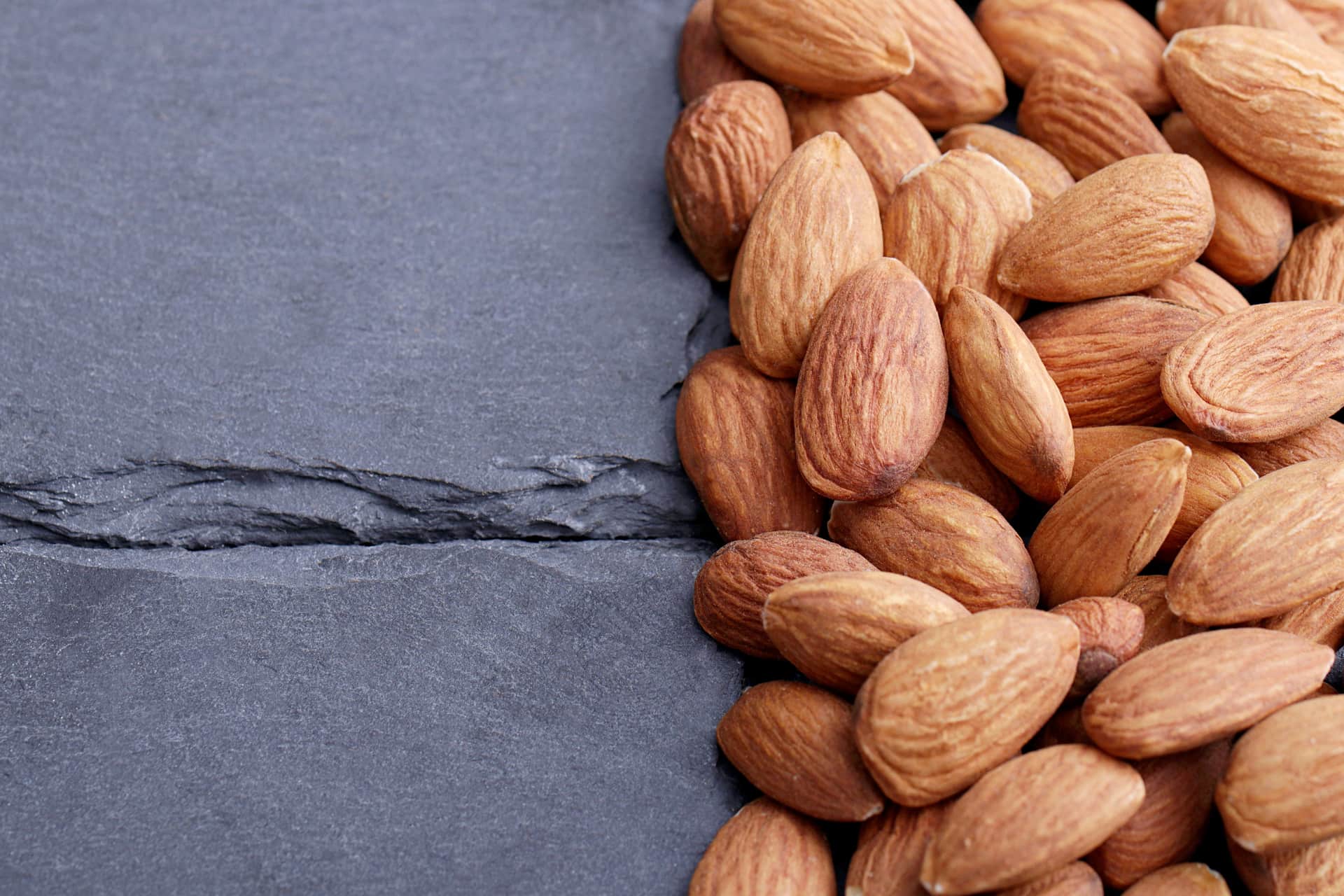
Mandelic acid is an aromatic alpha hydroxy acid. The name comes from the German *Mandel*, almond: it was first obtained in 1831 by heating amygdalin, an extract of bitter almonds. Like glycolic and lactic acid, it weakens the bonds holding dead cells to the skin surface so they shed rather than accumulate. That is its core job, and everything else on this page is either a consequence of that or a consequence of its size.
| What you want | Does mandelic acid help? | Notes |
|---|---|---|
| Rough, dull surface texture | Yes | Its core job, same as any AHA |
| An acid that sensitive skin tolerates | Yes — this is the reason to choose it | The largest common AHA, so the slowest in |
| Uneven tone and post-acne marks | Modestly, over months | Supported as an add-on; see the evidence section |
| Melasma | As an adjunct, not alone | Studied alongside hydroquinone, not instead of it |
| Inflammatory acne | Some evidence, at peel strengths | A 45% in-office peel is not a 10% serum |
| Clogged pores and blackheads | Not really | Salicylic acid is oil-soluble and works inside the pore |
| Rosacea bumps | No | Azelaic acid has FDA-approved prescription versions for that |
The second thing worth knowing is that mandelic acid had a medical career before it had a cosmetic one. Rosenheim introduced it in the *Lancet* in 1935 as an oral treatment for urinary infections, and British Drug Houses sold it as a urinary antiseptic through the 1930s. That antibacterial history is why the molecule keeps appearing in acne and folliculitis products today — though an oral antiseptic dose and a topical serum are not the same claim, and no brand should imply they are.
Strength Bands: 5% to 12%
Percentage is half the picture and pH is the other half, and only one of the two is usually printed on the bottle. An acid has to be partly in its free, un-neutralized form to do anything, which happens at low pH. A 10% mandelic acid buffered up to pH 5 is a hydrating serum with a marketing claim attached.
| Band | Where it sits | Who it is for |
|---|---|---|
| 5% | Toners and prep waters | A first acid, or skin that reacted to glycolic |
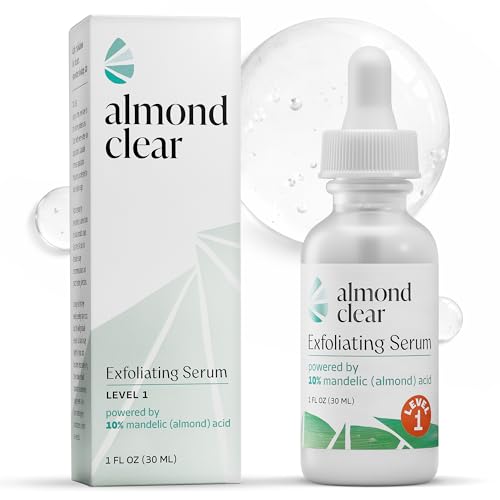
| 10% | The standard serum strength | Most people; the band to start and often stay at |
| 12% | The strong end of at-home | Skin that has tolerated 10% for a few months |
| 15% and up | Professional and body-specific products | Body skin, or under guidance |
| 40% to 45% | In-office peels only | A clinician applies and removes these |
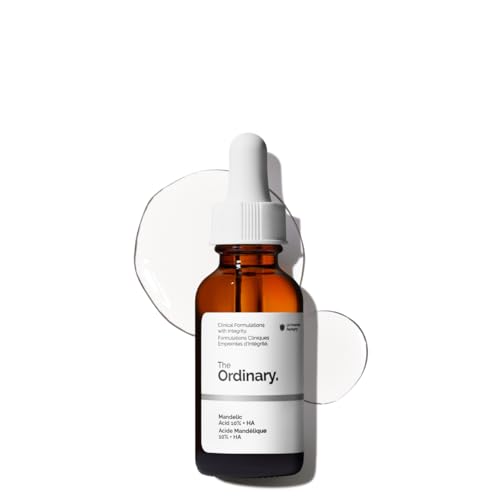
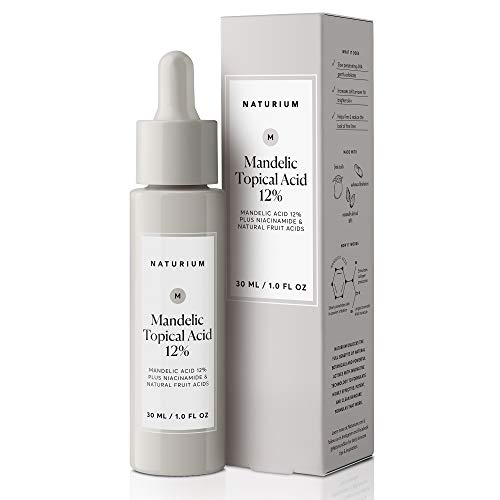
The FDA's consumer guidance on alpha hydroxy acids is that cosmetic AHA products are safe when the concentration is 10% or less, the pH is 3.5 or above, and the product is formulated to protect against sun sensitivity or carries a sunburn alert. Several popular mandelic serums sit above that line on one or both counts — Naturium's 12% states a pH of 3.0 to 3.5 — which is not a scandal, but it is a reason to introduce them slowly rather than nightly from day one.
What the Evidence Supports — and What It Does Not
Mandelic acid's evidence base is real but thin, and it is mostly peels rather than serums. The honest summary is that it is a well-tolerated exfoliant with encouraging small studies behind it, not an active with the weight of retinol or azelaic acid behind it.
| Study | Design | Finding |
|---|---|---|
| Dayal and colleagues, 2020 | 45% mandelic peel vs 30% salicylic peel, 50 patients with mild-to-moderate acne, six sessions over 12 weeks | Equal overall; salicylic better on non-inflammatory lesions, mandelic better on inflammatory ones, with fewer side effects |
| JPAD, 2018 | 4% hydroquinone alone vs 4% hydroquinone plus 10% mandelic acid, 100 patients with facial melasma, 24 weeks | 50% of the combination group achieved more than 50% improvement, against 20% on hydroquinone alone |
| Jacobs and Culbertson, 2018 | Topical mandelic acid twice daily for four weeks, 24 patients aged 42 to 68 | Lower-eyelid elasticity up 25.4%, firmness up 23.8%, using a formulation the authors developed |
Read the melasma row carefully, because it is the one most often misquoted. Mandelic acid was the add-on, not the treatment: both arms received hydroquinone, and the mandelic arm did better. That supports mandelic acid as an adjunct in a pigment routine. It does not show that a mandelic serum on its own will clear melasma, and melasma in particular is a condition where a dermatologist is the right first call.
Forms: Serum, Toner, Wash
- Leave-on serum — the format that does the work, and the one every pick below uses. Contact time is the whole point of an exfoliating acid.
- Toner or prep water — lower strength, swept on with a cotton pad. Gentler, and genuinely useful as a first acid, but the category has thinned out as brands consolidate on serums.
- Cleanser or body wash — rinses off in under a minute, so treat it as a mild adjunct rather than as your exfoliating step. Several publish no percentage at all.
- In-office peel — 40% to 45%, applied and neutralized by a clinician. Not something to replicate at home.
Mandelic acid is also one of the few acids routinely aimed below the jaw, at folliculitis, ingrown hairs and body breakouts on the chest, back and thighs. Its antibacterial history is the reason that positioning exists, and body skin tolerates higher strengths than the face does. For rough, bumpy upper arms specifically, keratosis pilaris is the guide, and lactic acid still has the better-documented case there.
How to Use It, and the Sun Problem
- Start at two nights a week, on clean dry skin, before moisturizer. Good Molecules caps its own directions at four nights a week, and that is a sensible ceiling for any 10% acid.
- Build up over a month, not a week. The reason to buy mandelic acid is tolerance; introducing it like glycolic throws that advantage away.
- Give it a few minutes before the next step, then moisturize. There is no need to wait twenty minutes, whatever the internet says.
- Wear sunscreen every morning. The FDA advises sun protection during AHA use and for a week afterwards. This is the single step that decides whether the acid helps your tone or works against it.
- Judge it at twelve weeks. Surface texture changes in two to four; tone and marks take a season.
Who It Suits, and Who Should Skip It
| Verdict | Why | |
|---|---|---|
| Sensitive or reactive skin | The best AHA to try | Slowest penetration of the common AHAs |
| Skin that reacted badly to glycolic | Yes — this is the substitution | Same mechanism, gentler delivery |
| Oily and blemish-prone skin | Reasonable | Exfoliates and has an antibacterial history; not a replacement for an acne treatment |
| Body acne, folliculitis, ingrown hairs | Yes, and it is the acid most aimed there | Body skin tolerates higher strengths |
| Dry skin needing exfoliation | Lactic acid first | Lactic is also a humectant; mandelic is not |
| Clogged pores and blackheads | Salicylic acid first | Oil-soluble, so it reaches inside the pore |
| Active rosacea | Skip | See rosacea; azelaic acid has the approved case |
| Pregnancy | Check first | See skincare during pregnancy |
The nut question comes up constantly and deserves a straight answer: mandelic acid is synthesized, not pressed from almonds, and the finished molecule contains no almond protein. Nut allergy is a protein allergy. That said, some mandelic products do add almond extracts — By Wishtrend's toner lists sweet almond fruit extract — so read the ingredient list rather than relying on the molecule's name.
Pairings and Conflicts
| With | Verdict | How |
|---|---|---|
| Niacinamide | Good pairing | Same routine is fine; Naturium builds it into the serum |
| Hyaluronic acid | Good pairing | Two of the picks below include it |
| A retinoid | Alternate nights | Both speed turnover; stacking them is the classic barrier mistake |
| Another exfoliating acid | Pick one | Two AHAs is not twice the result, it is twice the irritation |
| Vitamin C | Separate them | Vitamin C in the morning, mandelic at night |
| Benzoyl peroxide | Alternate nights | Both are drying; see benzoyl peroxide |
| Sunscreen | Mandatory | Not optional with any AHA |
If you want the direct head-to-head against the other acid people consider for the same problems, mandelic acid vs azelaic acid sets out which one earns the slot. For where an acid belongs in the order of application, see layering order.