What Lactic Acid Actually Does
Lactic acid does two jobs at once, which is unusual for an acid. As an alpha hydroxy acid it weakens the bonds holding dead cells to the surface, so they shed instead of accumulating — the same mechanism as glycolic acid. It is also a genuine humectant, and a component of the skin's own natural moisturizing factor, so it draws and holds water while it exfoliates.
That second property is not a marketing flourish. There is an FDA-approved prescription product containing 12% lactic acid whose purpose is hydrating skin, not exfoliating it. No other common exfoliating acid has that dual claim, and it is the whole reason lactic acid is the one recommended for dry and sensitive skin.
| What you want | Does lactic acid help? | Notes |
|---|---|---|
| Rough, dull surface texture | Yes | Its core job |
| Dry skin that also needs exfoliating | Yes — uniquely | Exfoliant and humectant in one |
| Uneven tone and dark marks | Modestly, over months | Slower than a dedicated pigment active |
| Fine lines | Modestly | Comparable to glycolic over six weeks in published work |
| Clogged pores and blackheads | Not really | Salicylic acid is oil-soluble and works in the pore |
| Active acne | No | Treat the acne; see benzoyl peroxide or azelaic acid |
| Keratosis pilaris on arms and legs | Yes | This is where 12% body lotions earn their place |
Strength Bands: 5% to 12%
Percentage matters, but so does pH, and only one of the two is usually printed on the bottle. An acid needs to be partly in its free form to work, which happens at low pH; INCIDecoder puts the useful range for at-home products at pH 3 to 4. A 10% lactic acid at pH 5 does very little.
| Strength | What it suits | Frequency |
|---|---|---|
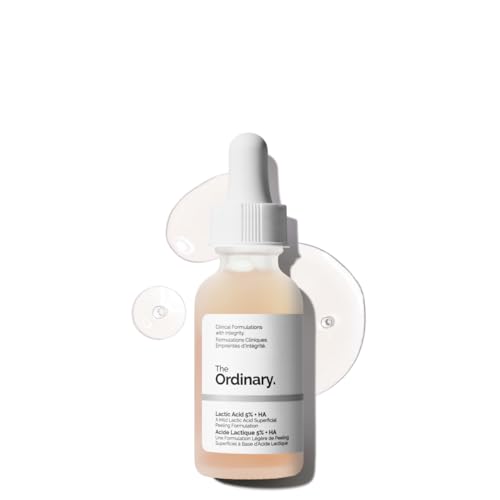
| 5% | First-time users, dry or sensitive skin | Two or three nights a week |
| 8% to 10% | Established tolerance, visible texture | Two or three nights a week |
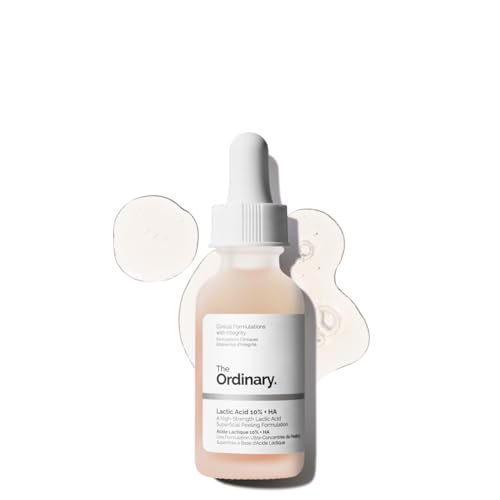
| 10% | The FDA's cosmetic ceiling for AHAs | Not nightly for most people |
| 12% | Body skin: arms, legs, elbows, heels | Daily on the body, as a lotion |
| Above 12% | Professional peels | In a clinic, not at home |
The FDA's position is specific: products with glycolic or lactic acid are considered safe for consumers when the AHA concentration is 10% or less and the finished product has a pH of 3.5 or greater. Body products at 12% exist in a different category — the prescription 12% hydrating lotion is the clearest example — and body skin tolerates more than a face does.
Lactic or Glycolic?
| Lactic acid | Glycolic acid | |
|---|---|---|
| Molecular weight (PubChem) | 90.08 | 76.05 |
| Penetration | Slower, shallower | Faster, deeper |
| Hydrating | Yes, it is also a humectant | No |
| Irritation risk | Lower | Higher |
| Best for | Dry, sensitive, first-timers | Oily, resilient, stubborn texture |
| Sun sensitivity | Yes — it is an AHA | Yes |
The honest summary: if glycolic acid stings, flakes you or leaves skin tight, lactic acid is the standard substitution rather than a compromise. If your skin tolerates glycolic comfortably and you want the fastest result, there is no reason to switch. Neither replaces salicylic acid for congestion, because that works inside the pore rather than on the surface.
Forms
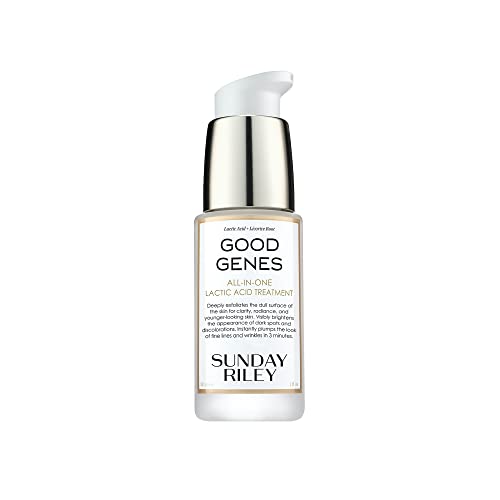
- Leave-on serum. The main event: a stated percentage, applied at night, with the most control over dose.
- Toner or essence. Lower strength, spread thin across the face; gentler and slower.
- Rinse-off peel or mask. Short contact time at a higher percentage. Convenient, harder to judge.
- Body lotion. Usually 12%, and the single most effective format for keratosis pilaris and rough limbs.
- With hyaluronic acid. A common and sensible pairing, since both hold water.
- In a blended AHA/BHA product. Harder to attribute a reaction to one acid; start with a single acid instead.
For the face, a serum at a stated percentage is the format to start with. Blends are where people lose track of what their skin is reacting to — a point covered in best chemical exfoliants.
How to Use It, and the Sun Problem
- At night, on clean dry skin, two or three times a week to start.
- Wait, then moisturize. Lactic acid hydrates, but it is not a moisturizer.
- Sunscreen every morning, without exception, while you are using it and for about a week afterwards.
- Hold the frequency for a month before increasing anything.
- Do not layer it with another acid or a retinoid the same night. One source of irritation at a time.
- Stop for two weeks if skin stings on water. That is over-exfoliation, not a sensitivity you were born with.
The sun sensitivity is measurable, and worth stating in the FDA's own numbers rather than vaguely. In the research the agency cites, four weeks of AHA use raised volunteers' sensitivity to UV-induced skin reddening by 18%, and their sensitivity to UV-induced cellular damage roughly doubled. The reassuring half: it is reversible — one week after treatment stopped, researchers found no significant difference in UV sensitivity.
Who It Suits, and Who Should Skip It
Lactic acid suits dry skin, sensitive skin, mature skin and anyone who has tried glycolic acid and found it too much. It also suits anyone who wants one product to handle both roughness and dryness, which is a combination very little else manages.
- Rosacea-prone skin should be cautious, and start at 5% on a small area if at all.
- Active acne needs an acne active, not an exfoliant — see azelaic acid vs benzoyl peroxide.
- Anyone already using a retinoid is exfoliating chemically and needs far less of this than they think.
- Compromised or stinging skin should repair the barrier for a fortnight first.
- Anyone who will not wear sunscreen should not use an AHA at all. That is not a moral position, it is the FDA's own data on UV sensitivity.
- During pregnancy, topical AHAs are generally viewed more favorably than retinoids, but check with your clinician — see skincare during pregnancy.
Pairings and Conflicts
| Combination | Verdict |
|---|---|
| Lactic acid + a moisturizer | Necessary, and it is the step people skip |
| Lactic acid + hyaluronic acid | Good. Both are humectants and they are often co-formulated. |
| Lactic acid + niacinamide | Fine. Apply the acid first and let it absorb. |
| Lactic acid + a retinoid, same night | Too much for most people. Alternate nights. |
| Lactic acid + glycolic or salicylic acid | Redundant. Pick one acid. |
| Lactic acid + vitamin C | Workable but unnecessary; morning vitamin C, evening acid. |
| Lactic acid + a scrub | No. Two forms of exfoliation is how barriers get damaged. |
Beyond the Face: Arms, Elbows and Heels
Body skin is thicker, tolerates higher percentages, and is where lactic acid is arguably most useful. A 12% lotion applied daily is one of the few genuinely effective answers to keratosis pilaris — the rough bumps on the backs of the upper arms and thighs.
- Apply to damp skin after a shower, which is when the humectant half works best.
- Expect weeks, not days. Bumps soften before they flatten.
- Do not scrub first. The American Academy of Dermatology advises against scrubbing keratosis pilaris because it irritates the skin and makes it worse.
- Keep going once it improves. It returns when you stop; this is management, not cure.
- Elbows, knees and heels respond to the same lotion, and faster.
The full protocol is in our keratosis pilaris guide, which also covers why a scrub is the wrong instinct for it.