Skip to content
Glow & Gild

Concern guide

Skincare for Acne

Different kinds of spot need different ingredients. Working out which kind you get is most of the work.

By Sawyer V. · Published September 8, 2026 · Last updated September 8, 2026

Cleansing products on a dark background in low light

The short answer

Plugs — blackheads and closed comedones — need salicylic acid or a retinoid. Inflamed spots need benzoyl peroxide or azelaic acid. Nodules and cysts need a clinician. Most people get a mixture and need more than one.

Disclosure: Glow & Gild earns a commission when you buy through links on this page, at no extra cost to you. It does not change which product we recommend, and no brand pays for placement here. Read the full disclosure.

First, Identify What You Actually Get

This takes ten seconds in a mirror and it determines everything that follows.

TypeLooks likeNeeds
BlackheadsOpen, dark, flatSalicylic acid or a retinoid
Closed comedonesSmall skin-colored bumps, not red, not soreSalicylic acid or a retinoid
PapulesRed, raised, sore, no headBenzoyl peroxide or azelaic acid
PustulesRed with a white or yellow headBenzoyl peroxide or azelaic acid
Nodules and cystsDeep, painful, lasting weeks, often scarringA clinician. Over-the-counter products delay effective care.
Fungal folliculitisUniform itchy bumps, often on forehead, chest or backNot acne. Needs antifungal treatment, and acne products make it worse.

Building the Routine

  1. A gentle cleanser, twice daily. Not a scrub, not a stripping foam. Over-cleansing damages the barrier and makes everything worse.
  2. One active for the plug, if you get comedones. Salicylic acid two or three times a week, building up.
  3. One active for inflammation, if you get red spots. Benzoyl peroxide at 2.5% or 4%, or azelaic acid at 10%.
  4. A moisturizer, every day. Non-negotiable. Acne routines are drying, and dry skin produces more oil in response.
  5. Sunscreen. Both salicylic acid and retinoids increase photosensitivity, and post-inflammatory marks darken with UV exposure.
  6. [Niacinamide](/ingredients/niacinamide), optionally, for oil regulation and barrier support alongside the rest.

Introduce one active at a time, two to three weeks apart. Acne routines are where people most often stack four products at once and end up with a damaged barrier and worse skin than they started with.

The Marks Left Behind

Two different things get called acne scarring and they need completely different answers.

Post-inflammatory hyperpigmentation is the flat brown or red marks left after a spot heals. These are pigment, not scarring, and they fade — slowly, over months. Azelaic acid, niacinamide, vitamin C and tranexamic acid all help, and sunscreen is what stops them re-darkening.

Atrophic scarring is indented — ice pick, boxcar or rolling. This is structural collagen loss and no topical product corrects it. Procedures do; serums do not, and any product claiming otherwise is misrepresenting what it can reach.

The most effective thing you can do about marks is prevent the spots that cause them, and avoid picking, which converts a mark into a scar.

Things That Do Not Help

  • Scrubbing. Physical exfoliation on inflamed skin spreads bacteria and damages the barrier. It feels productive and it is not.
  • Drying it out completely. Stripped skin produces more oil in response, and a damaged barrier is more prone to inflammation.
  • Toothpaste on spots. Irritant, not antibacterial in a useful way, and a reliable route to a post-inflammatory mark.
  • Stacking every acne active at once. The most common cause of the over-treated, shiny, stinging skin that follows a shopping spree.
  • Abandoning something at four weeks. Acne routines take eight to twelve weeks. Purging in the first two to six weeks is expected with a retinoid or acid.

When to see a clinician: nodulocystic acne, acne that is scarring, acne that has not responded to twelve weeks of consistent over-the-counter treatment, or acne causing significant distress. Effective prescription treatment exists, and working through the shelf first is a slower route to the same place.
No product photoNo product photograph available for PanOxyl Acne Foaming Wash 4% Benzoyl Peroxide

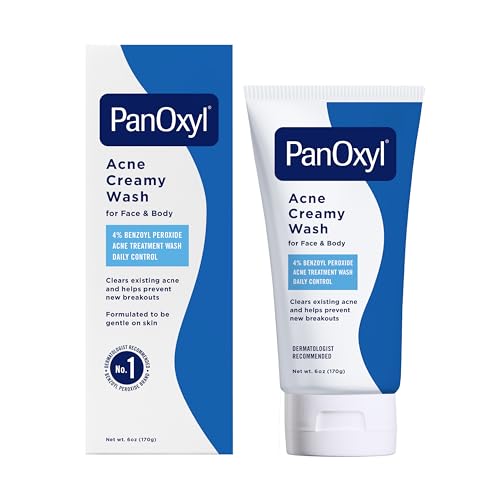
1Inflamed spots, as a wash

PanOxyl Acne Foaming Wash 4% Benzoyl Peroxide

What’s in it

  • Labeled 4% benzoyl peroxide in a rinse-off wash
  • Lower concentration than the 10% version, with published comparisons finding low concentrations as effective
  • Suitable for face, chest and back

A wash limits contact time, which is the practical way to get the antibacterial effect without the full drying cost — and it makes treating a back or chest realistic.

Who it’s not for

Purely comedonal acne. Benzoyl peroxide targets bacteria, and blackheads are a plug rather than an infection — salicylic acid or a retinoid is the right tool there.

No product photoNo product photograph available for The Ordinary Azelaic Acid Suspension 10%

2Inflammation and marks together

The Ordinary Azelaic Acid Suspension 10%

What’s in it

  • Labeled 10% azelaic acid
  • Antibacterial, keratolytic and pigment-reducing at once
  • Fragrance-free; silicone suspension, so best used at night

It is the rare ingredient that addresses the spot and the mark it leaves behind, and it is far gentler than benzoyl peroxide — which matters in a routine that is already drying.

Who it’s not for

Anyone layering products in the morning. The silicone suspension is the most pilling-prone format in skincare, so keep it to the evening or buy a cream-gel version.

No product photoNo product photograph available for COSRX BHA Blackhead Power Liquid

3Congestion and blackheads

COSRX BHA Blackhead Power Liquid

What’s in it

  • Betaine salicylate, a salicylic acid derivative, published at 4%
  • Converts more slowly than free salicylic acid, so milder in daily use
  • Includes niacinamide and willow bark water

Pore maintenance is a long-term job rather than a course of treatment, and a milder daily BHA is far more sustainable alongside a drying benzoyl peroxide than a second harsh product would be.

Who it’s not for

Anyone who wants a comparable dose. 4% betaine salicylate is not 4% salicylic acid, and the conversion ratio is not published.

Frequently Asked Questions

Depends on the spot. Salicylic acid or a retinoid for blackheads and closed comedones; benzoyl peroxide or azelaic acid for inflamed spots. Most people need both.

Sources

Who wrote this

By Sawyer V.. An enthusiast who’s genuinely into this: I read the manufacturer documentation, compile the published percentages, and do the arithmetic. No lab coat.

What I don’t do: test products, accept free product, or accept payment for placement. I hold no clinical credential and don’t claim one. How we pick.

Published September 8, 2026 · Last updated September 8, 2026

A serum bottle and dropper on a dark surface with soft side light

Sub-hub

By Concern

Aging, acne and sensitivity — each routed from the problem to the mechanism to the active.

Read it
Clear liquid exfoliant in a glass bottle on a dark background

Ingredient monograph

Salicylic Acid

The oil-soluble acid, which is why it works inside a pore. What 0.5%, 1% and 2% are each for.

Read it
Glass bottle of a clear exfoliating liquid on a dark surface

Ingredient monograph

Azelaic Acid

Redness, acne and pigment from one molecule, and the standard retinoid substitute in pregnancy. 10% versus 15%, honestly.

Read it
Clear serum texture pooled on dark glass

Ingredient monograph

Niacinamide

Barrier, oil, pores and pigment from one cheap molecule. Why 5% is the evidence-backed dose and 10% is the marketing one.

Read it

Nothing here is medical advice. Editorial policy · How we pick · Affiliate disclosure