The Claim and the Evidence
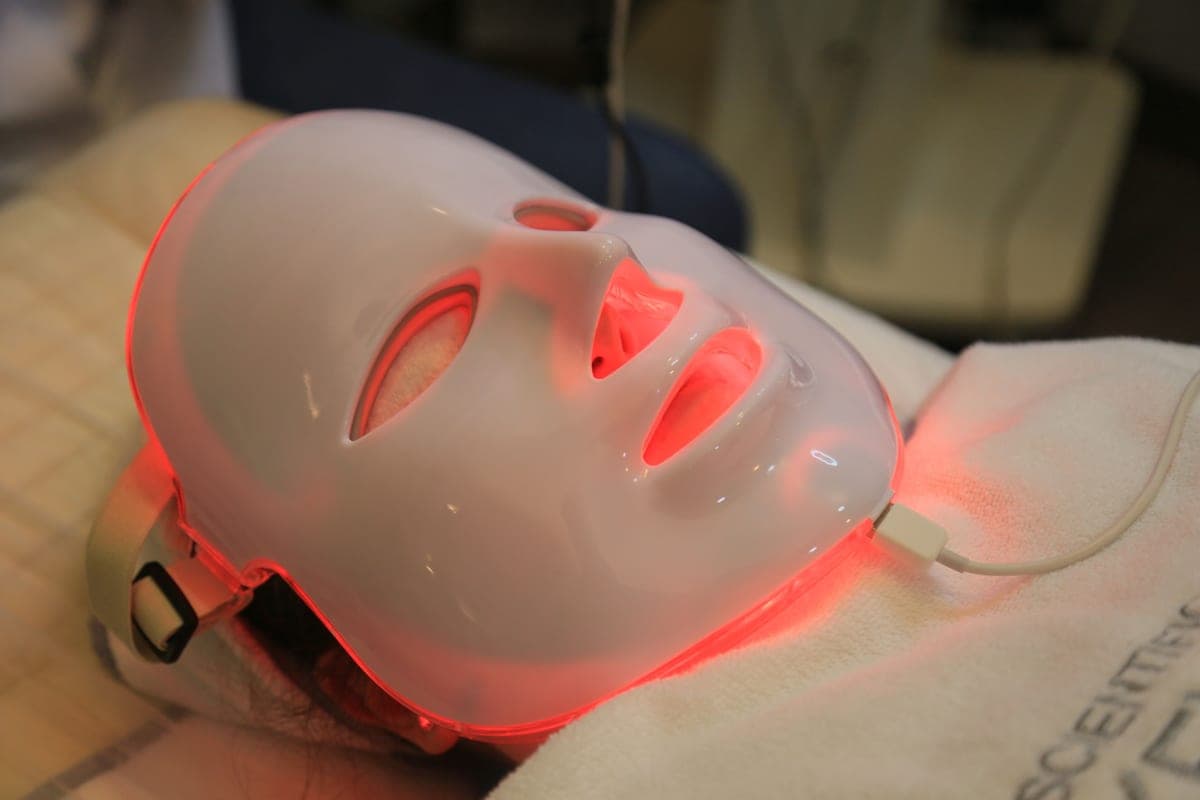
The claim: red light stimulates collagen and reduces inflammation; blue light kills acne bacteria; a few minutes a day produces visible improvement.
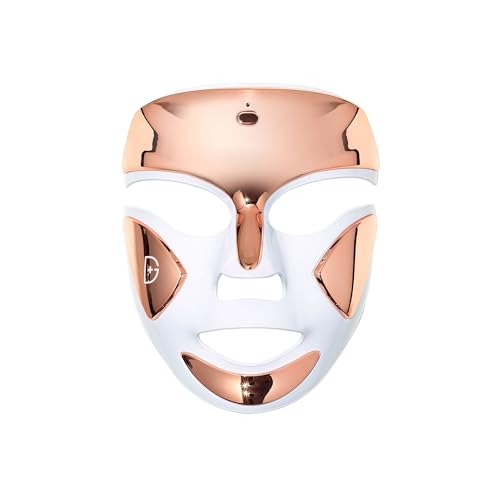
What the evidence supports: photobiomodulation is a real, studied phenomenon with a substantial literature. Red and near-infrared light in the 630 to 850 nm range influences mitochondrial activity in a way associated with increased collagen production and reduced inflammation. Blue light around 415 nm produces reactive oxygen species inside *Cutibacterium acnes*, killing the bacteria.
Where the gap sits: most of that evidence comes from clinical devices delivering considerably more light than a consumer mask does. The mechanism is real; whether your specific mask delivers a dose that engages it is the open question, and it is one almost no brand gives you the numbers to answer.
The Wavelengths and What Each Does
| Wavelength | Color | Target |
|---|---|---|
| ~415 nm | Blue | Acne bacteria. Kills C. acnes via porphyrin activation. |
| ~590 nm | Amber / yellow | Marketed for redness. Thin evidence relative to red. |
| 630 to 660 nm | Red | Collagen, inflammation, wound healing. The best-evidenced range. |
| 810 to 850 nm | Near-infrared (invisible) | Deeper penetration. Used in clinical devices; less common at home. |
A mask offering seven colors is usually offering four that have essentially no supporting literature. Red and blue are the two with a real evidence base, and a well-specified two-wavelength device beats a poorly specified seven-color one.
Irradiance Is the Number That Matters
Irradiance is the light power delivered per unit area at the skin, measured in milliwatts per square centimeter. It, multiplied by treatment time, gives the dose — and dose is what determines whether a biological effect occurs.
This is where the consumer category falls apart. Most masks publish an LED count, which tells you nothing: a hundred weak LEDs deliver less than thirty strong ones. Very few publish irradiance, and without it there is no way to compare two devices or to know whether either reaches a useful dose.
Our position is simple and it eliminates most of the market: a device that does not publish its wavelengths and its irradiance cannot be evaluated. That is not a claim that unspecified masks do nothing. It is a statement that neither we nor you have any basis for judging.
What to Check Before Buying
- Published wavelengths in nanometres, not color names. Red should be 630 to 660 nm.
- Published irradiance in mW/cm2, measured at the skin rather than at the LED.
- Eye protection, or a design that keeps light out of the eyes. Bright light at close range for ten minutes a day deserves care.
- Coverage — a mask that sits away from the face delivers less light than one that contacts it, since irradiance falls with distance.
- Treatment time and frequency stated by the manufacturer, and whether you will realistically do it. A ten-minute daily commitment is the actual product.
- Regulatory clearance if claimed — a real clearance has a number. Language like clinical-grade or professional-class without one is doing rhetorical work.
One contraindication worth stating: photosensitizing medications, and conditions such as lupus or a history of light-triggered migraine, are reasons to ask a clinician first rather than to buy and see.
Reasonable Expectations
For acne, blue light devices are best understood as an adjunct rather than a treatment. They reduce bacterial load; they do nothing about the plug or the sebum. Pairing one with salicylic acid or azelaic acid addresses more of the problem than either alone.
For lines and firmness, red light is slow and cumulative in the same way a retinoid is — twelve weeks minimum, with continued use required to maintain any effect. It is not a substitute for a retinoid, and if you have not yet established a sunscreen and retinoid habit, that is the higher-value purchase by a wide margin.
Nothing in this category resolves pigment, and no LED device is a substitute for sun protection.