What Retinol Actually Does
Retinol is one rung on a ladder. The only form of vitamin A your skin can use directly is retinoic acid, and retinol sits two enzymatic conversions away from it: retinol becomes retinaldehyde, and retinaldehyde becomes retinoic acid. Each conversion is lossy, which is the whole reason a 0.5% retinol product is not equivalent to a 0.5% prescription tretinoin product. Tretinoin is retinoic acid and skips the queue entirely.
Once retinoic acid reaches the retinoid receptors in the skin, three things follow. Keratinocyte turnover accelerates, so the outermost dead layer sheds faster and the pore lining is less prone to plugging. Fibroblasts in the dermis are prompted to produce more collagen, and the enzymes that break collagen down are partially suppressed. Melanocyte activity is modulated, which is why retinoids gradually fade post-inflammatory marks even though they are not a dedicated brightening agent.
The timeline follows the mechanism. Texture and pore appearance shift first, usually inside 8 to 12 weeks. The collagen effect is slower and cumulative — the studies that measured wrinkle depth ran for six to twelve months. Anyone promising visible change in two weeks is describing exfoliation, not remodeling.
Strength Bands: What Each Percentage Is For
This is the question the ingredient name never answers, and it is the one that decides whether you tolerate the product. Retinol strength is not a difficulty setting you graduate through as fast as possible. It is a dose, and past a point the irritation climbs faster than the benefit.
| Band | Typical use | What to expect |
|---|---|---|
| 0.01% to 0.1% | First-ever retinoid, reactive skin, eye-area products | Mild. Often used two or three nights a week indefinitely with almost no adjustment period. |
| 0.2% to 0.3% | The standard starting dose for most people | A real retinoid effect with a manageable adjustment period. Most consumer-strength studies sit near here. |
| 0.5% | The common step-up, and where many people stop | Noticeably more active. Expect two to six weeks of adjustment if you move up quickly. |
| 1% | The practical over-the-counter ceiling | Diminishing returns for most skin. Irritation risk climbs sharply and consistency usually drops with it. |
The band that matters is the one you will actually use four nights a week for a year. A 0.3% product used consistently outperforms a 1% product used sporadically, because the collagen effect is a function of cumulative exposure. That is the single most useful thing to understand about the whole category.
Encapsulated retinol changes the arithmetic. Encapsulation slows the release, which usually means better tolerance at a given percentage, but it also means the number on the label is not directly comparable to a non-encapsulated product at the same number. Where a brand publishes its delivery system we say so; where it does not, we say that too.
Forms: Serum, Cream, Oil and Encapsulated
Retinol is oil-soluble, so it has to be carried in something. What it is carried in changes tolerance more than most people expect.
- In an oil or squalane base. The simplest possible vehicle: retinol, a carrier and little else. Predictable and easy to reason about, but it does nothing to buffer irritation, so the percentage lands at full strength.
- In a cream or emulsion. The occlusive and humectant load buffers the retinoid and supports the barrier while it adapts. This is the friendliest starting format for dry or reactive skin.
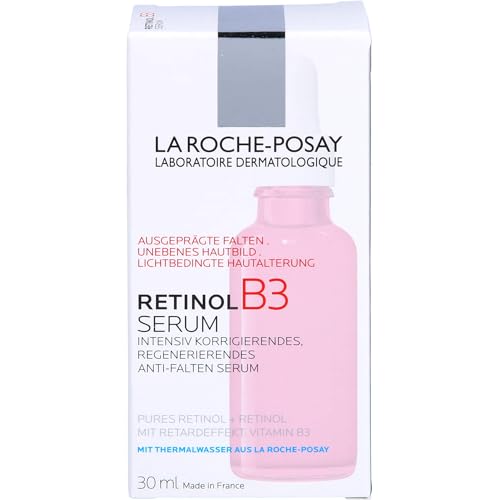
- Encapsulated in a serum. Slow-release delivery. Usually better tolerated at the same nominal percentage, and usually more expensive.
- Combined with niacinamide or ceramides. A genuinely sensible pairing — see niacinamide and ceramides. The supporting ingredients do not reduce the retinoid dose; they reduce what the barrier disruption costs you.
- Around the eyes. Eye-area products are usually 0.01% to 0.1% in a heavier base. That is a reasonable design choice, not a marketing one: the skin there is thinner and adapts more slowly.
How to Use Retinol
- Use it at night. Retinol degrades in UV light and increases photosensitivity, so a morning application wastes product and raises sun exposure at the same time.
- Start at two nights a week, not every night. The adjustment period is real, and the fastest way to abandon a retinoid is to spend the first fortnight peeling.
- Apply to dry skin. Damp skin increases penetration, which sounds useful and in practice mostly increases irritation. Wait a few minutes after cleansing.
- Use a pea-sized amount for the whole face. More product does not produce more collagen; it produces more irritation and a shorter bottle.
- Moisturize after, or buffer by moisturizing first. Sandwiching retinol between two layers of moisturizer genuinely helps sensitive skin tolerate it, at a modest cost in potency.
- Increase frequency before you increase strength. Get to four or five nights a week at your current percentage before considering a step up.
- Wear sunscreen every morning without exception. This is not optional advice attached to retinoid use — it determines whether you keep the collagen you are building. See zinc oxide if you prefer a mineral filter.
Who It Suits, and Who Should Avoid It
Retinol suits most adult skin concerned with fine lines, uneven texture, enlarged-looking pores or the marks left behind by breakouts. It is one of very few over-the-counter ingredients with a long, boring, well-replicated evidence base, which in this category is a compliment.
- Skip it entirely if you are pregnant or breastfeeding. Oral retinoids are established teratogens, and the standard clinical advice is to avoid topical vitamin A derivatives during pregnancy. Azelaic acid is the usual substitute.
- Be cautious with active eczema, rosacea or a compromised barrier. Repair the barrier first. Bakuchiol is the common alternative, with the honest caveat that its evidence base is far thinner.
- Do not use it on the same night as a strong acid while you are starting out. Sequencing is covered in the layering order guide.
- If you use benzoyl peroxide, separate them by time of day. Benzoyl peroxide oxidizes retinol and both are drying.
What It Pairs With, and What It Conflicts With
Most of the conflict advice circulating online is overstated. Two pairings genuinely matter; the rest are about total irritation load rather than chemistry.
| Combination | Verdict |
|---|---|
| Retinol + niacinamide | Good. Niacinamide supports the barrier while it adapts. See retinol vs. niacinamide. |
| Retinol + ceramides or squalane | Good, and close to essential for dry skin. See ceramides and squalane. |
| Retinol + vitamin C | Fine, but split them: vitamin C in the morning, retinol at night. Detail in retinol vs. vitamin C. |
| Retinol + AHA or BHA | Alternate nights while you adjust. Both increase turnover; together they mostly increase irritation. |
| Retinol + benzoyl peroxide | Separate by time of day. Benzoyl peroxide degrades retinol on contact. |
| Retinol + bakuchiol | Redundant rather than dangerous. See bakuchiol vs. retinol. |
Beyond the Face: Body, Neck and Hands
Body retinol products are legitimate — the mechanism does not stop at the jawline. Crepey texture on the upper arms, sun-marked hands and neck laxity all respond to the same ingredient, slowly.
Two practical differences. Body skin is thicker and generally more tolerant, so higher percentages are used more comfortably; but the surface area is large, so a face-sized bottle is an expensive way to treat two arms. The neck and chest are the exception in the other direction: the skin there is thin, sun-exposed and often the first to react, so treat it like face skin and extend your sunscreen down to it.
Retinol is not appropriate for the lips or for broken skin, and it should not be applied to freshly waxed or shaved areas.
Where to Start
One starting product and one step-up, chosen for a published concentration and a sensible vehicle rather than for marketing. The full ranked set is in the best retinol serums roundup.