Grouped by who should buy them rather than ranked one to ten, because the right retinol for oily skin is the wrong one for a compromised barrier.
By Sawyer V. · Published September 8, 2026 · Last updated September 8, 2026
The short answer
The best retinol serum is the one you will still be using in a year. For most people that means a published 0.2% to 0.5% in packaging that protects it. Below: five picks by buyer type, each with a stated reason it might be wrong for you.
Disclosure: Glow & Gild earns a commission when you buy through links on this page, at no extra cost to you. It does not change which product we recommend, and no brand pays for placement here. Read the full disclosure.
Amazon price as of October 23, 2026, 03:12 UTC — details
How We Picked
We ranked on four things, in this order: whether the brand publishes a concentration at all, whether the packaging protects an ingredient that degrades in light and air, whether the vehicle suits the buyer we matched it to, and the irritant load of the rest of the formula. Price came last.
Everyone in this category says they tested twenty of these. We have not tested any, and we say so. What we did instead: compiled the published concentrations and ingredient lists, checked each claim against what the formula can actually support, and wrote down who each product is wrong for. The full method is published so you can check it.
Quick Picks
The short answer, by buyer. Select any row for the full write-up.
#
Product
Best for
Where to buy
1
The Ordinary Retinol 0.5% in SqualaneIt is the clearest product in the category: one active, one carrier, a published number.
Amazon price as of October 23, 2026, 03:12 UTC — details
2
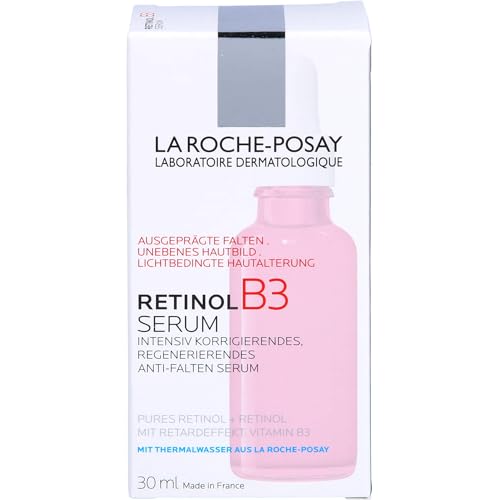
La Roche-Posay Retinol B3 SerumA lower pure-retinol load, a slow-release fraction and a meaningful niacinamide content is the standard prescription for people who tried a simple high-percentage retinol and stopped after a fortnight of flaking.
Amazon price as of October 23, 2026, 03:12 UTC — details
4
Naturium Retinaldehyde Cream Serum 0.05%[Retinal](/ingredients/retinal) sits one conversion step closer to the active form than retinol, so 0.05% here is a meaningful step up from a 0.5% retinol rather than a step down.
Amazon price as of October 23, 2026, 03:12 UTC — details
5
Paula's Choice 1% Retinol TreatmentIf you have worked up through 0.5% and genuinely tolerate it four or five nights a week, this is the top of the ladder before a prescription.
Amazon price as of October 23, 2026, 03:12 UTC — details
#ad — buying through these links earns us a commission at no cost to you. Prices come from Amazon’s own product data and show the date they were checked; without a current one, the button says check price.
What Actually Decides a Retinol Serum
Three variables separate a good retinol purchase from a bad one, and only one of them is on the front of the bottle.
Published concentration. A serum that says 0.5% is telling you something. A serum that says *encapsulated retinol complex* is telling you nothing you can compare. Roughly half the category declines to publish a number, and we treat that as a mark against a product rather than a neutral.
Packaging. Retinol degrades in light, air and heat. An opaque airless pump preserves it; a clear glass jar destroys it over the life of the bottle. A 0.3% in a pump is worth more at month four than a 1% in a jar, and no ingredient list will tell you that.
Vehicle. Retinol in a plain squalane base lands at full strength with nothing to buffer it. The same percentage inside a cream with ceramides and niacinamide is a materially different experience. This is why the picks below are grouped by buyer rather than ranked.
How to Choose Between These
If you are
Buy
Why
New to retinoids entirely
A 0.2% to 0.3% in a cream or emulsion base
Lowest chance of a two-week flaking phase that ends with the bottle in a drawer.
Already tolerating a retinoid and want more
A published 0.5% in a simple base
Predictable step up with a number you can reason about.
Someone who reacted badly last time
A buffered formula with niacinamide, or an encapsulated one
The supporting ingredients do not reduce the dose; they reduce what the barrier disruption costs you.
Acne-prone with texture concerns
A formula pairing the retinoid with ceramides
Retinoids help congestion, and the barrier support is what lets you keep using it through the adjustment.
Pregnant or breastfeeding
None of these
Avoid topical vitamin A entirely. Use azelaic acid instead.
A number on the label. If the brand will not publish a concentration, you cannot compare the product to anything, including its own previous formulation.
Opaque, airless packaging. A pump or an aluminum tube. A clear dropper bottle is acceptable if the glass is dark; a wide-mouth jar is not.
Supporting ingredients that do something. Niacinamide, ceramides, panthenol or squalane are all doing real work here. A long list of extracts usually is not.
No fragrance, if your skin is at all reactive. Retinoid adjustment plus fragrance is the most common combination behind an abandoned bottle.
A size you will finish in six months. Retinol degrades once opened regardless of what the box says.
One thing that does not matter: whether the product is called a serum, a treatment, a night oil or a cream. Those are marketing categories. The vehicle matters; the noun does not.
1 — Knowing exactly what dose you are getting
The Ordinary Retinol 0.5% in Squalane
What’s in it
Labeled 0.5% retinol, stated on the front of the bottle
Carried in squalane, an inert emollient — the vehicle adds nothing and subtracts nothing
Opaque bottle with a dropper; no encapsulation claimed
It is the clearest product in the category: one active, one carrier, a published number. That makes it the right purchase when you want to learn how your skin responds to retinol as an ingredient rather than to somebody's formula, and it is cheap enough that finding out is not an expensive experiment.
Who it’s not for
Anyone with a reactive or already-compromised barrier. There is no buffering here — no niacinamide, no ceramides, no humectant load — so 0.5% behaves exactly like 0.5%. Start lower or start in a cream.
Published as pure retinol plus a gradual-release retinol derivative
Niacinamide as the primary supporting ingredient — the pairing is in the name
Opaque pump packaging, appropriate for a light-sensitive active
A lower pure-retinol load, a slow-release fraction and a meaningful niacinamide content is the standard prescription for people who tried a simple high-percentage retinol and stopped after a fortnight of flaking. It is the most reliable route back into the category.
Who it’s not for
Anyone who wants a directly comparable dose. The gradual-release fraction is described but not fully quantified, so you cannot line it up against a stated percentage — which is exactly the tradeoff being made for the gentler experience.
3 — Acne marks with a barrier that needs protecting
CeraVe Resurfacing Retinol Serum
What’s in it
Encapsulated retinol; the brand does not publish the concentration, and we count that against it
Formulated with three ceramides plus niacinamide and licorice root extract
Fragrance-free, opaque tube with a pump
The ceramide and niacinamide load is the point. For post-acne marks specifically, the limiting factor is usually barrier tolerance rather than retinoid strength, and this formula is built around that constraint rather than around a headline number.
Who it’s not for
Anyone who insists on a published percentage — and that is a legitimate position. The concentration is not stated anywhere, which means you cannot compare it to a labeled product or tell whether a reformulation has changed it.
Labeled 0.05% retinaldehyde — a different molecule to retinol and not comparable by percentage
Cream-serum base with supporting emollients rather than a plain carrier
Opaque pump packaging
Retinal sits one conversion step closer to the active form than retinol, so 0.05% here is a meaningful step up from a 0.5% retinol rather than a step down. Publishing the number at all puts it ahead of most of the retinal category.
Who it’s not for
A first retinoid. Starting on retinaldehyde skips the gentlest rung of the ladder, and the adjustment period is correspondingly less forgiving. Tolerate a retinol first.
5 — Experienced users at the over-the-counter ceiling
Paula's Choice 1% Retinol Treatment
What’s in it
Labeled 1% retinol, the practical ceiling for over-the-counter use
Formulated with peptides and licorice extract as supporting ingredients
Opaque airless pump, 0.17 fl oz travel size
If you have worked up through 0.5% and genuinely tolerate it four or five nights a week, this is the top of the ladder before a prescription. The packaging is right and the number is published, which is the minimum bar at this strength.
Who it’s not for
Almost everyone reading this page. 1% has diminishing returns for most skin and a sharply higher irritation risk, and the usual outcome of buying it early is a shorter, less consistent retinoid habit — which is worse than a lower percentage used reliably.
This is a whole shelf rather than one product, and it is the most reliable way to waste money in this category. Retinol degrades in light and air, and a wide-mouth jar exposes it to both every single day. It does not matter what the percentage on the front says — by the time you are halfway through, the formula is not delivering what the label claims, and there is no way to tell from the outside. Buy an opaque pump or a dark dropper bottle. The same rule applies to any vitamin A product sold in a jar, at any price point.
Frequently Asked Questions
0.2% to 0.3%, used two nights a week and built up. Reactive skin should start lower and in a cream base. Frequency before strength is the rule that matters.
Texture and pore appearance in 8 to 12 weeks; the collagen effect over six to twelve months. Anything promising visible change in two weeks is describing exfoliation.
Not reliably. The cheapest pick on this page publishes its concentration and uses appropriate packaging, which is most of what matters. Price buys texture, supporting ingredients and encapsulation, not more retinoid effect.
Eventually most people can, but not at the start. Two nights a week, then increase frequency once you have gone a fortnight without flaking. Consistency beats intensity.
Yes, with sequencing: vitamin C in the morning, retinol at night, and acids on alternate nights while you adjust. See the layering order guide.
None. All topical vitamin A derivatives are avoided during pregnancy and breastfeeding as standard advice. Azelaic acid is the usual substitute.
By Sawyer V.. An enthusiast who’s genuinely into this: I read the manufacturer documentation, compile the published percentages, and do the arithmetic. No lab coat.
What I don’t do: test products, accept free product, or accept payment for placement. I hold no clinical credential and don’t claim one. How we pick.
Published September 8, 2026 · Last updated September 8, 2026