What Ceramides Actually Do
The standard model of the stratum corneum is bricks and mortar: corneocytes are the bricks, and a lipid matrix is the mortar. That matrix is roughly 50% ceramides, 25% cholesterol and 15% free fatty acids, with the exact figures varying by body site and study.
When that matrix is depleted — by over-cleansing, cold weather, eczema, or an aggressive actives routine — water escapes faster and irritants get in more easily. That is what a damaged barrier is. Topical ceramides supplement the missing lipid, which reduces water loss and calms the reactivity that follows from it.
The Ceramide Types on Ingredient Lists
Cosmetic labels use a naming system that looks more precise than it is. The ones you will actually see:
| Name on the label | Also written as | Note |
|---|---|---|
| Ceramide NP | Ceramide 3 | The most common in cosmetics. Well studied for barrier support. |
| Ceramide AP | Ceramide 6-II | Frequently paired with NP in barrier creams. |
| Ceramide EOP | Ceramide 1 | Long-chain, important for the lamellar structure of the barrier. |
| Ceramide NG / NS | Ceramide 2 | Common in Asian formulations. |
| Phytosphingosine | — | A ceramide precursor. Skin can build ceramides from it. |
There is no meaningful ranking among these for everyday use. A formula containing two or three of them alongside cholesterol and a fatty acid is doing the right thing; a formula containing only one, with no supporting lipids, is doing the marketing thing.
Percentages are almost never published for ceramides, and unlike retinol or niacinamide that is not a red flag — effective use levels are low, and the composition of the lipid blend matters more. We say so rather than pretending a number exists.
Forms: Cream, Lotion, Cleanser and Serum
- Cream or ointment. The most effective format. Ceramides are lipids and belong in a lipid-containing base.
- Lotion. Lighter, suitable for body and for oily skin, generally less repairing.
- Cleanser. Genuinely useful — a ceramide cleanser mitigates the lipid stripping that cleansing causes in the first place.
- Serum. The weakest format for this ingredient. A water-based ceramide serum is working against its own chemistry.
This is a case where the format is the decision. If you buy one ceramide product, buy the moisturizer.
How to Use Ceramides
- Apply as the last skincare step at night, and under sunscreen in the morning.
- Apply to slightly damp skin, which pairs the lipid layer with water for the humectants to hold.
- Use them alongside your actives, not instead of them — this is the ingredient that makes a retinoid routine survivable.
- During active barrier damage, pause exfoliants and retinoids entirely for one to two weeks and use only a ceramide moisturizer and a gentle cleanser.
- For body use, apply within a few minutes of a shower while skin is still damp.
- Do not expect it to do anything for tone, texture or lines. It repairs; it does not remodel.
Who It Suits, and Who Should Avoid It
Ceramides suit dry skin, eczema-prone skin, anyone using retinoids or acids, anyone in a cold or dry climate, and anyone whose skin has become inexplicably reactive after an enthusiastic period of buying actives.
- Very oily, acne-prone skin may find rich ceramide creams heavy. A ceramide lotion or a gel-cream is the usual answer rather than skipping the ingredient.
- If a specific ceramide cream breaks you out, the culprit is usually the occlusives or thickeners, not the ceramides themselves.
- This is not a treatment ingredient. If your goal is pigment or wrinkles, ceramides support the routine that treats them.
- Nobody needs to avoid ceramides on principle — they are among the lowest-risk ingredients in skincare.
Pairings and Conflicts
| Combination | Verdict |
|---|---|
| Ceramides + cholesterol + fatty acids | The point. Look for all three on the ingredient list. |
| Ceramides + niacinamide | Complementary — niacinamide prompts your own ceramide production while the cream supplies more. |
| Ceramides + retinoid | Close to essential. Apply the retinoid first, then the ceramide cream. |
| Ceramides + hyaluronic acid | Good. The humectant holds water; the ceramide layer keeps it there. |
| Ceramides + acids | Good, and the standard recovery pairing after over-exfoliation. See ceramides vs. peptides. |
| Ceramides + squalane | Good. Squalane is an emollient rather than a barrier lipid, so they do different jobs. |
Beyond the Face: Body, Hands and Scalp
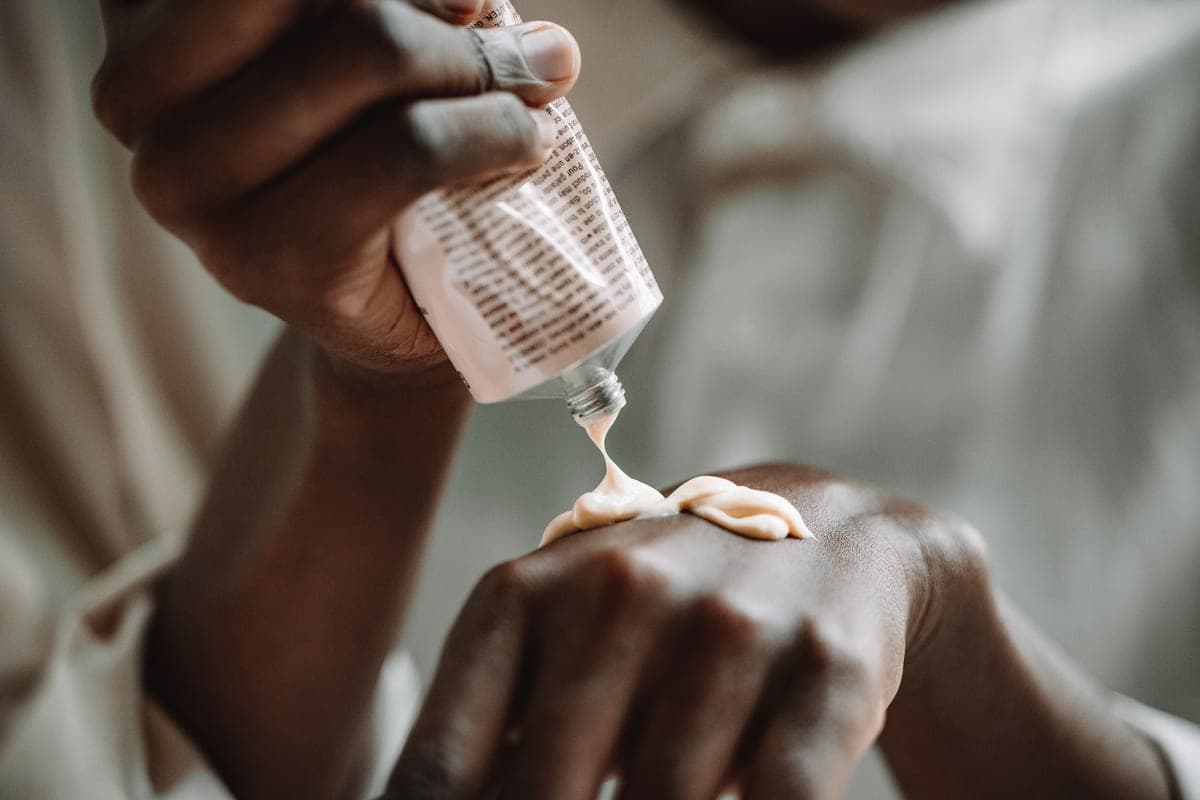
The case for ceramides is arguably stronger on the body than on the face. Shins, forearms and hands lose lipids faster and are washed more aggressively, and eczema most often presents there. A large tub of ceramide body cream applied after showering is one of the highest-value purchases in this entire category.
On the scalp, ceramide-containing leave-ins address the same barrier logic where flaking is dryness rather than seborrheic dermatitis. If flaking is greasy and yellow rather than dry and white, it is a different problem and needs a different product.
Where to Start
Two moisturizers built on the lipid-ratio principle rather than on a ceramide name-check. The full set is in best ceramide moisturizers.