There Is No Definition
This is the whole page in one sentence, so it goes first. No regulator defines clean beauty, no body certifies it, and no standard governs it. In the United States, the FDA states plainly that terms like clean and natural have no regulatory meaning in cosmetics.
What exists instead is a set of retailer standards — each major beauty retailer maintains its own list of excluded ingredients and awards a badge to products that comply. Those lists overlap substantially and disagree at the edges, which means a product can be clean at one retailer and not at another without changing a single ingredient.
None of that makes clean products bad. Many are well formulated, and the fragrance-free ones in particular suit reactive skin. It makes the word uninformative, which is a different criticism and a more useful one.
What the Lists Actually Exclude
The common exclusions, and how well each holds up:
| Excluded | Rationale offered | How it holds up |
|---|---|---|
| Parabens | Endocrine concerns | Weak. Parabens are among the best-studied preservatives and are permitted at low concentrations by every major regulator. Their replacements are less studied. |
| Sulphates (SLS/SLES) | Irritation | Partly fair. SLS is a genuine irritant at high concentration in leave-on products; in a rinse-off cleanser it is far less relevant. |
| Synthetic fragrance | Allergy | Fair, and the most useful exclusion on any of these lists. Fragrance is the most common cause of cosmetic contact allergy. |
| Phthalates | Endocrine concerns | Reasonable as precaution. Largely already removed from cosmetics in most markets. |
| Silicones | Various | Not supported. Silicones are inert, well tolerated and not environmentally persistent in the way the claim usually implies. |
| Chemical UV filters | Absorption concerns | Unresolved, and the trade is real — see chemical vs. mineral sunscreen. |
What to Look For Instead
Four questions do more work than any free-from list.
- Is it fragrance-free? The single most useful filter for reactive skin, and one you can verify on the ingredient list. Note that unscented is not the same — an unscented product may contain masking fragrance.
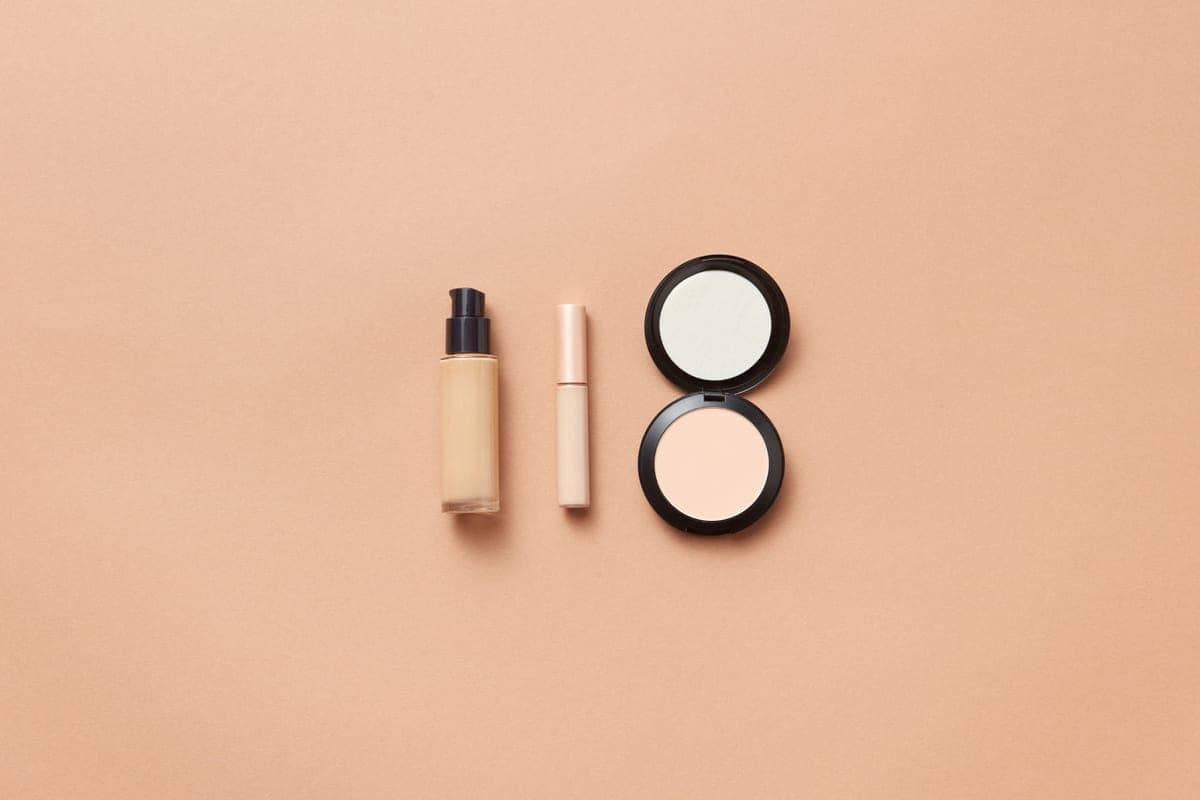
- Does the shade range cover you? A beautifully formulated concealer in the wrong undertone is a worse purchase than an ordinary one in the right shade.
- Does the finish match your skin? Dewy finishes emphasize texture; matte finishes emphasize dryness. Most product disappointment traces here rather than to ingredients.
- Are you relying on its SPF? Makeup SPF is real and is almost never applied at the tested quantity. Treat it as a bonus, never as sun protection.
If you have a specific ingredient you react to, look for that ingredient. That is a far more precise tool than a category badge that excludes forty things you have no problem with and permits the one you do.
When the Badge Is Genuinely Useful
In fairness: a clean badge is a rough proxy for a shorter ingredient list, no added fragrance, and no essential oils. For someone with reactive skin who does not want to read every label, that is a real, if crude, shortcut.
It is also a reasonable filter if you have decided, for your own reasons, to avoid a specific excluded category. The badge does what it says — it just does not mean what the word implies.
What it is not is evidence that a product is safer, gentler or better. If a page tells you otherwise, check who published it.