Skip to content
Glow & Gild

Concern guide

Skincare for Aging Skin

A short list of things with real evidence, and a long list of things sold alongside them. This page is about the short list.

By Sawyer V. · Published September 8, 2026 · Last updated September 8, 2026

A serum bottle in low, elegant light on a dark surface

The short answer

Sunscreen prevents most of what people are trying to correct. A retinoid is the strongest corrective available over the counter. Vitamin C protects and evens tone. Those three cover the evidence; everything else is refinement.

Disclosure: Glow & Gild earns a commission when you buy through links on this page, at no extra cost to you. It does not change which product we recommend, and no brand pays for placement here. Read the full disclosure.

What Is Actually Happening

Skin aging has two components, and separating them explains why some interventions work and others cannot.

Intrinsic aging is chronological: collagen production declines gradually from the mid-twenties, cell turnover slows, and the fat pads that give the face its structure lose volume and shift position. This is genetic and universal, and topical products influence only the first of those three.

Extrinsic aging is environmental damage, and it is overwhelmingly photoaging — UV exposure degrading collagen and elastin and driving uneven pigmentation. Published comparisons of sun-exposed and sun-protected skin on the same person make the size of this effect very clear.

The consequence for a routine: the largest single intervention available is preventing further photoaging, and that is sunscreen. Correction is possible and slower, and no topical product addresses fat pad position or bone remodelling.

The Routine, in Priority Order

  1. Daily sunscreen. Not a step you add once the rest is working — the step the rest depends on. See chemical vs. mineral and zinc oxide.
  2. A [retinoid](/ingredients/retinol) at night. The strongest over-the-counter corrective, with the deepest evidence base of any cosmetic ingredient. Start at 0.2% to 0.3%, two nights a week.
  3. [Vitamin C](/ingredients/vitamin-c) in the morning. Antioxidant protection against the damage that gets past the filter, plus tone and pigment.
  4. A [ceramide](/ingredients/ceramides) moisturizer. Barrier function declines with age, and it is what makes the retinoid sustainable.
  5. [Niacinamide](/ingredients/niacinamide), optionally, for barrier support and pigment.
  6. [Tranexamic acid](/ingredients/tranexamic-acid), if pigment rather than texture is the main visible concern.

What to Expect, Honestly

ConcernWhat topicals can do
Fine lines and textureGenuine improvement over 6 to 12 months with a retinoid
Uneven tone and sun spotsGenuine improvement over 12 weeks and beyond
Dullness and roughnessFast — 4 to 8 weeks
Deep static wrinklesSoftening at best. These are structural.
Laxity and jowlingNothing meaningful. This is fat pad position and ligament change.
Volume lossNothing. No topical adds volume.

Saying that plainly is more useful than implying otherwise. The bottom three rows are what procedures address, and a page that suggests a serum will do the same is selling something.

What Is Overrated in This Category

  • Collagen supplements and collagen creams. Collagen molecules are far too large to penetrate skin, and applied topically they function as a humectant. Whether oral collagen does anything is a separate and unsettled question.
  • Stem cell and growth factor claims. Expensive and, in cosmetic products, poorly substantiated relative to their price.
  • Anything promising a facelift effect. Topicals do not reposition tissue. See microcurrent, which is honest about being use-dependent.
  • Eye creams as a separate category. Frequently a smaller quantity of a similar formula at a higher price. Some are genuinely gentler and worth it; most are a marketing segment.
  • Multi-active serums with twelve ingredients. At the concentrations required to fit twelve actives into one bottle, few of them are present at working levels.

None of that means expensive products are bad. It means the correlation between price and evidence in this category is weak, and several of the picks below are inexpensive.
No product photoNo product photograph available for La Roche-Posay Anthelios UV Correct Face Sunscreen SPF 70

Premium Beauty listing

1The intervention that outweighs the rest

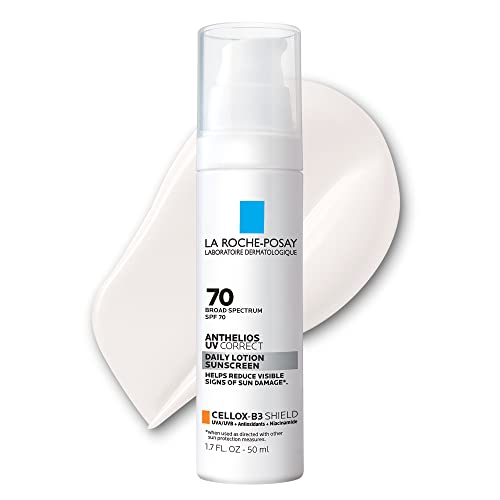
La Roche-Posay Anthelios UV Correct Face Sunscreen SPF 70

What’s in it

  • Broad-spectrum chemical filter system, lightweight fluid texture
  • Includes niacinamide as a stated supporting ingredient
  • No white cast; wearable under makeup

Photoaging is most of what people are trying to correct, and a texture light enough to apply at the tested quantity every day matters more than which filters it uses.

Who it’s not for

Very reactive skin, or anyone who stings on chemical filters. A tinted mineral formula is the correct alternative.

No product photoNo product photograph available for The Ordinary Retinol 0.5% in Squalane

2The corrective, at a published dose

The Ordinary Retinol 0.5% in Squalane

What’s in it

  • Labeled 0.5% retinol, stated on the bottle
  • Squalane carrier with no buffering ingredients
  • Opaque dropper bottle

The collagen effect is a function of cumulative exposure over years, so the product you keep buying beats the product you buy once. A published percentage at this price makes long-term consistency easy.

Who it’s not for

A first retinoid on reactive skin. There is no buffering here at all — a lower percentage in a cream base is the better starting point.

No product photoNo product photograph available for Timeless Skin Care 20% Vitamin C + E Ferulic Acid Serum

3Antioxidant protection and tone

Timeless Skin Care 20% Vitamin C + E Ferulic Acid Serum

What’s in it

  • Published as 20% L-ascorbic acid with vitamin E and ferulic acid
  • Small bottles suited to an ingredient with a short usable life
  • Fragrance-free, simple ingredient list

It copies the reference antioxidant architecture at a price that makes replacing an oxidized bottle a non-event — which for this ingredient matters more than any formulation refinement.

Who it’s not for

Skin that stings at 15%. Going to 20% buys little extra absorption and more irritation; a gentler derivative is the right substitution.

Frequently Asked Questions

Sunscreen, by a wide margin, because prevention outweighs correction. Among correctives, a retinoid has the deepest evidence base of any cosmetic ingredient.

Sources

Who wrote this

By Sawyer V.. An enthusiast who’s genuinely into this: I read the manufacturer documentation, compile the published percentages, and do the arithmetic. No lab coat.

What I don’t do: test products, accept free product, or accept payment for placement. I hold no clinical credential and don’t claim one. How we pick.

Published September 8, 2026 · Last updated September 8, 2026

A serum bottle and dropper on a dark surface with soft side light

Sub-hub

By Concern

Aging, acne and sensitivity — each routed from the problem to the mechanism to the active.

Read it
Amber glass serum bottle with a dropper on a dark surface, lit from one side

Ingredient monograph

Retinol

The most studied over-the-counter retinoid. What each percentage band is for, and how to start without peeling.

Read it
Cut citrus fruit on a dark background lit from the side

Ingredient monograph

Vitamin C

The form matters more than the percentage. L-ascorbic acid versus the derivatives, and how to tell when a bottle is finished.

Read it
Tube of mineral sunscreen resting on dark stone

Ingredient monograph

Zinc Oxide

The only single US-approved filter covering the whole UVA range. What each percentage costs you in white cast.

Read it
Laboratory pipette dispensing a clear serum, dark background

Ingredient monograph

Peptides

Signal, carrier and neurotransmitter peptides, with the evidence for each stated separately rather than as one claim.

Read it
A small set of skincare essentials on a dark surface

Guide

Starter Actives

Four products do most of the work. A twelve-week sequence for adding them, and what to ignore until they are established.

Read it

Nothing here is medical advice. Editorial policy · How we pick · Affiliate disclosure