Skip to content
Glow & Gild

Comparison

Retinol vs Tretinoin

Tretinoin is retinoic acid itself, so it skips the conversion entirely. That makes it stronger, faster and considerably harder to live with.

By Sawyer V. · Published September 8, 2026 · Last updated September 8, 2026

A serum dropper and tube side by side on a dark background

The short answer

Tretinoin is retinoic acid — the active form your skin has to convert retinol into. It works faster and more powerfully, requires a prescription, and has a harder adjustment period. Retinol is the right starting point for almost everyone; tretinoin is the escalation.

Disclosure: Glow & Gild earns a commission when you buy through links on this page, at no extra cost to you. It does not change which product we recommend, and no brand pays for placement here. Read the full disclosure.

The Comparison, in One Table

RetinolTretinoin
What it isA precursor, two conversions from activeRetinoic acid itself — the active form
AvailabilityOver the counter, everywherePrescription in the US, UK and most markets
Typical strengths0.2% to 1%0.025%, 0.05%, 0.1%
Time to visible change8 to 12 weeks for texture6 to 8 weeks, sometimes faster
Adjustment period2 to 6 weeks, manageable4 to 12 weeks, frequently difficult
Evidence baseSubstantialThe strongest of any topical anti-aging ingredient
Best forAlmost everyone starting outEstablished acne, significant photoaging, plateaued on retinol

The honest summary: tretinoin does what retinol does, more and sooner. The question is whether the extra irritation and the medical appointment are worth it for your situation, and for many people the answer is genuinely no.

When to Choose Retinol

You have never used a retinoid. Starting on tretinoin is possible under medical supervision, and it is a harder road than most people expect. Building tolerance on retinol first makes the eventual step up far more comfortable if you take it.

Your concern is maintenance rather than correction. For keeping texture even and fine lines soft, a consistently used retinol does the job. The gap between the two widens most on established damage, not on prevention.

You have reactive skin, rosacea or eczema. Tretinoin is frequently intolerable on skin that is already inflamed, and pushing through is not the correct move. Azelaic acid or bakuchiol are the usual alternatives.

Consistency is your limiting factor. A retinoid you abandon after three weeks is worth nothing. If you know that a difficult adjustment period will end with the tube in a drawer, the gentler option is the better one, and that is not a compromise.

When Tretinoin Is Worth the Prescription

Established inflammatory or comedonal acne. This is tretinoin's original indication and where the evidence is strongest. Over-the-counter retinol is a poor substitute for genuine acne treatment.

Significant photoaging. Deep lines, mottled pigmentation and sun-damaged texture respond measurably better to tretinoin, and the studies supporting that are decades deep.

You have genuinely plateaued. If you have used 1% retinol four or more nights a week for six months and want more, the ladder has one rung left. Note that retinal sits between the two and may be enough — see retinol vs. retinal.

Can You Use Both?

No, and there is no benefit in trying. Both act on the same retinoid receptors, tretinoin being the endpoint of the pathway retinol travels down. Using them together adds irritation without adding effect.

The one legitimate arrangement is by area and strength: a prescription tretinoin on the face and a cheaper retinol product on the body or the backs of the hands, where the surface area makes prescription cost impractical.

If you are moving from retinol to tretinoin, stop the retinol. Do not taper both at once — you will not know which is causing what.

If You Do Switch

  1. Start at the lowest strength, usually 0.025%, twice a week. Your retinol tolerance helps but does not transfer directly.
  2. Buffer. Applying moisturizer first costs some potency and buys a great deal of consistency.
  3. Expect a genuine adjustment period. Four to twelve weeks of some flaking and tightness is normal at the start; sustained burning is not.
  4. Do not add acids. Suspend exfoliants entirely until you are stable.
  5. Sunscreen daily, without exception. Tretinoin increases photosensitivity and the whole point is preventing further damage. See zinc oxide.
  6. Give it six months before judging the anti-aging effect. The acne effect shows sooner.

A Pick for the Over-the-Counter Side

Tretinoin cannot be bought without a prescription, so there is nothing for us to link on that side of this comparison — and we would not link a route around a prescription requirement if there were. What follows are the two strongest over-the-counter options: the top of the retinol range, and the retinal rung that sits between it and a prescription.

No product photoNo product photograph available for Paula's Choice 1% Retinol Treatment

Premium Beauty listing

1The top of the over-the-counter retinol range

Paula's Choice 1% Retinol Treatment

What’s in it

  • Labeled 1% retinol, the practical ceiling for over-the-counter use
  • Peptides and licorice extract as supporting ingredients
  • Opaque airless packaging

If you are considering a prescription because retinol has stopped delivering, first make sure you have actually reached the top of the retinol range consistently. Many people conclude they have plateaued at 0.5% used twice a week.

Who it’s not for

Anyone not already using 0.5% comfortably several nights a week. 1% has diminishing returns and a sharply higher irritation risk, and buying it early usually shortens the retinoid habit rather than strengthening it.

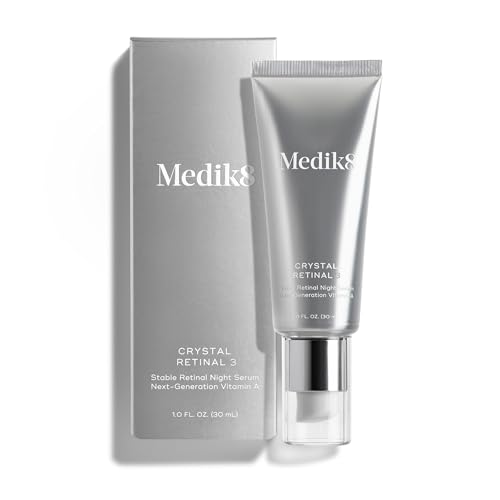
No product photoNo product photograph available for Medik8 Crystal Retinal

Premium Beauty listing

2The rung between retinol and a prescription

Medik8 Crystal Retinal

What’s in it

  • Sold as a numbered ladder of published retinaldehyde concentrations
  • Encapsulated delivery, published by the brand as the stability mechanism
  • Airless pump packaging

Before booking an appointment, retinal is worth trying — one conversion step from the active form, available without a prescription, and stepped so you can move up gradually.

Who it’s not for

Anyone with established acne. Adult acne is a medical condition with an evidenced prescription treatment, and working through cosmetic options first is a slower route to the same place.

Frequently Asked Questions

No. Tretinoin is retinoic acid — the active form your skin converts retinol into over two steps. Tretinoin skips the conversion entirely, which makes it stronger and harder to tolerate.

Sources

Who wrote this

By Sawyer V.. An enthusiast who’s genuinely into this: I read the manufacturer documentation, compile the published percentages, and do the arithmetic. No lab coat.

What I don’t do: test products, accept free product, or accept payment for placement. I hold no clinical credential and don’t claim one. How we pick.

Published September 8, 2026 · Last updated September 8, 2026

Amber glass serum bottle with a dropper on a dark surface, lit from one side

Ingredient monograph

Retinol

The most studied over-the-counter retinoid. What each percentage band is for, and how to start without peeling.

Read it
Two amber serum bottles side by side on a dark surface

Comparison

Retinol vs Retinal

One conversion step apart, sold at percentages that look ten times different. Which rung of the ladder you should be on.

Read it
Glass bottle of a clear exfoliating liquid on a dark surface

Ingredient monograph

Azelaic Acid

Redness, acne and pigment from one molecule, and the standard retinoid substitute in pregnancy. 10% versus 15%, honestly.

Read it
Cleansing products on a dark background in low light

Concern guide

Skincare for Acne

Plug or inflammation — the kind of spot decides the ingredient. Plus what fungal folliculitis looks like and why it matters.

Read it
Amber dropper bottle of retinol serum lit from one side on a dark surface

Roundup

Best Retinol Serums

Five retinol picks grouped by buyer, each with a stated negative, plus the packaging mistake that wastes the most money.

Top pick: The Ordinary Retinol 0.5% in Squalane

Nothing here is medical advice. Editorial policy · How we pick · Affiliate disclosure