What Hyaluronic Acid Actually Does
Hyaluronic acid is a glycosaminoglycan that occurs naturally in skin and connective tissue, where it holds water in the extracellular matrix. Applied topically, it does one thing: it binds water molecules and keeps them at the surface.
That produces an immediate, visible plumping effect on fine dehydration lines — the ones that appear when skin is dry and vanish when it is not. It also improves surface smoothness and makes makeup sit better. What it does not do is repair the barrier, change the skin's own hydration capacity, or last beyond the day.
Molecular Weight: The Thing That Actually Varies
Percentage is close to meaningless here. What differentiates one hyaluronic acid serum from another is the size of the molecules and whether the formula uses several sizes at once.
| Type | Behavior | Effect |
|---|---|---|
| High molecular weight (above ~1,000 kDa) | Stays on the surface and forms a hydrating film | Immediate smoothness and a light film-forming feel. No depth. |
| Low molecular weight (~50 to 300 kDa) | Penetrates the upper stratum corneum | Longer-lasting surface hydration. Some formulas report mild irritation at very low weights. |
| Sodium hyaluronate | The salt form — smaller and more stable than the acid | The form actually used in most products, whatever the marketing says. |
| Hydrolyzed hyaluronic acid | Fragmented into very small pieces | Deepest penetration of the family, and the most commonly overclaimed. |
| Sodium acetylated hyaluronate | Modified for better substantivity | Sticks to skin longer, so the effect persists through the day. |
A well-built serum uses a blend, so you get the surface film and the slightly deeper reservoir at once. A formula that lists three or four hyaluronate variants is not padding the label — that is the actual design.
On percentage: 2% is roughly the practical ceiling before texture becomes unpleasantly tacky, and most good serums sit between 0.1% and 1%. A brand advertising a very high hyaluronic acid percentage is advertising stickiness.
Forms and Alternatives
- Water-based serum. The standard. Applied to damp skin, sealed with a moisturizer.
- Inside a moisturizer. Convenient and often the better choice, because the occlusive layer is already there.
- In a toner or essence. A light hydrating step in a longer routine.
- Polyglutamic acid is the usual named alternative — a different humectant that holds more water per molecule and forms a stronger surface film.
- Glycerin is the unglamorous competitor and is, on the evidence, at least as effective a humectant at a fraction of the cost. Most hyaluronic acid serums contain glycerin anyway.
How to Use Hyaluronic Acid
- Apply to damp skin, not dry. This is the whole trick — you are giving the humectant water to bind that is not coming from your dermis.
- Follow immediately with a moisturizer or an occlusive. Unsealed humectant in dry air is counterproductive.
- Use it morning and night if you like; there is no time-of-day preference and no adjustment period.
- If your skin feels tight an hour later, you either skipped the seal or the room is very dry. Add an occlusive, do not add more serum.
- In very dry or cold climates, consider using it only at night under a heavier cream, or switching to a glycerin-and-ceramide moisturizer instead.
- It layers under sunscreen and makeup without issue once sealed.
Who It Suits, and Who Should Avoid It
Hyaluronic acid suits dehydrated skin of any type — including oily skin, which is frequently dehydrated and oily at the same time. It suits people using drying actives, and it suits anyone who wants a hydration step that does not add oil.
- Genuinely dry skin needs more than this. Dry skin lacks lipids, not water. Ceramides and squalane address that; hyaluronic acid does not.
- If you live somewhere very dry, treat it as a step inside a routine rather than a product on its own.
- If you want long-term change to lines, tone or texture, this is the wrong ingredient. The plumping is real and temporary.
- Filler and injectable hyaluronic acid are unrelated to what a serum does. Topical HA does not reach the dermis in any meaningful quantity.
Pairings and Conflicts
Hyaluronic acid conflicts with nothing. Its usefulness is almost entirely about sequencing.
| Combination | Verdict |
|---|---|
| HA + a moisturizer on top | Required, not optional. The moisturizer is what makes the humectant work. |
| HA + niacinamide | Good. Completely different jobs — see niacinamide vs. hyaluronic acid. |
| HA + retinoid | Good. Hydration offsets some of the retinoid dryness. Retinol goes on first, on dry skin. |
| HA + acids | Good. Apply the acid, wait, then hydrate. |
| HA + vitamin C | Fine. No interaction. |
| HA alone, in dry air, unsealed | The one genuinely bad configuration. |
Beyond the Face: Lips, Hands and Hair
Hyaluronic acid works on lips and hands under exactly the same rule: it needs sealing. In a lip product it is almost always paired with a wax or butter, which is why lip formulas rarely have the drying failure mode that bare face serums do.
In hair products it acts as a lightweight humectant for the hair shaft, adding softness without weight. The effect is modest and washes out, and it should not be confused with any structural repair claim.
Where to Start
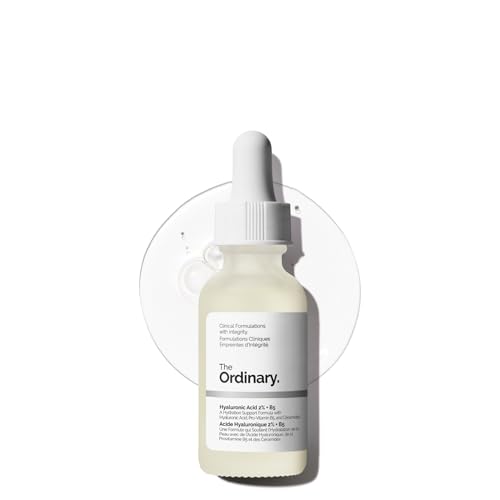
Two serums that publish their molecular-weight approach rather than just a percentage. More in best hyaluronic acid serums.