Percentage is close to meaningless here. What separates these is the molecular weight blend and whether you will still be using it in July.
By Sawyer V. · Published September 8, 2026 · Last updated September 8, 2026
The short answer
The best hyaluronic acid serum uses several molecular weights at once and has a texture you will tolerate daily. Percentage barely matters — above about 2% total, you are mostly buying stickiness. Always seal it with a moisturizer.
Disclosure: Glow & Gild earns a commission when you buy through links on this page, at no extra cost to you. It does not change which product we recommend, and no brand pays for placement here. Read the full disclosure.
Amazon price as of October 23, 2026, 03:12 UTC — details
How We Picked
We ranked on whether the brand publishes its molecular weight approach rather than just a percentage, then on texture, because a tacky serum is one you stop using in warm weather. Supporting humectants and fragrance-free formulation were the tiebreakers.
Everyone in this category says they tested twenty of these. We have not tested any, and we say so. What we did instead: compiled the published concentrations and ingredient lists, checked each claim against what the formula can actually support, and wrote down who each product is wrong for. The full method is published so you can check it.
Quick Picks
The short answer, by buyer. Select any row for the full write-up.
#
Product
Best for
Where to buy
1
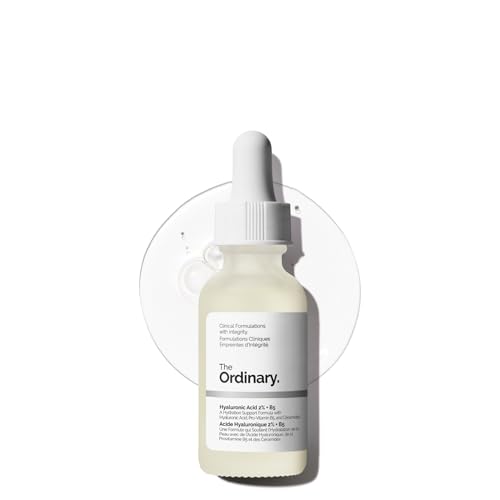
The Ordinary Hyaluronic Acid 2% + B5It publishes the thing that actually matters — a multi-weight blend rather than a single fraction — and does so at a price where sealing it under a proper moisturizer is still cheaper than most single serums..
Amazon price as of October 23, 2026, 03:12 UTC — details
4
La Roche-Posay Hyalu B5 SerumThe madecassoside and panthenol content makes this more than a humectant, which is the reason to consider it if you like the texture and tolerate fragrance..
Amazon price as of October 23, 2026, 03:12 UTC — details
#ad — buying through these links earns us a commission at no cost to you. Prices come from Amazon’s own product data and show the date they were checked; without a current one, the button says check price.
Molecular Weight Is the Variable
Hyaluronic acid serums are marketed on percentage and differentiated by something else entirely. What actually varies between products is the size of the molecules and whether the formula uses several sizes together.
High molecular weight stays on the surface and forms a hydrating film. Immediate smoothness, no depth.
Low molecular weight penetrates the upper stratum corneum for longer-lasting surface hydration.
A blend of both gives you the film and the slightly deeper reservoir at once. A formula listing three or four hyaluronate variants is not padding its label — that is the actual design.
On percentage: 2% total is about the practical ceiling before the texture turns unpleasantly tacky, and most good serums sit between 0.1% and 1%. A brand advertising a very high hyaluronic acid percentage is advertising stickiness. The full breakdown is on the hyaluronic acid monograph.
The Sealing Rule, Which Is Not Optional
A humectant binds water from wherever it can find it. Applied to dry skin, in dry air, with nothing over the top, the nearest available water is the deeper layers of your own skin — so a hyaluronic acid serum used bare can leave you drier than before.
Two rules follow, and they matter more than which product on this list you buy. Apply to damp skin, so the humectant has water to bind that is not coming from your dermis. Follow immediately with a moisturizer, so the water it holds cannot evaporate away.
This also explains why genuinely dry skin is often disappointed by this category. Dry skin lacks lipids, not water. Ceramides and squalane address that; hyaluronic acid does not.
What to Look For When Choosing Your Own
Several hyaluronate variants on the ingredient list, not one.
A texture you will use in summer. The most common reason a hyaluronic acid serum ends up unused is that it feels tacky in humid weather.
Supporting humectants — glycerin, panthenol, polyglutamic acid, betaine. These are not filler; glycerin in particular is at least as effective a humectant as hyaluronic acid.
Fragrance-free, since this is a step most people use twice daily.
A sensible price. Hyaluronic acid is inexpensive, the effect is temporary by design, and there is no premium version that changes that.
Something to consider before buying at all: if your moisturizer already contains glycerin and hyaluronic acid, which most do, a separate serum may be adding a step rather than a result.
1 — A published multi-weight blend at the lowest cost
The Ordinary Hyaluronic Acid 2% + B5
What’s in it
Published as low, medium and high molecular weight hyaluronic acid at 2% total
Panthenol added as a secondary humectant
Water-based, fragrance-free, dropper bottle
It publishes the thing that actually matters — a multi-weight blend rather than a single fraction — and does so at a price where sealing it under a proper moisturizer is still cheaper than most single serums.
Who it’s not for
Anyone who dislikes a tacky finish. At 2% total this sits at the sticky end of the range, and in humid weather it stays noticeable under makeup.
Formulated at a lower hyaluronic acid load than a maximum-percentage serum, prioritizing texture
Built on the brand's mineralizing thermal water rather than plain water
Available fragrance-free; pump packaging
Hydration you actually use every day beats hydration that feels unpleasant under sunscreen. This is the version people keep using in summer, which for a daily step is the only metric that matters.
Who it’s not for
Dry skin looking for a single-product answer. This is a light hydrating layer, not a moisturizer, and on genuinely dry skin it needs a cream over it or it does nothing useful.
Built on polyglutamic acid, a humectant that holds more water per molecule than hyaluronic acid
Forms a stronger surface film, which improves how makeup sits
Fragrance-free, tube packaging
Polyglutamic acid is the straightforward upgrade in this category and is far less marketed than hyaluronic acid. The film-forming quality also makes it the better choice under makeup, where a plain HA serum can pill.
Who it’s not for
Anyone who dislikes a filmy finish. The stronger surface film that makes this effective is also more noticeable on the skin than a light HA serum, and some people find it occlusive-feeling.
4 — Hyaluronic acid with madecassoside and panthenol
La Roche-Posay Hyalu B5 Serum
What’s in it
Combines two molecular weights of hyaluronic acid with vitamin B5 (panthenol) and madecassoside
Contains parfum and alcohol denat. — check the list if you are reactive
Pump packaging, 1.7 oz
The madecassoside and panthenol content makes this more than a humectant, which is the reason to consider it if you like the texture and tolerate fragrance.
Who it’s not for
Skin that is actively irritated by actives, and fragrance-sensitive skin generally — parfum and denatured alcohol are both on the ingredient list, which is the wrong combination for a barrier mid-recovery. Also anyone buying purely on cost per milliliter, since this is several times the price of a plain multi-weight HA serum that hydrates just as well.
Above roughly 2% total hyaluronic acid, the additional material does not hydrate better — it makes the serum tackier and harder to layer, and in dry air it increases the risk of the humectant pulling water out of your skin rather than into it. A 5% or 10% claim on the front of a bottle is a number competing for attention, not a formulation decision. The products that hydrate best in this category use a blend of molecular weights at a modest total, plus supporting humectants like glycerin and panthenol. If a brand is leading with a large percentage, it is telling you what it thinks you will buy rather than what works.
Frequently Asked Questions
Percentage is the wrong question. Most good serums sit between 0.1% and 1%, and above about 2% the texture turns tacky. The molecular weight blend matters far more.
It can, applied to dry skin in dry air with nothing over it. Apply to damp skin and always follow with a moisturizer.
It holds more water per molecule and forms a stronger surface film, so it often performs better in a single layer. It is also less widely available and more expensive.
Yes, morning and night. There is no adjustment period, no photosensitivity and no interaction with other actives.
Often not. If your moisturizer already contains glycerin and hyaluronate — most do — a separate serum may be adding a step rather than a result.
By Sawyer V.. An enthusiast who’s genuinely into this: I read the manufacturer documentation, compile the published percentages, and do the arithmetic. No lab coat.
What I don’t do: test products, accept free product, or accept payment for placement. I hold no clinical credential and don’t claim one. How we pick.
Published September 8, 2026 · Last updated September 8, 2026