The Comparison, in One Table
| Bakuchiol | Retinol | |
|---|---|---|
| Chemistry | A meroterpene phenol. Not a retinoid. | A vitamin A derivative. A retinoid. |
| Mechanism | Upregulates some of the same downstream pathways by a different route | Converts to retinoic acid and binds retinoid receptors |
| Evidence base | A small number of trials, the best-known with 44 participants over 12 weeks | Decades of clinical literature |
| Irritation | Low. Usually no adjustment period | Moderate. A real adjustment period |
| Photostability | Photostable — morning use is fine | Degrades in UV; night use only |
| Pregnancy | Often marketed as safe; the specific data is limited | Avoided as standard clinical advice |
| Typical strengths | 0.5% to 2% | 0.2% to 1% |
What the Headline Study Actually Did
Almost every claim that bakuchiol matches retinol traces to one trial, and it is worth knowing its shape rather than its headline.
It compared 0.5% bakuchiol applied twice daily against 0.5% retinol applied once daily, over twelve weeks, in 44 participants. It found comparable improvement in wrinkle area and pigmentation, with significantly less scaling and stinging in the bakuchiol group.
That is a genuine, peer-reviewed result and it is the reason the ingredient is taken seriously. It is also one small study, at one concentration, against one retinol dose, with bakuchiol applied twice as often. Treating it as proof of equivalence overstates what a single trial of 44 people can establish, and we would rather say so than repeat the marketing line.
When to Choose Bakuchiol
Retinoids have repeatedly failed on your skin. If you have tried a low-percentage retinol in a cream base, buffered it, and still could not get past the adjustment period, bakuchiol is the sensible next thing to try rather than a fourth retinol.
You have rosacea-prone or highly reactive skin. The low irritation profile is the ingredient's clearest advantage, and it is a real one.
You want a morning-usable anti-aging active. Bakuchiol is photostable and does not increase photosensitivity, so it can sit in a morning routine where a retinoid cannot. For people whose evenings are unreliable, that is a genuine practical advantage.
One thing that is not a good reason: assuming it is pregnancy-safe. It is widely marketed that way and the specific data is thin. Azelaic acid has a far better-established position there.
When to Choose Retinol
If you tolerate it, use it. This is the whole verdict. Retinol has decades of replicated evidence behind it, a well-understood dose-response relationship, and published concentrations you can compare across products. None of that is true of bakuchiol.
If your concern is significant photoaging. The gap between the two is widest on established damage, where retinoid evidence is deepest and bakuchiol's is essentially untested.
If you want to know what dose you are getting. Bakuchiol has no established dose-response curve — there is no evidence that 2% outperforms 1%, and a brand advertising a higher percentage is advertising a number. Retinol at least has a ladder you can climb deliberately.
Can You Use Both?
You can, and combination products exist on the reasoning that bakuchiol may reduce retinoid irritation. That is plausible and not yet well demonstrated.
If you already tolerate a retinoid, adding bakuchiol is largely redundant — you are paying for a second, weaker route to the same downstream effect. If you are struggling with a retinoid, a combination product is a reasonable thing to try, but so is simply lowering the retinol percentage.
The one clean combination is by time of day: bakuchiol in the morning, retinol at night. That uses bakuchiol's photostability for something retinol structurally cannot do.
A Pick for Each Side
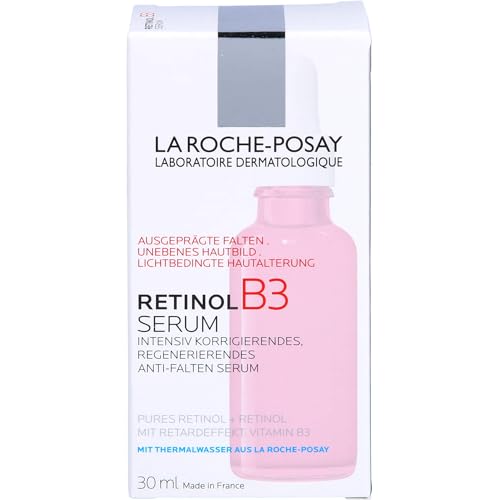
One bakuchiol with a published percentage and one retinol with a published percentage, so either choice is one you can evaluate.