Skip to content
Glow & Gild

Comparison

Salicylic Acid vs Benzoyl Peroxide

Different kinds of spot need different ingredients. The distinction is whether the spot is inflamed, and it decides the whole answer.

By Sawyer V. · Published September 8, 2026 · Last updated September 8, 2026

Acne treatment products arranged on a dark surface

The short answer

Salicylic acid clears the plug — blackheads and closed comedones. Benzoyl peroxide kills the bacteria driving inflamed spots — papules and pustules. Match the ingredient to the kind of spot you actually get, and use both if you get both.

Disclosure: Glow & Gild earns a commission when you buy through links on this page, at no extra cost to you. It does not change which product we recommend, and no brand pays for placement here. Read the full disclosure.

The Comparison, in One Table

Salicylic acidBenzoyl peroxide
MechanismOil-soluble keratolytic — dissolves the plug inside the poreReleases oxygen, killing C. acnes bacteria
Best forBlackheads, closed comedones, congestionInflamed papules and pustules — red, sore spots
Typical strengths0.5% to 2%2.5% to 10%
Speed4 to 8 weeksIndividual spots in days; overall pattern in 4 to 6 weeks
DryingModerateHigh — the main reason people stop
Bleaches fabricNoYes — towels, pillowcases and clothing
Bacterial resistanceNot applicableNone known, which is why it is used alongside antibiotics

Work Out Which Kind of Spot You Get

This is the whole decision, and it takes about ten seconds in a mirror.

  • Blackheads — open, dark, flat. A plug. Salicylic acid.
  • Closed comedones — small skin-colored bumps, often across the forehead or chin, not red and not sore. Also a plug. Salicylic acid.
  • Papules — red, raised, sore, no visible head. Inflammation. Benzoyl peroxide.
  • Pustules — red with a white or yellow head. Inflammation plus bacteria. Benzoyl peroxide.
  • Nodules and cysts — deep, painful, lasting weeks, often scarring. Neither. This needs a clinician, and treating it with over-the-counter products delays effective care.

Most people get a mixture, which is why the answer for most people is both — applied to different areas or at different times.

When Benzoyl Peroxide Is the Answer

Your spots are red and sore. Inflammation means bacteria are involved, and benzoyl peroxide is the most effective over-the-counter answer to that specifically.

You want speed on an individual spot. A short-contact application on a papule works faster than anything else available without a prescription.

You are using a topical antibiotic. Benzoyl peroxide is routinely prescribed alongside antibiotics because no bacterial resistance to it has been demonstrated, and it reduces the resistance risk of the antibiotic.

Two practical warnings. It bleaches fabric — use white towels and pillowcases, and expect to ruin a t-shirt eventually. And it is drying, which is the main reason people abandon it. Start at 2.5% and moisturize.

When Salicylic Acid Is the Answer

Your problem is congestion rather than inflammation. Blackheads and closed comedones are structural plugs, not infections, and an antibacterial does nothing for them.

Your skin is oily and you want maintenance rather than treatment. A leave-on BHA used two or three times a week keeps pores clear; benzoyl peroxide used that way is unnecessarily harsh.

You need to treat a large area. Body acne is easier to manage with a salicylic acid spray or wash than with benzoyl peroxide, which bleaches everything it touches.

You cannot tolerate the dryness of benzoyl peroxide. Salicylic acid is drying too, but noticeably less so at typical concentrations.

Using Both

Common, effective, and drying. The two together are a legitimate acne routine, and the whole skill is managing the irritation.

  1. Separate them by time of day. Salicylic acid in the morning, benzoyl peroxide at night, or the reverse. Do not layer them in one application.
  2. Or separate by area. Salicylic acid on the congested zones, benzoyl peroxide on the inflamed ones.
  3. Moisturize after both. A ceramide moisturizer is not optional in this routine.
  4. Start one at a time, two to three weeks apart.
  5. Never combine benzoyl peroxide with a retinoid in the same application — benzoyl peroxide oxidizes retinoids on contact. Different times of day.
  6. Consider [azelaic acid](/ingredients/azelaic-acid) instead if the combination is too drying. It is antibacterial and keratolytic at once, and much gentler.

A Pick for Each Side

One of each, both at sensible concentrations rather than the highest available.
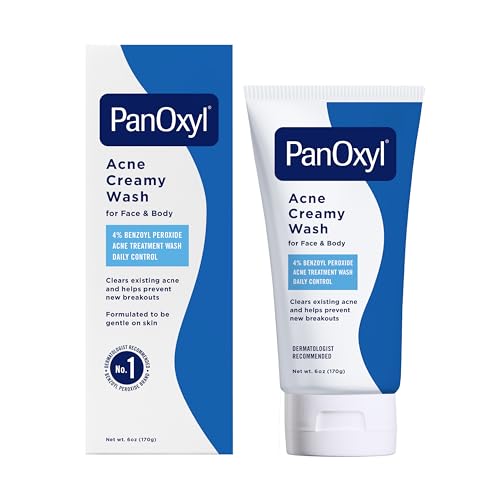
No product photoNo product photograph available for PanOxyl Acne Foaming Wash 4% Benzoyl Peroxide

1The benzoyl peroxide side, as a wash

PanOxyl Acne Foaming Wash 4% Benzoyl Peroxide

What’s in it

  • Labeled 4% benzoyl peroxide in a rinse-off wash
  • A 10% version exists; the lower concentration is the sensible starting point
  • Suitable for face, chest and back

A wash format limits contact time, which is the practical way to get benzoyl peroxide's antibacterial effect without its full drying cost — and it makes treating a back or chest realistic.

Who it’s not for

Anyone with dry or reactive skin who needs leave-on treatment. A wash is a lower dose by design, so if inflamed spots are severe this may be too gentle, and a leave-on 2.5% gel is the next step.

No product photoNo product photograph available for COSRX BHA Blackhead Power Liquid

2The salicylic acid side, gently

COSRX BHA Blackhead Power Liquid

What’s in it

  • Uses betaine salicylate, a salicylic acid derivative, published at 4%
  • Converts more slowly than free salicylic acid, so it is milder in daily use
  • Includes niacinamide and willow bark water

For pore maintenance rather than a course of treatment, a gentler daily BHA is the right tool — and pairing it with a drying benzoyl peroxide is far more sustainable than stacking two harsh products.

Who it’s not for

Anyone who wants a directly comparable dose. 4% betaine salicylate is not 4% salicylic acid and the conversion is not published as a fixed ratio.

Frequently Asked Questions

Depends on the spot. Salicylic acid for blackheads and closed comedones; benzoyl peroxide for red, sore, inflamed spots. Most people get both and need both.

Sources

Who wrote this

By Sawyer V.. An enthusiast who’s genuinely into this: I read the manufacturer documentation, compile the published percentages, and do the arithmetic. No lab coat.

What I don’t do: test products, accept free product, or accept payment for placement. I hold no clinical credential and don’t claim one. How we pick.

Published September 8, 2026 · Last updated September 8, 2026

Clear liquid exfoliant in a glass bottle on a dark background

Ingredient monograph

Salicylic Acid

The oil-soluble acid, which is why it works inside a pore. What 0.5%, 1% and 2% are each for.

Read it
Cleansing products on a dark background in low light

Concern guide

Skincare for Acne

Plug or inflammation — the kind of spot decides the ingredient. Plus what fungal folliculitis looks like and why it matters.

Read it
Glass bottle of a clear exfoliating liquid on a dark surface

Ingredient monograph

Azelaic Acid

Redness, acne and pigment from one molecule, and the standard retinoid substitute in pregnancy. 10% versus 15%, honestly.

Read it
Clear serum texture pooled on dark glass

Ingredient monograph

Niacinamide

Barrier, oil, pores and pigment from one cheap molecule. Why 5% is the evidence-backed dose and 10% is the marketing one.

Read it
A swatch of rich cream on dark stone

Ingredient monograph

Ceramides

The lipid your barrier is made of. Why the cholesterol and fatty acid alongside it matter more than the ceramide percentage.

Read it

Nothing here is medical advice. Editorial policy · How we pick · Affiliate disclosure