What Benzoyl Peroxide Actually Does
Acne has four drivers: excess oil, plugged follicles, inflammation, and the proliferation of Cutibacterium acnes inside those plugged follicles. Benzoyl peroxide addresses the fourth directly. It decomposes on the skin and releases oxygen into the follicle, which the bacteria cannot tolerate, and it has mild keratolytic activity that helps with the plug as well.
Its most underrated property is what it does not do: bacteria do not develop resistance to it. That is why dermatologists pair it with topical antibiotics rather than choosing between them — the benzoyl peroxide protects the antibiotic's usefulness. It is also why a product that worked for you three years ago will still work now, which is not true of every acne treatment.
| Acne driver | Does benzoyl peroxide help? | Better tool if not |
|---|---|---|
| C. acnes bacteria | Yes — this is its job | — |
| Inflammatory papules and pustules | Yes | — |
| Plugged pores and blackheads | Partly | Salicylic acid |
| Excess oil | No | Niacinamide, or a retinoid |
| Post-acne dark marks | No | Azelaic acid or niacinamide |
| Cystic or scarring acne | Not on its own | See a clinician |
Strength: Why 2.5% Is Usually the Right Answer
Over-the-counter benzoyl peroxide is sold between 2.5% and 10%, and the shelf is dominated by the high end because a bigger number sells. The evidence does not support that preference. A set of three double-blind studies across 153 patients compared 2.5%, 5% and 10% gels and found 2.5% equivalent to both higher strengths at reducing inflammatory lesions — while producing less scaling, redness and burning than the 10%.
| Strength | Effectiveness on inflammatory acne | Irritation | Best use |
|---|---|---|---|
| 2.5% | Equivalent to 5% and 10% in published comparison | Lowest | Face, daily, most people |
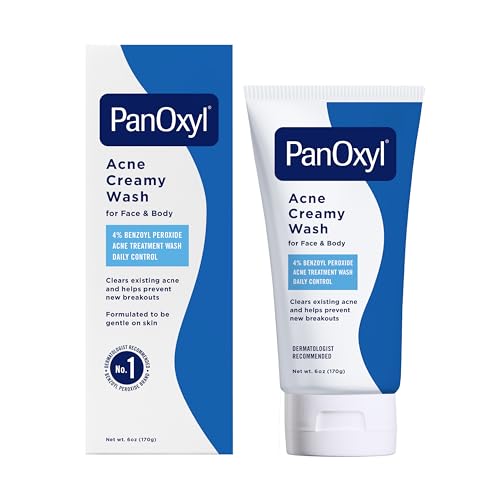
| 4% | Comparable | Low to moderate | Face wash, sensitive skin |
| 5% | Comparable | Moderate | Leave-on treatment |
| 10% | No better in that comparison | Highest | Body: chest, back, shoulders |
The practical reading: start at the lowest strength you can find, and treat 10% as a body product. Skin that is peeling and stinging is skin that stops using the treatment, and the treatment only works while you are using it.
Formats, and Why the Wash Is Usually Right First
- Foaming or creamy wash. Short contact time, easy on the barrier, and the only practical way to treat a back. The sensible starting format.
- Leave-on gel or cream. More effective on stubborn spots because contact is continuous, and correspondingly more irritating.
- Cleansing bar. Cheap and convenient for the body, less controllable on a face.
- Spot treatment. Fine, but acne forms days before you see it, so treating the whole affected area beats dotting individual spots.
- Combined with adapalene. Sold as a single prescription-strength-style gel in the US; the two are formulated to be stable together.
- Combined with a topical antibiotic. Prescription territory, and the pairing exists specifically to prevent resistance.
A wash gives you most of the benefit with a fraction of the irritation, which is why it is the format to fail on first. If a 4% wash used daily for twelve weeks has not moved your acne, that is the point at which a leave-on earns its place — not before.
The Benzene Question, Honestly
In March 2025 the FDA published the results of its own testing of 95 acne products containing benzoyl peroxide, after third-party results raised concerns about benzene, a known carcinogen. This is worth stating precisely, because the coverage was not always careful.
| What the FDA found | Detail |
|---|---|
| Products tested | 95 benzoyl peroxide acne products |
| Undetectable or extremely low benzene | More than 90% of them |
| Elevated benzene | Six products |
| Action taken | Limited voluntary recalls at the retail level |
| Consumer instruction | No instruction to discard product already owned |
| FDA's risk assessment | Cancer risk from this exposure described as very low, even with decades of daily use |
The mechanism matters more than the headline, because it is actionable: benzoyl peroxide can degrade into benzene under certain conditions, notably extreme temperatures. That makes storage a real variable rather than a footnote.
- Do not leave it in a hot car, a gym bag in summer, or a windowsill.
- Do not keep it in a steamy shower long-term; a cabinet is better than a ledge.
- Replace it at its expiry date rather than finishing a three-year-old tube.
- Buy smaller tubes you will finish, rather than value packs that sit for years.
- Check recall notices if you want certainty about a specific product, since the recalls were product-specific rather than category-wide.
How to Use It Without Wrecking Your Skin
- Start with a wash, every other day, for the first two weeks.
- Move to daily once skin tolerates it, and only then consider a leave-on.
- Treat the whole area, not individual spots. New spots are already forming where you can not see them yet.
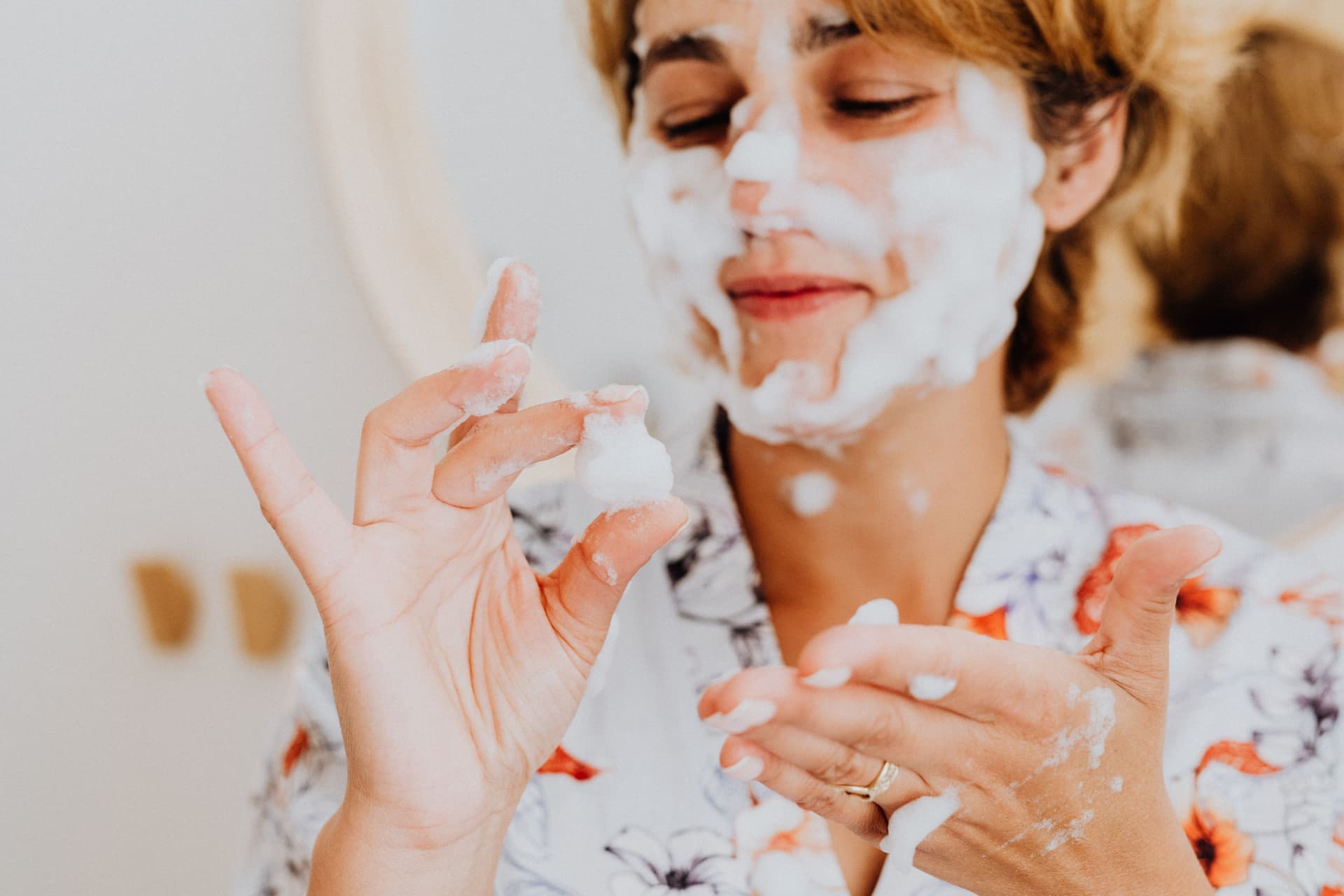
- Leave a wash on for twenty to sixty seconds before rinsing — long enough to work, short enough to be gentle.
- Moisturize afterwards, every time. The barrier damage is what makes people quit.
- Sunscreen every morning. Treated skin is more reactive, and post-acne marks darken in sun.
- Give it twelve weeks before judging. Acne treatments are assessed in months.
And the one that nobody warns you about until it happens: benzoyl peroxide bleaches fabric permanently. Towels, pillowcases, T-shirt collars, the sleeve of anything you dry your hands on. Use white towels and white pillowcases, and wash your hands after applying it.
Who It Suits, and Who Should Skip It
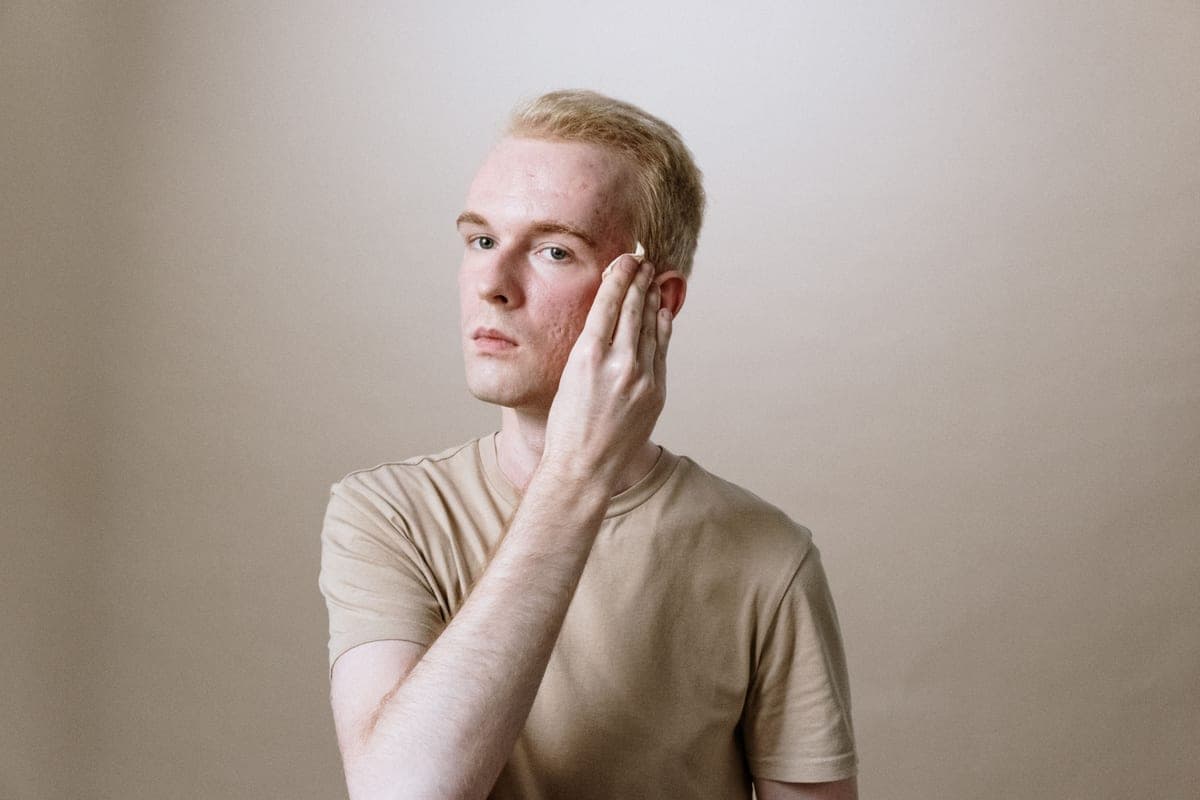
Benzoyl peroxide suits inflammatory acne — the red, raised, sometimes pus-filled kind — on faces, chests, shoulders and backs. It is the single most useful over-the-counter product for that presentation, and it is cheap.
- Rosacea-prone skin should usually avoid it. It commonly aggravates rosacea, where azelaic acid is a treatment rather than an irritant.
- Very dry or compromised skin should repair the barrier first, then introduce it as a wash.
- Blackheads and closed comedones respond better to salicylic acid, which is oil-soluble and works inside the pore.
- Pigment left after spots heal is not something it addresses at all.
- In pregnancy, discuss it with your clinician — see skincare during pregnancy.
- Deep, painful or scarring acne needs a clinician early. Waiting costs you scars that are far harder to treat than the acne was.
Pairings and Conflicts
| Combination | Verdict |
|---|---|
| Benzoyl peroxide + a moisturizer | Necessary, not optional |
| Benzoyl peroxide + adapalene | Good. They are co-formulated in a single gel for this reason. |
| Benzoyl peroxide + tretinoin | Traditionally applied at separate times rather than layered together. |
| Benzoyl peroxide + salicylic acid | Workable, usually one as a wash and the other as a leave-on. |
| Benzoyl peroxide + azelaic acid | Good, and complementary — see azelaic acid vs benzoyl peroxide. |
| Benzoyl peroxide + a topical antibiotic | The standard pairing, specifically to prevent resistance. |
| Benzoyl peroxide + strong exfoliation | Too much. Pick one source of irritation. |
The general principle with this ingredient is subtraction rather than addition. It is potent enough that the usual failure is a routine containing it plus an acid plus a scrub plus a retinoid, applied to skin that then reacts to everything. One active at a time, with a moisturizer, for twelve weeks.