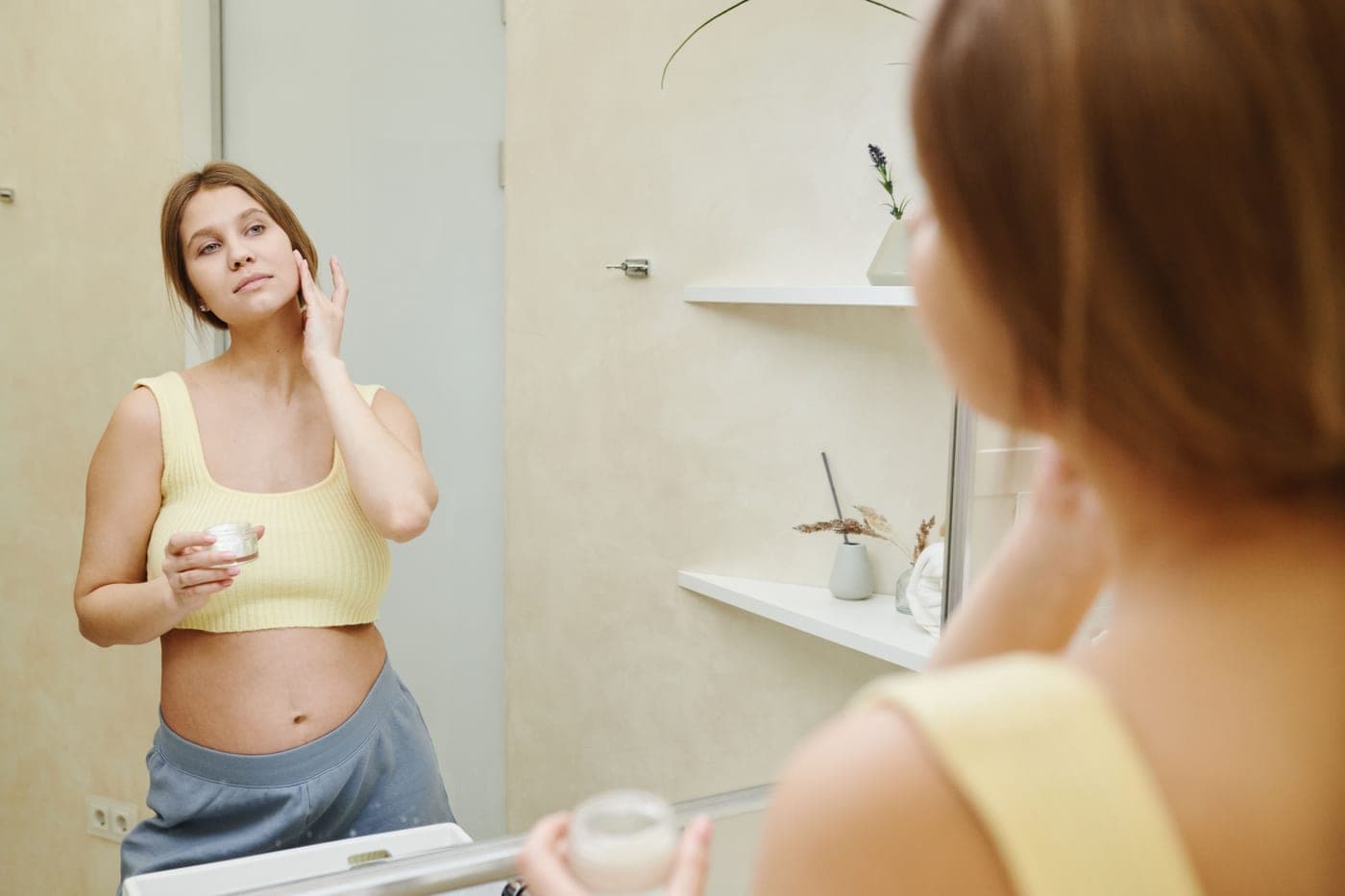
The One the Labels Are Clear About
Topical retinoids are where prescribing information stops hedging. The label for tretinoin cream 0.025% states that it should not be used during pregnancy, and describes fetotoxicity in animal studies along with thirty cases of temporally associated congenital malformations reported over two decades of clinical use. There are no adequate and well-controlled studies in pregnant women, which is exactly why the labels read as they do.
That covers prescription tretinoin and, by the same logic most clinicians apply, cosmetic retinol and retinal as well. It is the one category where the standard advice — stop, and pick it up afterwards — is genuinely well grounded. Our retinol guide covers what it does when you return to it.
What People Commonly Keep
| Ingredient | What the published material says | Usual role |
|---|---|---|
| Azelaic acid | The 15% gel's label puts it in the older Pregnancy Category B and notes under 4% systemic absorption from a topical 20% cream | The usual substitute for a retinoid |
| Niacinamide | No pregnancy-specific restriction in cosmetic use | Redness, oil, pigment support |
| Mineral sunscreen | Zinc oxide and titanium dioxide sit on the skin surface | The most important step of all |
| Plain moisturizers | Humectants, emollients, occlusives | Itching and stretching skin |
| Hyaluronic acid | No pregnancy-specific restriction in cosmetic use | Hydration |
Azelaic acid is the one worth knowing about, because it addresses several of the things pregnancy tends to bring at once: inflammatory breakouts, redness and post-inflammatory pigment. Its label language is notably softer than the retinoid labels, and the systemic absorption figure it quotes is small. See azelaic acid and mandelic acid vs azelaic acid for what it does and how it compares.
Melasma, the Reason Sunscreen Matters More
Melasma — the brown or gray-brown patches that appear across the cheeks, forehead and upper lip — is common enough in pregnancy to have been nicknamed the mask of pregnancy. The American Academy of Dermatology describes pregnancy as one of the triggers that causes it, and notes that it can fade after delivery.
Sun makes it worse: in the AAD's words, sunlight causes the skin to make more pigment, which can darken existing melasma and cause new patches. Their advice is a wide-brimmed hat, shade, and broad-spectrum SPF 30 or higher applied throughout the day — and for melasma specifically, dermatologists often recommend sunscreen containing zinc oxide, titanium dioxide or iron oxide.
- Reapply, rather than relying on a single morning application. The AAD's melasma advice is explicit about throughout the day.
- Iron oxides are worth seeking out, which in practice means a tinted mineral sunscreen — see best tinted sunscreens.
- Do not start a pigment-fading routine mid-pregnancy without asking. Several of the usual actives are the ones under discussion.
- Expect patience. Melasma that is triggered by pregnancy often improves after delivery on its own.
A Routine That Survives the Shorter List
- A gentle, fragrance-free cleanser, morning and night — see best cleansers for dry skin.
- A plain moisturizer, applied more often than usual if skin is itching as it stretches.
- Mineral sunscreen every morning, reapplied if you are outdoors.
- Azelaic acid or niacinamide if you were treating breakouts or pigment before, and your clinician agrees.
- Nothing new in the first trimester unless there is a reason. It is the worst time to be diagnosing whether a reaction is the product or the pregnancy.
Two practical notes. Fragrance sensitivity often increases in pregnancy, so fragrance-free is worth defaulting to even if you never needed it before. And body skin gets itchier as it stretches: a large tub of plain cream used generously does more than any stretch-mark product, none of which has good evidence behind it.