The Comparison, in One Table
| Mandelic acid | Azelaic acid | |
|---|---|---|
| What it is | An alpha hydroxy acid (AHA), first isolated from bitter almonds | A dicarboxylic acid (nonanedioic acid), not an AHA |
| Molecular weight | 152.15 g/mol, twice glycolic acid's 76.05 | 188.22 g/mol |
| Main job | Surface exfoliation of rough, dull or uneven skin | Calming inflammatory acne and rosacea bumps; fading marks |
| Over the counter | Serums at 10% to 12% | Serums and creams at 10% |
| Prescription and in-office | Studied as 40% to 45% in-office peels | 15% gel for rosacea and 20% cream for acne, by prescription |
| Sun sensitivity | Yes: the FDA says AHAs increase UV sensitivity | Not an AHA; brands still advise daytime sunscreen |
| What to watch for | Irritation if introduced too quickly; brands advise building up | Burning, stinging or tingling, reported by 29% in the rosacea gel's trials |
What Each Acid Actually Does
Mandelic acid is an aromatic alpha hydroxy acid. Its name comes from the German Mandel, for almond: it was discovered in 1831 by heating amygdalin, an extract of bitter almonds. Like glycolic and lactic acid, it exfoliates the surface of the skin, which is why brands aim it at rough texture, dullness and uneven tone rather than at anything happening deeper down.
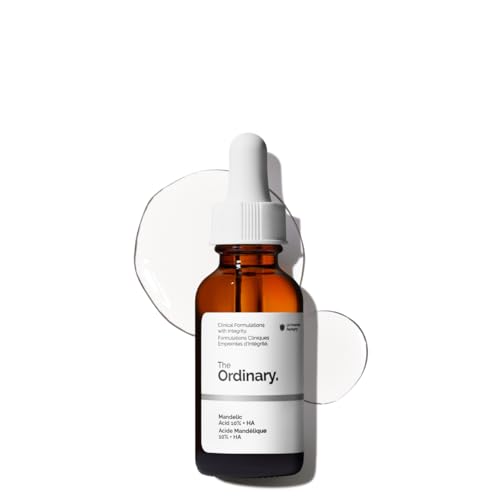
What sets it apart is size. PubChem gives mandelic acid a molecular weight of 152.15, against 90.08 for lactic acid and 76.05 for glycolic acid. The Ordinary says that larger molecular weight gives a slower, more balanced distribution, and that is the usual explanation for mandelic acid's reputation as the gentlest AHA. It is a sensible explanation, not a guarantee: a 12% mandelic serum at a low pH can still sting, and it is still an AHA, with the sun sensitivity that comes with the class. The strength bands, the evidence and the pairings are set out in full in our mandelic acid guide.
Azelaic acid is a different kind of molecule altogether, a dicarboxylic acid, and it does more than exfoliate. The prescription labels describe antimicrobial activity against Propionibacterium acnes and Staphylococcus epidermidis, and FDA approval for two conditions: the 15% gel for the inflammatory papules and pustules of mild to moderate rosacea, and the 20% cream for mild-to-moderate inflammatory acne. The American Academy of Dermatology also lists azelaic acid among the ingredients to look for when fading dark spots in darker skin tones. The full ingredient profile is in our azelaic acid guide.
What the Evidence Shows
The two acids sit on very different evidence. Azelaic acid has FDA-approved prescription products, and their labels summarize trial results: the 20% acne cream's label says improvement occurs in the majority of patients with inflammatory lesions within four weeks. Mandelic acid's evidence is mostly small studies of in-office peels, at strengths three to four times higher than any serum on this page.
| Study | What was compared | What it found |
|---|---|---|
| Wójcik and colleagues, 2013 | A 20% azelaic peel (11 women) against a 40% mandelic peel (17 women), aged 49 to 71, five peels two weeks apart | Both raised sebum on the cheeks and chin; neither changed the T-zone |
| Dayal and colleagues, 2020 | A 45% mandelic peel against a 30% salicylic peel in 50 patients with mild-to-moderate acne, six sessions over 12 weeks | Equal overall; salicylic did better on noninflammatory lesions, mandelic on inflammatory ones, with fewer side effects |
| Jacobs and Culbertson, 2018 | Topical mandelic acid twice daily for four weeks in 24 patients aged 42 to 68 | Lower-eyelid elasticity up 25.4% and firmness up 23.8%, using a formulation the authors developed |
The only direct comparison of the two, the 2013 study, measured oil production rather than acne, redness or pigment, in older women, with peels far stronger than a home serum. It does not tell you which one to buy. What the evidence does support is narrower: azelaic acid has the stronger case for rosacea and inflammatory acne, and mandelic acid is a well-tolerated exfoliant with encouraging but small studies behind it.
Which One Suits Your Skin
- Rosacea with bumps: azelaic acid. It is the only one of the two with a rosacea indication, and the 15% gel is prescription-only — see our rosacea guide and a dermatologist.
- Inflammatory breakouts: azelaic acid first, for the prescription acne indication and the antimicrobial activity on its label. Mandelic acid is a reasonable later addition for texture once your skin has settled.
- Rough, dull or uneven texture: mandelic acid. Surface exfoliation is what it is for, and every mandelic serum here is aimed at texture and tone.
- Marks left behind by breakouts: either can help, but azelaic acid is the one the AAD names for dark spots. Expect months, not weeks: the AAD says a spot a few shades darker than your skin usually fades within 6 to 12 months.
- Darker skin tones: both prescription labels note that azelaic acid has not been well studied in people with dark complexions and advise watching for early signs of lightening. Stop and see a dermatologist if patches of skin lighten.
- Your first acid: a 10% mandelic serum a few nights a week is a gentle place to start. For stronger exfoliants later, see glycolic acid vs salicylic acid.
If pigment is the main concern and you are weighing azelaic acid against a different brightener, niacinamide vs azelaic acid covers that decision, and our shortlist of the best azelaic acid products has more formats to choose from.
Can You Use Both?
Yes, but not in the same step. The Ordinary's own directions for its azelaic suspension say not to use it in the same routine as strong acids, retinoids or peptides, and a mandelic serum is an acid. The simplest arrangement is alternating nights, introduced one product at a time.
- Start with the one that matches your main concern, and use it alone for a month before adding the second.
- Use them on different nights, mandelic on one and azelaic on the next, rather than layering them.
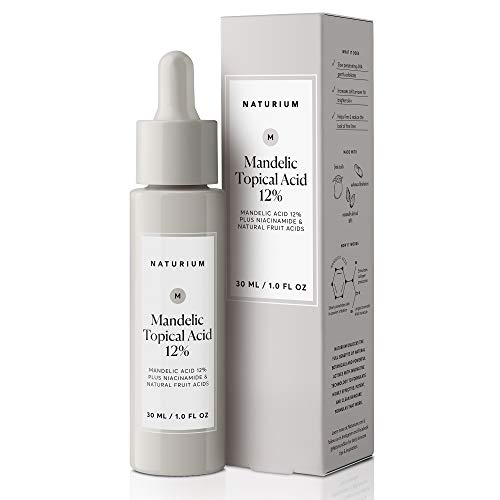
- Build up gradually. Naturium advises using its mandelic serum a few times a week at first; Good Molecules caps its serum at four nights a week.
- Wear sunscreen every morning. The FDA's recommended label for AHA products warns they may increase sun sensitivity and advises sunscreen, protective clothing and limited sun exposure while using them and for a week afterwards.
- Stop if burning persists. The rosacea gel's label notes that irritation usually occurs during the first few weeks of treatment; if it continues beyond that, stop and ask a dermatologist.
If you already use a retinoid, putting either acid on the same night makes irritation more likely. Our layering order guide covers how to space actives across the week.
Reading the Label Before You Buy
| Check | Why it matters | On this page |
|---|---|---|
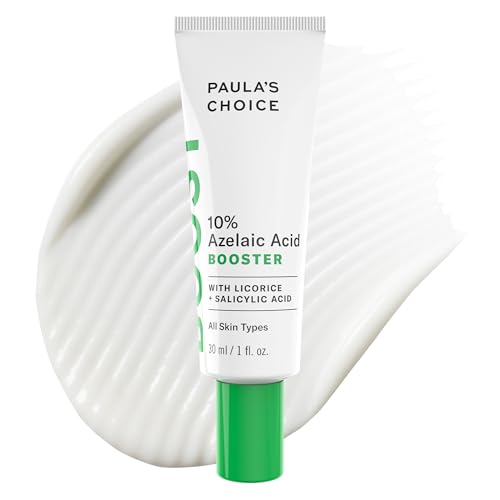
| The acid is named in the ingredient list | Some products named for azelaic acid use a derivative, potassium azeloyl diglycinate, which is a different ingredient from the azelaic acid in the prescription labels | Both azelaic picks list azelaic acid itself |
| A printed percentage | It lets you compare like with like | All five products print one |
| A stated pH | A lower pH means a more active and more irritating acid; for glycolic and lactic acid, the safety panel the FDA cites set a floor of pH 3.5 | The Ordinary mandelic states 3.5 to 4.5, Naturium 3.0 to 3.5, Good Molecules none |
| Other actives in the formula | Extra acids or brighteners make a reaction harder to trace | Paula's Choice adds 0.5% salicylic acid; Naturium adds niacinamide and fruit extracts; Good Molecules adds gluconolactone |
None of the five lists fragrance. Naturium's orange and lemon fruit extracts are there as what the brand calls natural fruit AHAs, so the formula carries more than one acid even though mandelic acid leads the list. If your skin is reactive, the shortest list on this page is The Ordinary's mandelic serum.