Every over-the-counter option is 10%, so the percentage decides nothing. What decides everything is what the acid is suspended in.
By Sawyer V. · Published September 8, 2026 · Last updated September 8, 2026
The short answer
Over-the-counter azelaic acid is 10% almost everywhere, so choose on vehicle. Silicone suspensions give a smooth primer finish but pill under sunscreen; cream and gel bases layer better. Prescription 15% is stronger for rosacea specifically.
Disclosure: Glow & Gild earns a commission when you buy through links on this page, at no extra cost to you. It does not change which product we recommend, and no brand pays for placement here. Read the full disclosure.
Amazon price as of October 23, 2026, 03:12 UTC — details
How We Picked
Since the concentration is effectively fixed across the category, we ranked on vehicle and layering behavior first, then on supporting actives that make sense for the buyer, then on fragrance and irritant load. Azelaic acid is poorly soluble, so how it is suspended is the whole formulation problem.
Everyone in this category says they tested twenty of these. We have not tested any, and we say so. What we did instead: compiled the published concentrations and ingredient lists, checked each claim against what the formula can actually support, and wrote down who each product is wrong for. The full method is published so you can check it.
Quick Picks
The short answer, by buyer. Select any row for the full write-up.
#
Product
Best for
Where to buy
1
The Ordinary Azelaic Acid Suspension 10%It is the reference point for the category: stated concentration, minimal formula, and a price that makes the twelve-week trial azelaic acid requires an easy decision rather than a considered purchase..
Amazon price as of October 23, 2026, 03:12 UTC — details
2
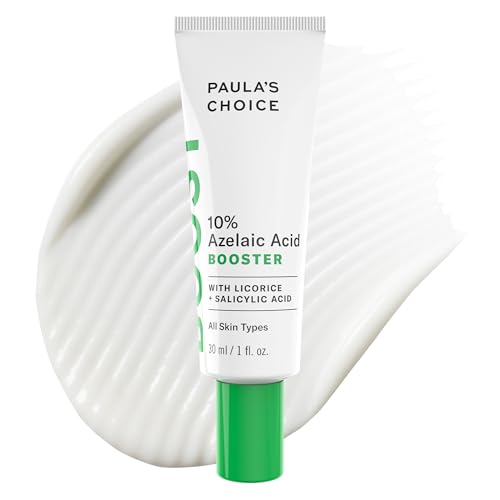
Paula's Choice 10% Azelaic Acid BoosterSame headline concentration, better layering behavior — which is the variable that decides whether you keep using an azelaic acid product.
Amazon price as of October 23, 2026, 03:12 UTC — details
3
Naturium Azelaic Topical Acid 10%The cream-serum base suits dry skin better than a silicone suspension, and pairing azelaic acid with niacinamide addresses two different steps of pigment production rather than doubling down on one..
Amazon price as of October 23, 2026, 03:12 UTC — details
4
No product photograph available for Geek & Gorgeous Azelaic Acid 10% Cream
Geek & Gorgeous Azelaic Acid 10% CreamA clean single-active formulation is the right choice when you are trying to work out whether azelaic acid suits you at all.
Not sold on Amazon — we earn nothing on this link.
#ad — buying through these links earns us a commission at no cost to you. Prices come from Amazon’s own product data and show the date they were checked; without a current one, the button says check price.
Why the Vehicle Decides This Category
Azelaic acid is poorly soluble, which means a formulator has to suspend, dissolve or micronize it. That choice produces genuinely different products at the same nominal 10%.
Silicone suspension. The most common over-the-counter format. Gives a smooth, primer-like finish that many people love — and pills under sunscreen and makeup more than any other vehicle in skincare.
Cream-gel. Layers cleanly, better for morning use, usually with a slightly heavier feel.
Prescription gel at 15%. Lighter than the cosmetic suspensions, and the concentration studied specifically for papulopustular rosacea.
The honest position on 10% versus 15%: for inflammatory rosacea, 15% is meaningfully stronger. For pigment, the difference is smaller than the numbers suggest, and a well-formulated 10% used consistently for three months will do most of what you are hoping for. Full detail on the azelaic acid monograph.
Who Should Be Buying Azelaic Acid
This is one of very few ingredients that genuinely addresses three unrelated concerns, and the buyer profile is correspondingly wide.
If you have
Azelaic acid does
Timeline
Papulopustular rosacea
Reduces the inflammatory papules and background redness
About eight weeks
Post-inflammatory marks
Fades them, and selectively — it acts hardest where pigment production is abnormal
Antibacterial plus keratolytic, so it works on the spot and the plug
Eight to twelve weeks
A pregnancy and a retinoid you had to stop
The standard substitute for both texture and marks
Same as above
It does not resurface texture the way an AHA or a retinoid does. If smoothness rather than tone is the goal, this is the wrong purchase.
What to Look For When Choosing Your Own
A stated 10%. Almost every credible product publishes it; treat silence as a reason to look elsewhere.
The vehicle, named. Suspension versus cream-gel decides whether you can layer it in the morning.
Supporting actives that match your reason for buying. Salicylic acid alongside it makes sense for acne and is unhelpful if you chose azelaic acid because acids irritate you.
Fragrance-free, particularly for rosacea-prone skin.
A tube rather than a jar, since a thin layer applied cleanly is the whole application technique.
One application note that matters more than product choice: use a pea-sized amount for the whole face. More product does not produce more effect — it produces pilling, which is the reason most people abandon this ingredient.
1 — The cheapest published 10%, at night
The Ordinary Azelaic Acid Suspension 10%
What’s in it
Labeled 10% azelaic acid, stated in the product name
Silicone-based suspension with a smoothing, primer-like finish
Fragrance-free, squeeze tube
It is the reference point for the category: stated concentration, minimal formula, and a price that makes the twelve-week trial azelaic acid requires an easy decision rather than a considered purchase.
Who it’s not for
Anyone layering sunscreen or makeup over it. This is the format most prone to pilling, and no amount of technique fully fixes that — use it at night, or buy the cream-gel instead.
Labeled 10% azelaic acid with salicylic acid and adenosine
Cream-gel base rather than a silicone suspension, so it layers cleanly
Designed to be used neat or mixed into a moisturizer
Same headline concentration, better layering behavior — which is the variable that decides whether you keep using an azelaic acid product. The added salicylic acid also makes it the more sensible pick when acne rather than pigment is the reason you are buying.
Who it’s not for
People who chose azelaic acid specifically because exfoliating acids irritate them. The salicylic acid content is useful for congestion and counterproductive if avoiding acids was the point.
Includes niacinamide and vitamin C derivative as stated supporting brighteners
Fragrance-free, pump packaging
The cream-serum base suits dry skin better than a silicone suspension, and pairing azelaic acid with niacinamide addresses two different steps of pigment production rather than doubling down on one.
Who it’s not for
Anyone who wants to isolate the effect of azelaic acid alone. With two additional brightening ingredients in the formula, a good result — or an irritation — cannot be attributed to any one of them.
No product photoNo product photograph available for Geek & Gorgeous Azelaic Acid 10% Cream
4 — Plainly formulated, no supporting actives
Geek & Gorgeous Azelaic Acid 10% Cream
What’s in it
Labeled 10% azelaic acid in a simple cream base
No additional actives, so the effect is attributable
Fragrance-free, tube packaging
A clean single-active formulation is the right choice when you are trying to work out whether azelaic acid suits you at all. Nothing else in the tube can take credit for a result or blame for a reaction.
Who it’s not for
Anyone who wants the smooth blurring finish the silicone suspensions give. This is a plain cream and behaves like one under makeup — that is the trade for the cleaner ingredient list.
Not sold on Amazon — we earn nothing on this link.
Skip This One
Azelaic acid products that do not state a concentration
A handful of cosmetic products list azelaic acid or its derivatives well down the ingredient list without publishing a percentage, usually alongside a brightening claim. Azelaic acid needs to be present at around 10% to do what it is known for, and at the position these products list it, the content is almost certainly far below that. Because the ingredient is poorly soluble and needs a substantial share of the formula, an unstated concentration in this specific category is a much stronger signal than it would be for a peptide or a ceramide. If the number is not on the label, assume it is not enough, and buy one of the products that publishes it.
Frequently Asked Questions
For inflammatory rosacea, meaningfully yes — 15% is the concentration studied for it. For pigment the gap is smaller than the numbers suggest, and vehicle quality matters more than the last five percent.
Most over-the-counter 10% products use a silicone suspension, which resists layering. Use less, let it absorb for several minutes, apply it at night, or buy a cream-gel formulation instead.
It is one of the few actives generally considered acceptable in pregnancy and is the standard retinoid substitute. Confirm with your own clinician, since the decision is a medical one.
Redness in about eight weeks, pigment in about twelve. Stopping at six weeks is the most common reason people conclude it did not work.
Yes, and it is a good pairing — the two act on different steps of pigment production. See niacinamide vs. azelaic acid.
By Sawyer V.. An enthusiast who’s genuinely into this: I read the manufacturer documentation, compile the published percentages, and do the arithmetic. No lab coat.
What I don’t do: test products, accept free product, or accept payment for placement. I hold no clinical credential and don’t claim one. How we pick.
Published September 8, 2026 · Last updated September 8, 2026