Skip to content
Glow & Gild

Comparison

Niacinamide vs Azelaic Acid

Both calm redness and fade marks by different routes. Azelaic acid is the stronger tool; niacinamide is the easier one.

By Sawyer V. · Published September 8, 2026 · Last updated September 8, 2026

Two treatment bottles side by side on a dark stone surface

The short answer

Azelaic acid is the stronger option for rosacea, inflammatory acne and stubborn pigment, and it is the standard retinoid substitute in pregnancy. Niacinamide is gentler, cheaper and easier to layer. They act on different steps, so using both is usually better than choosing.

Disclosure: Glow & Gild earns a commission when you buy through links on this page, at no extra cost to you. It does not change which product we recommend, and no brand pays for placement here. Read the full disclosure.

The Comparison, in One Table

NiacinamideAzelaic acid
Pigment mechanismBlocks melanin transfer to surrounding cellsSelectively inhibits tyrosinase in overactive melanocytes
RednessMild anti-inflammatory effectStrong; the concentration studied for papulopustular rosacea
AcneSupporting only, via sebum and inflammationAntibacterial plus keratolytic — works on spot and plug
Concentration2% to 5% (10% commonly sold)10% over the counter, 15% to 20% prescription
IrritationLow at 5%Mild tingle for the first fortnight; occasional intolerance
LayeringLayers cleanlySilicone suspensions pill under sunscreen
PregnancyGenerally considered acceptableThe standard retinoid substitute

When to Choose Azelaic Acid

Papulopustular rosacea. Azelaic acid at 15% is a studied treatment for it, and even the 10% over-the-counter versions do meaningfully more for inflammatory redness than niacinamide does.

Inflammatory acne with pigment left behind. It is antibacterial, keratolytic and pigment-reducing at once, which is an unusual combination and exactly what post-inflammatory hyperpigmentation needs.

Melasma, particularly on deeper skin tones. The tyrosinase inhibition is selective — it acts hardest where pigment production is abnormal, which makes patchy over-lightening unlikely. That is a real advantage over stronger brightening agents.

Pregnancy, where a retinoid is off the table. This is the standard substitute for both texture and marks, though the decision is a medical one to confirm with your clinician.

When to Choose Niacinamide

Your skin is oily. Niacinamide reduces sebum production; azelaic acid does not. For visible oiliness and distended-looking pores it is the more direct tool.

Your barrier needs support. Niacinamide increases the skin's own ceramide production, which azelaic acid has no effect on. If your routine already contains a retinoid or acid, this is the more valuable addition.

You need something that layers cleanly in the morning. Over-the-counter azelaic acid is usually a silicone suspension, which is the most pilling-prone format in skincare. A water-based niacinamide serum does not have that problem.

Cost is a factor. Niacinamide is one of the cheapest actives there is, and a 5% serum costs less than most azelaic acid products.

Using Both

This is the usual right answer, and the two are frequently formulated together for that reason.

  1. Niacinamide in the morning, under sunscreen. It layers cleanly and has no photosensitivity.
  2. Azelaic acid at night, a pea-sized amount for the whole face, on clean dry skin. This sidesteps the pilling problem entirely.
  3. Or use azelaic acid twice daily if you are treating rosacea and tolerate it — that is the standard clinical instruction.
  4. Give redness eight weeks and pigment twelve. Both are slow, and combining them does not accelerate either.
  5. Wear sunscreen. Pigment treatment without UV protection does not work.

For a third mechanism on stubborn pigment, tranexamic acid works further upstream — reducing the signal to produce melanin at all. Three complementary mechanisms beats a higher dose of any one.

A Pick for Each Side

One of each, both with published concentrations, chosen so they can be used together without pilling.
No product photoNo product photograph available for Paula's Choice 10% Azelaic Acid Booster

Premium Beauty listing

1The azelaic acid side, in a layerable base

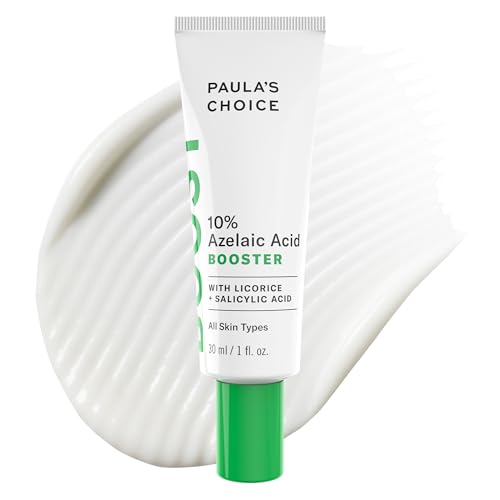
Paula's Choice 10% Azelaic Acid Booster

What’s in it

  • Labeled 10% azelaic acid with salicylic acid and adenosine
  • Cream-gel base rather than a silicone suspension, so it layers cleanly
  • Can be used neat or mixed into a moisturizer

Vehicle decides whether you keep using azelaic acid, and a cream-gel avoids the pilling that makes the common silicone suspensions a night-only product.

Who it’s not for

People who chose azelaic acid because exfoliating acids irritate them. The added salicylic acid is useful for acne and counterproductive if avoiding acids was the point.

No product photoNo product photograph available for Geek & Gorgeous Niacinamide 5% Serum

2The niacinamide side

Geek & Gorgeous Niacinamide 5% Serum

What’s in it

  • Labeled 5% niacinamide, the evidence-backed concentration
  • No zinc, so it layers under sunscreen without pilling
  • Fragrance-free and inexpensive

5% is the dose the research supports, and the zinc-free formulation is what makes it usable in the morning alongside an azelaic acid at night.

Who it’s not for

Anyone treating active rosacea. Niacinamide helps, but azelaic acid is the ingredient with the evidence for that specific presentation, and using the gentler option alone will disappoint.

Frequently Asked Questions

For rosacea, inflammatory acne and stubborn pigment, yes. For oil control and barrier support, niacinamide. They act on different steps, so using both is usually better.

Sources

Who wrote this

By Sawyer V.. An enthusiast who’s genuinely into this: I read the manufacturer documentation, compile the published percentages, and do the arithmetic. No lab coat.

What I don’t do: test products, accept free product, or accept payment for placement. I hold no clinical credential and don’t claim one. How we pick.

Published September 8, 2026 · Last updated September 8, 2026

Glass bottle of a clear exfoliating liquid on a dark surface

Ingredient monograph

Azelaic Acid

Redness, acne and pigment from one molecule, and the standard retinoid substitute in pregnancy. 10% versus 15%, honestly.

Read it
Clear serum texture pooled on dark glass

Ingredient monograph

Niacinamide

Barrier, oil, pores and pigment from one cheap molecule. Why 5% is the evidence-backed dose and 10% is the marketing one.

Read it
Citrus fruit and glassware on a dark surface, side-lit

Ingredient monograph

Tranexamic Acid

Works upstream of melanin production rather than on it, which is why it holds up against melasma when brighteners stall.

Read it
Cleansing products on a dark background in low light

Concern guide

Skincare for Acne

Plug or inflammation — the kind of spot decides the ingredient. Plus what fungal folliculitis looks like and why it matters.

Read it

Nothing here is medical advice. Editorial policy · How we pick · Affiliate disclosure