What Adapalene Is, and Why It Is Regulated as a Drug
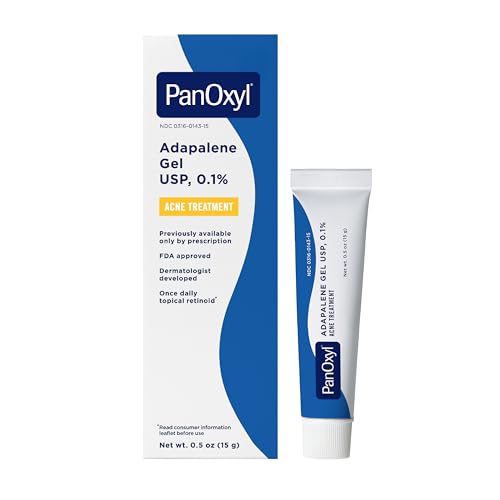
Adapalene is a third-generation topical retinoid developed by Galderma, patented in Luxembourg in 1986 and in the US in 1988, and approved by the FDA as a prescription acne medication in 1996. In 2016 the FDA approved adapalene gel 0.1% for over-the-counter sale — the first time a formerly prescription-only retinoid became buyable without a prescription for acne.
That history is the whole reason this page reads differently from the retinol and retinal monographs. Those are cosmetic ingredients, so what a brand may claim about them is governed by cosmetic rules and the strength is whatever the formulator chose. Adapalene has an approved Drug Facts label: a stated active, a stated purpose, a stated age limit and stated directions. Nothing about how to use it is left to the marketing department.
Mechanically, it is the shortest path in the vitamin A family. Retinol has to be converted twice before your skin can use it; retinal once. Adapalene skips the ladder entirely — it binds nuclear retinoic acid receptors directly, specifically the beta and gamma subtypes, and its agonism of the gamma subtype is largely responsible for its observed effects. It is also highly lipophilic, so it readily penetrates hair follicles, which is where comedonal acne starts.
| Retinol | Retinal | Adapalene | |
|---|---|---|---|
| US regulatory status | Cosmetic ingredient | Cosmetic ingredient | OTC drug at 0.1%, prescription at 0.3% |
| Conversion steps to act | Two | One | None — binds receptors directly |
| Receptor behavior | After conversion | After conversion | Selective for RAR beta and gamma |
| What the label may claim | Cosmetic claims | Cosmetic claims | Treatment of acne |
| Strength on the box | Set by the brand | Set by the brand | Fixed by the monograph |
Two actions matter in acne, and adapalene has both. It normalizes keratinocyte differentiation, which decreases microcomedone formation and the clogging of pores while increasing cell turnover — the comedolytic half. It is also regarded as an anti-inflammatory agent: it suppresses the inflammatory response stimulated by *Cutibacterium acnes*, and inhibits lipoxygenase activity and the metabolism of arachidonic acid into prostaglandins. That second half is why it does something for inflamed spots and not only for blackheads.
0.1% Over the Counter, 0.3% by Prescription
Unlike every cosmetic retinoid, adapalene does not come in a ladder of strengths you can climb by shopping. There are two, and only one of them is yours to buy.
| Strength | Status in the US | What the label says |
|---|---|---|
| 0.1% gel | Over the counter | Drug Facts label: adapalene 0.1% (retinoid), purpose acne treatment, for ages 12 and over |
| 0.3% gel | Prescription only | Prescription label: each gram contains 3 mg adapalene, for acne vulgaris in people 12 years and older |
This is the useful part of a fixed monograph strength: the 0.1% in an $8 generic tube is the same 0.1% in a $40 one. Price differences across over-the-counter adapalene gels buy you a base, a tube or pump, a size and a brand — not more drug. That is a genuinely unusual situation in skincare, where strength is normally the thing you are paying for, and it changes how the picks below are chosen.
It also means there is no sensible way to "start low". With retinol you can buy 0.2% and work upward; the gentler route into adapalene is frequency, not concentration — which is covered below.
What the Label Actually Tells You to Do
Most people use adapalene incorrectly in exactly one way, and the label contradicts them in plain language. The directions, for adults and children 12 years of age and older, are:
- Use once daily. MedlinePlus notes it is usually applied at bedtime.
- Clean the skin gently and pat dry before applying.
- Cover the entire affected area with a thin layer. The label spells out what it means: if your acne is on the face, apply the product to the entire face.
- Do not use more than one time a day. Applying more than directed will not provide faster or better results, but may worsen skin irritation.
Two things the label notably does not say are worth recording, because both circulate as fact. It gives no pea-sized dose — only "a thin layer" over the whole area. And children under 12 are not given a lower strength or a slower schedule; the label simply says ask a doctor.
The listed inactive ingredients in the reference gel are carbomer 940, edetate disodium, methylparaben, poloxamer 182, propylene glycol, purified water and sodium hydroxide. If you react to a specific adapalene product rather than to adapalene, this is the short list to compare against another brand's.
Three Months Is the Number That Matters
Adapalene has an unusually explicit timeline on its own label, and it is much longer than most people give it. The label says it may take up to 3 months of once daily use to see results, and lists "you see no improvement after 3 months of once daily use" as a reason to stop and ask a doctor. MedlinePlus puts the same window at 8 to 12 weeks or longer before you feel the full benefit.
The first few weeks run the other way, and the label says so rather than hiding it: during the early weeks of use, your acne may appear to worsen before it improves, and this is normal. MedlinePlus describes the same effect mechanically — adapalene may bring previously unseen pimples to the skin surface. The instruction in both places is to continue, unless irritation becomes severe.
| When | What the references describe |
|---|---|
| Weeks 1-4 | Redness, scaling, dryness, burning or stinging are most likely here. A brief sensation of warmth or stinging, dry skin, peeling and redness are reported in 1% to 10% of users during the first two to four weeks. |
| Early weeks | Acne may appear to worsen before it improves. The label calls this normal and says to continue as directed. |
| 8-12 weeks | MedlinePlus's window for feeling the full benefit. |
| 3 months | The label's own decision point. No improvement by here is a reason to stop and ask a doctor. |
Practically, this is a budgeting fact as much as a clinical one. A 15 g tube is sold as roughly a 30-day supply, so judging adapalene the way its label asks means buying about three of them — which is why the larger tube is the sensible default rather than the thrifty-looking small one.
The Benzoyl Peroxide Question
The standing advice for retinoids is to keep them away from benzoyl peroxide, because benzoyl peroxide is an oxidizer and tretinoin degrades in its presence. Adapalene is the exception, and the reason is structural: the molecule is more stable than tretinoin and tazarotene, which also means less concern about photodegradation. That stability is what allows it to be combined with benzoyl peroxide, and unlike tretinoin it has been shown to retain its efficacy when applied at the same time.
As of this year that is no longer a theoretical point. In May 2026 Galderma announced FDA approval of Differin Epiduo Acne Gel — adapalene 0.1% with benzoyl peroxide 2.5% — for over-the-counter use in ages 12 and older. The company describes the pairing as the first FDA-approved, stable, fixed-dose prescription acne treatment to combine benzoyl peroxide with a retinoid, now available without a prescription. Outside the US, Epiduo remains prescription only.
Galderma's stated Phase 3 results are that the combination outperformed adapalene alone, benzoyl peroxide alone and vehicle gel across inflammatory, non-inflammatory and total lesions, with up to a 70.3% reduction in inflammatory acne lesions at Week 12. Those figures are the manufacturer's own, the comparator for the 70.3% is not named in the release, and the 12-month durability figure it also cites comes from a single-arm study. Treat them as a company claim with a real approval behind the product, not as an independent result.
If you are treating a back or chest rather than a face, the arithmetic changes — a leave-on gel is an awkward way to cover that much skin, and a wash is usually the practical route. See best benzoyl peroxide wash and the body acne guide.
Keeping the First Month Survivable
Adapalene is often regarded as the best tolerated of the three topical retinoids, which is a low bar rather than a promise. Most people who abandon it do so in the first month, and the references are specific about what makes that month worse.
- Do not wax. The label says not to wax to remove hair in areas where the product has been applied; MedlinePlus repeats it for hot wax. This one surprises people and it is on the label for a reason.
- Limit sun exposure, including tanning beds, and use sunscreen outdoors. Both references say your skin may be more sensitive while using it. Adapalene is the most photostable of the topical retinoids, but that is about the molecule, not about your skin.
- Skip glycolic and other alpha hydroxy acids while you settle in. The patient leaflet specifically says to avoid products containing alpha hydroxy or glycolic acids, which may worsen irritation. That rules out pairing it with glycolic acid during the adjustment period.
- Drop the scrubs. MedlinePlus says not to use harsh or abrasive cleansers or to scrub vigorously, and warns that products which are harsh, dry out the skin, or contain alcohol can irritate skin used with adapalene.
- Moisturize. The leaflet says a moisturizer may help decrease dryness and other signs of irritation. This is the single cheapest intervention against quitting.
- Start already calm. If another acne product has left you irritated, the leaflet suggests delaying the start until that irritation has gone away.
- Avoid eyes, lips and mouth, flush with water on contact, and wash your hands after use.
Because the strength is fixed, the only dial you have is frequency. The label's directions are once daily; anyone whose skin cannot take that from day one is better served by building up to it than by scaling the amount down, since "a thin layer over the whole area" is the dose the directions describe. Where it sits in a routine is covered in the layering order guide.
Who It Suits, and Who Should Skip It
The label's own "do not use" list is short and worth reading literally: do not use on damaged skin — cuts, abrasions, eczema, sunburn — or if you are allergic to adapalene or any ingredient in the product. If you are pregnant or breastfeeding, the label says to ask a doctor before use, and to stop and ask a doctor if you become pregnant or are planning to while using it.
- It suits comedonal acne — blackheads, whiteheads and the congestion that keeps regenerating — because preventing microcomedones is the thing it does.
- It suits anyone who has used a cosmetic retinoid for acne and found it underwhelming, since this is the same family at an approved acne strength.
- It suits people who want one product rather than a routine: it is a once-daily leave-on with a published label.
- Skip it if your skin is currently broken, sunburned or eczematous — that is a label instruction, not a preference.
- Skip it if you are pregnant, trying to conceive or breastfeeding without speaking to a clinician first. Topical adapalene in pregnancy has not been well studied and carries a theoretical risk of retinoid embryopathy.
- Skip it if what you want is anti-aging. Retinoids as a class are studied in photoaging, but adapalene's over-the-counter label is written for acne, and this site will not claim a benefit its label does not carry. Retinol and retinal are the cosmetic routes.
- Skip it if you are already using another retinoid. Combining them on the same skin mostly adds irritation — the comparison is laid out in retinol vs. adapalene.