Skip to content
Glow & Gild

Fragrance note

Tuberose

The most polarizing white floral in perfumery, from a plant that no longer grows wild anywhere on earth.

By Sawyer V. · Published October 22, 2026 · Last updated October 22, 2026

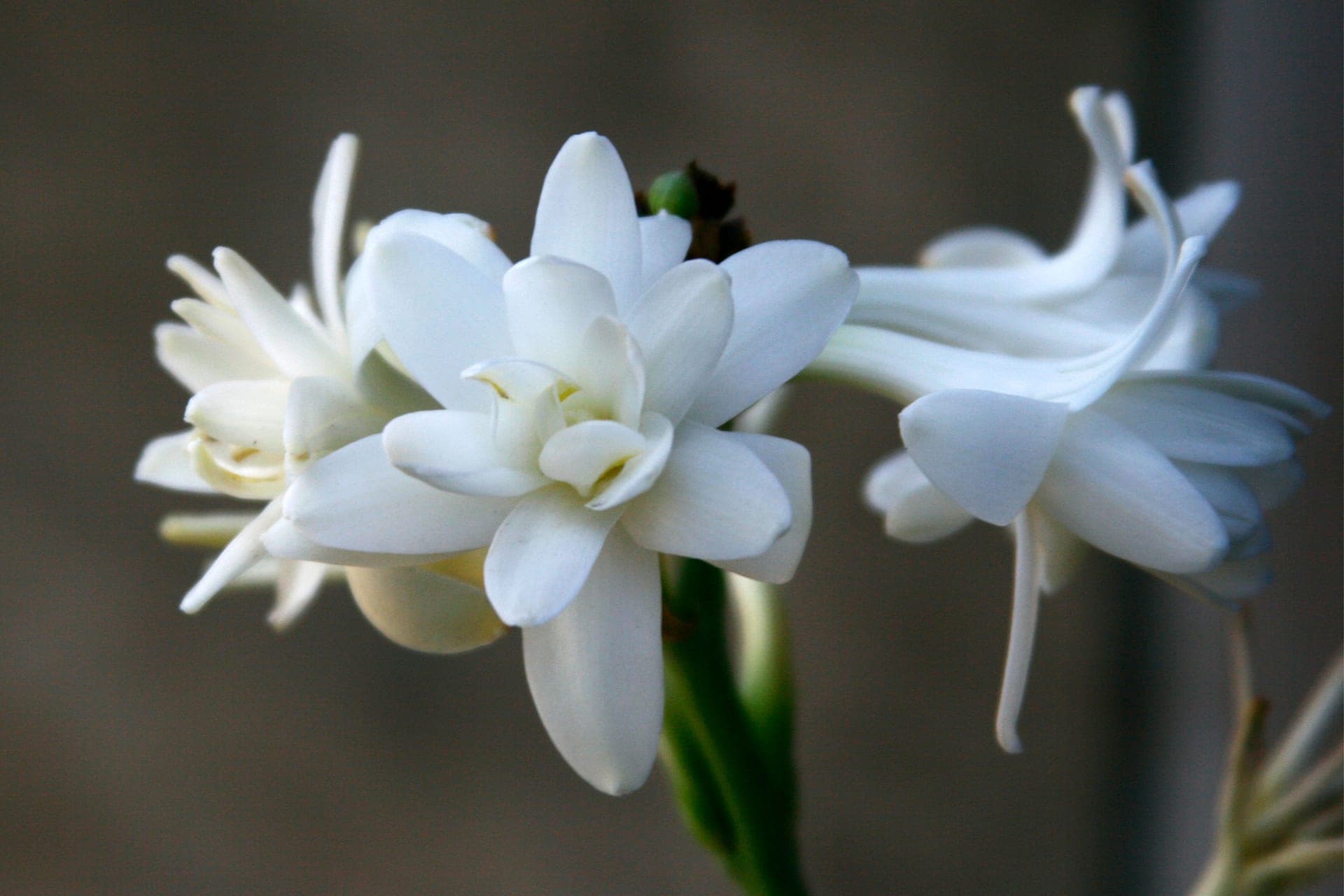
Waxy white tuberose flowers against a dark background

The short answer

Tuberose is a white floral from a Mexican plant that no longer exists in the wild — Wikipedia's entry says it was probably domesticated out of existence by the Aztecs. Its scent cannot be steam distilled: the heat destroys it, which is why enfleurage was historically the only way to capture it. Published work on the flower describes its volatiles as terpenes and benzenoids. It is the note most often described as overpowering, and the same source notes the essence can become sickly to the wearer.

Disclosure: Glow & Gild earns a commission when you buy through links on this page, at no extra cost to you. It does not change which product we recommend, and no brand pays for placement here. Read the full disclosure.

What It Actually Smells Like

Tuberose is a white floral, but calling it that undersells how loud it is. The flowers themselves are described as strongly fragrant and waxy, and the concentrated material carries that intensity into a bottle: dense, creamy, slightly green, and far heavier than the small white blooms suggest. Where jasmine reads bright and rose reads soft, tuberose reads thick.

If someone says tuberose smells like...They are describingWhere it shows
Cream, butter, gardeniaThe rich center of the noteAlmost any tuberose fragrance
Green, sharp, almost mentholThe opening of the raw materialAustere or vintage-style tuberose
Fleshy, skin-like, carnalWhy the note has its reputationClassic 20th-century compositions
Hairspray or an old department storeTuberose at 1980s concentrationsThe decade that overused it
Too much, full stopA common and legitimate reactionEverywhere - see below

The last row is not a failure of taste. Tuberose is the floral that most reliably splits a room, and the reason is in the material rather than in the wearer — which the section below gets to.

The Flower Heat Destroys

Most aromatic plants give up their oil to steam. You pass steam through the plant material, the volatile compounds come over with it, and you condense the result. That is how lavender, vetiver and citrus peel are handled, and it is cheap and scalable.

Tuberose cannot be treated that way. Wikipedia's entry on enfleurage states that the technique was the sole method of extracting the fragrant compounds in delicate flowers such as jasmine and tuberose, which would be destroyed or denatured by the high temperatures that steam distillation requires. The scent does not survive the process that works on nearly everything else.

  1. Cold enfleurage. Petals or whole flowers are laid on fat spread across a glass frame called a chassis, and the scent diffuses into the fat over one to three days.
  2. The pomade. Spent flowers are replaced repeatedly until the fat is saturated. The result is the enfleurage pomade.
  3. The absolute. The pomade is soaked in ethyl alcohol to pull the aromatic material back out, giving an absolute.

A Flower With No Wild Population

Tuberose is believed to be native to central and southern Mexico, and it is no longer found in the wild — probably, the entry says, as a result of being domesticated by the Aztecs. Every tuberose on earth today is a cultivated plant descended from that domestication. It is now grown in many tropical and temperate countries, and it is the only species in its genus in commercial cultivation.

Its name is also genuinely unsettled, which is worth knowing if you read about it anywhere else. The plant is listed as Polianthes tuberosa, in the family Asparagaceae, subfamily Agavoideae — it is an agave relative rather than a lily. Agave amica appears among its synonyms, and the taxonomy section states that the correct name within *Agave* is *Agave amica*, while noting that *Polianthes* was reinstated as a genus in 2024. You will see both names in current writing, and neither is a mistake.

Why People Say It Is Too Much

Tuberose has a reputation for being overwhelming, and unusually for a perfumery reputation, the reference sources agree with it rather than talking it down. Wikipedia describes the fragrance as overwhelming and says the essence is overpowering and can become sickly to the wearer, adding that it generally must be used in moderation. That is a blunt assessment of a material, not a matter of taste.

  • It is dose-sensitive in a way most florals are not. A little reads creamy and expensive; slightly too much reads cloying, and the gap between those two points is narrow.
  • It does not fade politely. Tuberose compositions tend to sit at a constant volume for hours rather than tapering, so an over-application is an all-day decision.
  • Your own nose adapts faster than other people's. You stop registering it long before the room does, which is precisely how over-spraying happens.
  • The 1980s did it no favors. The decade's biggest florals used tuberose loudly, and for a generation of wearers the note is permanently associated with that volume.

On what is actually in the material: a 2018 study of scent formation in the flower describes its floral scent volatiles as consisting mainly of terpenes and benzenoids. That is a statement about chemical classes rather than a single signature molecule, and it is worth saying plainly that the fleshy, carnal quality people attribute to tuberose is a description of perception — we have not found a published source pinning it to one compound, so this page does not name one.

How to Meet the Note

Tuberose punishes the usual approach of spraying something on a wrist in a shop and deciding in thirty seconds. Work up to it instead.

  1. Start with a modern, softened tuberose rather than a classic. Contemporary compositions dilute the note into other florals, which is a far gentler introduction than meeting it at full strength.
  2. Apply once. One spray of a tuberose fragrance delivers more material than one spray of almost anything else, and the commonest first mistake is dosing it like a citrus.
  3. Wait several hours before deciding. The note holds its volume, so the question is not whether you like the first minute but whether you want to be inside it at hour four.
  4. Only then try a classic such as Fracas, which is what people mean when they say a fragrance is a tuberose. If the modern versions already felt like a lot, the 1948 benchmark will confirm it.

For specific bottles across the full range, including a famously cold, camphorous take that is sold direct rather than on Amazon, see our best tuberose perfumes roundup. If you are still working out which white floral you respond to, floral perfumes and the floral family page cover the neighbors.
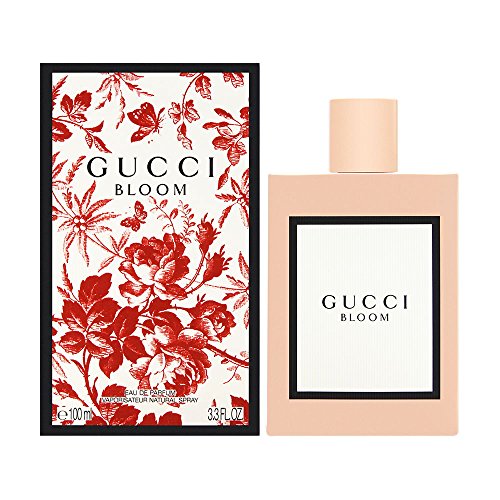
Gucci Bloom Eau de Parfum

Premium Beauty listing

1 — The gentlest way in

Gucci Bloom Eau de Parfum

What’s in it

  • Eau de parfum, 3.4 fl oz
  • Tuberose built into a wider white-floral composition rather than standing alone
  • The most widely sold modern tuberose

The tuberose most people have actually smelled, and the sensible first encounter. The note is present and recognizable but padded by other florals, which takes the edge off the density that makes the classics hard work.

Who it’s not for

Anyone who wants to learn what tuberose smells like on its own. This is a composition built around the note, not a demonstration of it.

$82.88 · Check Price on Amazon

Amazon price as of October 23, 2026, 03:12 UTC — details

#ad — how we’re funded

Robert Piguet Fracas Eau de Parfum, 1.7 oz

Premium Beauty listing

2 — The benchmark, in the smaller bottle

Robert Piguet Fracas Eau de Parfum, 1.7 oz

What’s in it

  • Eau de parfum, 1.7 fl oz
  • Bergamot, tuberose, musk and sandalwood in the listing's note summary
  • Released in 1948 and still the reference tuberose

This is the fragrance the word tuberose points at. Almost every later tuberose is either an homage to it or a reaction against it, so smelling it is how the rest of the category becomes legible.

Who it’s not for

Anyone not yet sure they like the note. We have linked the 1.7 oz rather than the large bottle deliberately — this is a fragrance people either wear for decades or abandon after a week.

$145.00 · Check Price on Amazon

Amazon price as of October 23, 2026, 03:12 UTC — details

#ad — how we’re funded

Diptyque Do Son Eau de Toilette

Premium Beauty listing

3 — Tuberose with the weight taken out

Diptyque Do Son Eau de Toilette

What’s in it

  • Eau de toilette, 3.4 fl oz
  • A tuberose-led composition in a deliberately airy style
  • Eau de toilette concentration, which suits a heavy note

Proof that tuberose does not have to be loud. This treats the note as something transparent and breezy, which is the clearest counterargument to anyone who has written the whole material off.

Who it’s not for

Anyone who wants the creamy density that drew them to tuberose in the first place. This is the opposite end of the range, and eau de toilette strength means it asks to be reapplied.

$169.99 · Check Price on Amazon

Amazon price as of October 23, 2026, 03:12 UTC — details

#ad — how we’re funded

Skip This One

Layering tuberose with another white floral

Layering is having a moment, and tuberose is the worst possible candidate for it. The reference sources are unusually direct about this material: the fragrance is overwhelming, the essence can become sickly to the wearer, and it generally must be used in moderation. Stacking a jasmine or gardenia on top of a note already carrying that warning does not produce a more interesting white floral — it produces a wall, and because tuberose holds its volume for hours rather than tapering, it is a wall you cannot step away from until it wears off. There is a second problem specific to this note: your nose adapts to it faster than the people around you do, so the version you smell an hour in is considerably quieter than the one everyone else is getting. If you want to layer, build around a quiet base such as a [musk](/fragrance/notes/musk) and let the tuberose be the only loud thing in the room. Our [layering guide](/fragrance/how-to-layer-fragrance) covers the general rules.

Frequently Asked Questions

A dense, creamy white floral with a green edge — heavier and more buttery than jasmine, and frequently described as overwhelming. The flowers themselves are noted as strongly fragrant.

Sources

Who wrote this

By Sawyer V.. An enthusiast who’s genuinely into this: I read the manufacturer documentation, compile the published percentages, and do the arithmetic. No lab coat.

What I don’t do: test products, accept free product, or accept payment for placement. I hold no clinical credential and don’t claim one. How we pick.

Published October 22, 2026 · Last updated October 22, 2026

Dark agarwood chips arranged on a dark textured surface

Sub-hub

Fragrance Notes

Oud, vetiver, sandalwood, patchouli, tobacco and incense — described in sensory terms, not adjectives.

A fine mist of fragrance caught in low light against a dark background

Fragrance literacy

Fragrance Notes Explained

Note, accord and family are three different words. What the pyramid actually models, and the two reasons listings mislead.

A purple iris flower lit against a black background

Fragrance note

Iris

The iris you smell is a dried root, and the smell does not exist until five years of drying create it - which is why orris is the costliest material in perfumery.

White jasmine flowers photographed in close-up

Fragrance family

The Floral Family

The largest family in perfumery, split into soliflores, bouquets and aldehydic florals — and what each does.

Several perfume bottles arranged in low, warm light against a dark background

Families, notes and literacy

Fragrance

Nine families, six notes, and the literacy pages that make a fragrance description readable.

Nothing here is medical advice. Editorial policy · How we pick · Affiliate disclosure