What It Actually Smells Like
Iris is the note people find hardest to place, because the word points at a flower and the smell points somewhere else entirely. The published descriptions of orris are consistent about one thing: it is closer to violets than to iris blossom. Beyond that it is usually described as flowery, heavy and woody at the same time — a combination that does not sound like it should work and is the reason the material is prized.
| If someone says iris smells like... | They are describing | Where you meet it |
|---|---|---|
| Violets, slightly sweet | The core orris character | Almost any iris fragrance |
| Face powder, lipstick, a vanity table | The cosmetic register | Classic powdery florals |
| Cold earth, raw carrot, damp root | The rooty extreme | Austere, modern iris compositions |
| Suede or soft leather | Iris used as a texture rather than a flower | Iris-leather hybrids |
| Nothing floral at all | An accurate reading | This is the usual surprise |
The last row is not a failure of your nose. Iris is a floral by botanical origin and almost never a floral by effect, which is why it turns up as readily in men's fragrance as in women's — Dior Homme, among the picks below, is built on iris concrete and cocoa, and the house itself described the result as a masculine iris.
The Flower Is Not the Note
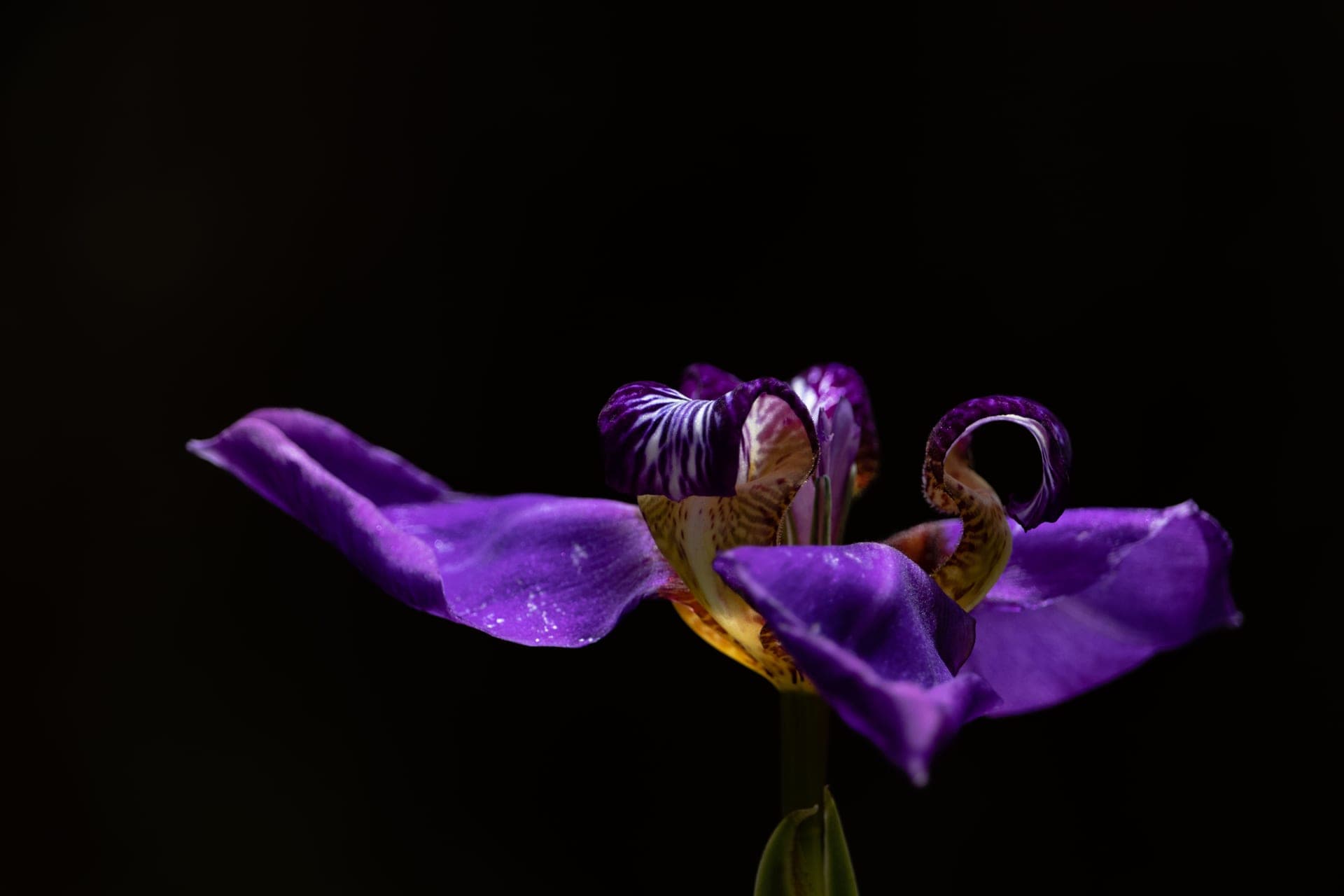
Orris root is the root of Iris germanica and Iris pallida. Iris pallida in particular is grown commercially for the extraction of oil from its rhizome, and that oil — not anything pressed from the petals — is what perfumery means by iris.
This matters practically rather than as trivia. Iris blossom has very little scent to give, and there is no commercial iris flower absolute in the way there is a rose or jasmine absolute. So when a bottle lists iris, it is naming a root product, and the gap between what the label pictures and what the fragrance does is the single most common reason people say an iris scent disappointed them.
Why It Costs What It Costs
Orris is routinely described as the most expensive material in perfumery, and unusually for that claim, the reason is not scarcity of the plant. Iris pallida is not rare or difficult to grow. The cost sits in two places: the yield, and the wait.
- The yield. One ton of iris root produces roughly two kilos of orris butter. That is about two parts in a thousand, before anyone has been paid for growing, lifting, cleaning or storing the crop.
- The wait. The harvested rhizomes go through an initial drying period that can run five years or more for perfumery use. For comparison, root destined for potpourri is dried for two to three months.
- The wait is not storage. This is the part that explains the rest. In Iris pallida, the irones — the odorants that give orris its smell — form through slow oxidation of triterpenoids in the dried rhizomes. They are not sitting in the fresh root waiting to be extracted. The drying period is the chemistry.
Put those together and the economics are brutal in a way no other note matches. A producer buries five or more years of capital in a shed, loses 998 parts in a thousand at extraction, and cannot shorten either step, because shortening the drying is shortening the synthesis. Sandalwood and oud are expensive because of what they are and how slowly they grow; orris is expensive because of what has to happen to it after it is already out of the ground.
Irones, and the Cheaper Molecules Standing In for Them
Irones are a group of methylionone odorants, described as having a sweet floral, iris, woody character. The two commercially important ones are both cis isomers, and they are what a perfumer is paying for when they buy orris butter.
The practical consequence for a buyer is that most fragrances listing iris are not delivering it with orris butter. Ionones and methylionones — the wider family irones belong to — are made synthetically at a tiny fraction of the cost and produce a recognizably iris-and-violet effect. That is not a scandal: it is how the note reaches a price most people will pay, and a well-built synthetic iris can smell excellent.
How to Meet the Note
Iris is worth approaching in a deliberate order, because the cheap end and the austere end of this note smell so different that starting at the wrong one tells you nothing useful.
- Start with a soliflore — a fragrance built around the single idea — so you learn what the iris effect is on its own, without having to pick it out of a composition.
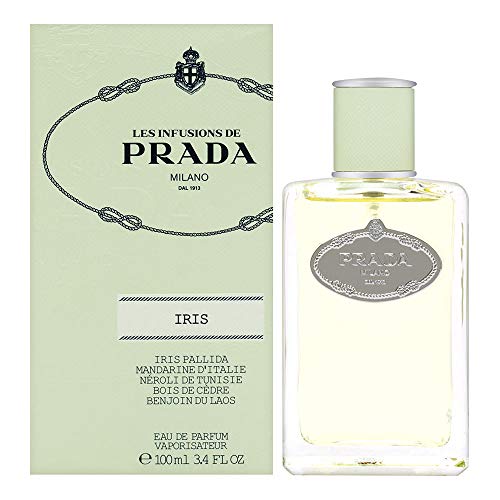
- Move to a clean, modern iris such as Prada's, where the note is rendered soapy and bright rather than rooty. This is the register most people mean when they say they like iris.
- Then try an iris built into something warm and unexpected, like Dior Homme's iris-and-cocoa opening, to see how the note behaves as a texture rather than a flower.
- Only then decide whether you want the cold, rooty extreme. That style is the most admired among enthusiasts and the least immediately likeable, and buying it first is how people conclude they dislike iris.
Give it longer than you would give a citrus. Orris materials are heavy and slow, and the first minutes of an iris fragrance are frequently the least representative part of it — our longevity page covers why base materials take their time to come forward. For specific bottles, including two that are not sold on Amazon, see our best iris perfumes roundup.