Skip to content
Glow & Gild

Comparison

Alpha Arbutin vs Azelaic Acid

The question is not which is stronger. It is whether the thing that made your dark marks has stopped.

By Sawyer V. · Published October 12, 2026 · Last updated October 12, 2026

Brown glass cosmetic bottles with droppers on a dark surface

The short answer

Choose alpha arbutin when the pigment is all that is left — old sun spots, faded acne marks on calm skin. Choose azelaic acid when something is still happening: active breakouts, rosacea bumps, or redness alongside the marks, because azelaic treats the cause and the mark at once. Alpha arbutin is a tyrosinase inhibitor capped at 2% by the EU's SCCS; azelaic acid has FDA-approved prescription versions at 15% and 20%. They work on different steps and can be used together.

Disclosure: Glow & Gild earns a commission when you buy through links on this page, at no extra cost to you. It does not change which product we recommend, and no brand pays for placement here. Read the full disclosure.

How We Picked

We compared these on mechanism and on what each one is approved or assessed to do, because that is what decides which of them suits your particular dark marks. Regulatory positions come from the EU's SCCS and from FDA-approved drug labels; the dark-spot ingredient guidance comes from the American Academy of Dermatology. Products were confirmed in stock at the time of writing. We have not tested any of these.

Everyone in this category says they tested twenty of these. We have not tested any, and we say so. What we did instead: compiled the published concentrations and ingredient lists, checked each claim against what the formula can actually support, and wrote down who each product is wrong for. The full method is published so you can check it.

The Comparison, in One Table

Alpha arbutinAzelaic acid
What it isA glycoside — hydroquinone bonded to a sugarA dicarboxylic acid (nonanedioic acid)
How it works on pigmentInhibits tyrosinase, and slowly releases hydroquinoneInhibits tyrosinase directly
Does anything else?No — pigment onlyYes: anti-inflammatory and antimicrobial
Over the counter2% serums10% serums and creams
PrescriptionNone15% gel for rosacea, 20% cream for acne
Regulatory ceilingSCCS: 2% in face creams, 0.5% in body lotionsNo cosmetic cap; 10% is the OTC norm
On the AAD's dark-spot list?NoYes
Safe in pregnancy?Ask your clinicianThe usual retinoid substitute, but still ask
Typical irritationVery lowStinging or tingling, especially at first

Two rows carry most of the decision. Does anything else? is the practical one, and On the AAD's dark-spot list? is the one most pages skip.

The Real Question: Has the Cause Stopped?

Most dark marks are post-inflammatory hyperpigmentation — the stain left behind after inflammation. The useful distinction is not how dark the mark is but whether the inflammation that created it is finished. If it is, you have a pigment problem and nothing else, and a pigment specialist is the efficient tool. If it is not, a pigment specialist is bailing out a boat with the hole still open.

Your situationPickWhy
Old sun spots on calm skinAlpha arbutinPigment is the only problem left
Faded acne marks, no new spots for monthsAlpha arbutinThe inflammation has finished
Dark marks and active breakoutsAzelaic acidTreats the acne and the mark together
Redness with the marksAzelaic acidAnti-inflammatory; arbutin does nothing for redness
Rosacea bumps plus uneven toneAzelaic acidPrescription versions are approved for rosacea
MelasmaEither, as part of a routineStubborn; see a dermatologist first
Very reactive skin that stings easilyAlpha arbutinAzelaic acid commonly tingles at first

What Each One Is Actually Doing

Alpha arbutin is a sugar molecule bonded to hydroquinone. The intact molecule inhibits tyrosinase — the enzyme that turns tyrosine into melanin — and the bond slowly breaks on skin to release small amounts of hydroquinone, which is a far stronger inhibitor of the same enzyme. That slow release is the whole design: a fraction of hydroquinone's effect without its irritation or its restricted status. It is also why the EU's Scientific Committee on Consumer Safety set a ceiling, concluding alpha-arbutin is safe at up to 2% in face creams and 0.5% in body lotions.

Azelaic acid is a different kind of molecule doing several jobs. It inhibits tyrosinase too, but it is also anti-inflammatory and antimicrobial — the prescription labels describe activity against the organisms involved in acne. That is why it holds FDA approval for two conditions rather than none: a 15% gel for the papules and pustules of rosacea, and a 20% cream for inflammatory acne. The 10% products you buy over the counter are below those strengths, but the mechanism is the same one.

The depth on each sits at alpha arbutin and azelaic acid. If you want the third option in this family, kojic acid inhibits the same enzyme by a different route and carries its own 1% regulatory ceiling.

Can You Use Both?

Yes, and for stubborn pigment it is usually the better move than increasing the dose of either. They are not alternatives in the way the comparison format implies — they interrupt the same pathway at different points, and a routine using two mechanisms tends to outperform one using a bigger number.

  1. Introduce one at a time, two to three weeks apart, so you know which one your skin is reacting to.
  2. Azelaic acid at night, alpha arbutin in the morning is the simplest split, since azelaic is the more likely of the two to tingle.
  3. Or alternate nights if your skin is reactive and you would rather not run both daily.
  4. Sunscreen every morning, without exception. UV drives the pathway both ingredients are trying to interrupt — see daily face sunscreen.
  5. Judge at twelve weeks. Pigment turns over slowly, and four weeks tells you nothing about either.

What Each Feels Like

  • Alpha arbutin is close to inert. Most 2% serums are water-light and layer under anything; it is one of the few actives that reactive skin tolerates straight away.
  • Azelaic acid commonly stings or tingles for the first few weeks, and the prescription rosacea gel's own trials reported burning, stinging or tingling in a substantial minority of patients. That usually settles.
  • Azelaic acid's texture divides people. The 10% suspension formats can pill under makeup and feel gritty; the cream-gel versions do not.
  • Neither bleaches skin. Both slow pigment production; they do not lighten unaffected skin, which is the thing people worry about and the thing hydroquinone's restricted status is actually about.

If azelaic acid's texture is the obstacle rather than its sting, the cream-gel formats below solve it, and they are the reason the price range on that side of this page is so wide.

The Ordinary Alpha Arbutin 2% + Hyaluronic Acid

1 — The cheapest route to a published 2%

The Ordinary Alpha Arbutin 2% + Hyaluronic Acid

What’s in it

  • 2% alpha arbutin, published — the SCCS ceiling for a face product
  • Water-light serum with hyaluronic acid, 30 ml
  • Single-active formula

When a committee has capped the concentration, the cheapest compliant version is a rational buy. This prints the number and costs very little.

Who it’s not for

Anyone wanting a formulated multi-active serum, and anyone whose marks come with active breakouts — that is the azelaic side of this page.

$11.50 · View on Amazon

Amazon price as of October 16, 2026, 03:15 UTC — details

#ad — how we’re funded

COSRX 2% Alpha Arbutin Discoloration Care Serum

2 — A fuller arbutin formula

COSRX 2% Alpha Arbutin Discoloration Care Serum

What’s in it

  • 2% alpha arbutin, published
  • 1.7 fl oz — larger than most in the category
  • Supporting ingredients beyond the single active

Same ceiling concentration with more formula around it, in a noticeably bigger bottle. The upgrade if the single-active version felt bare.

Who it’s not for

The tightest budget, where the cheaper 2% does the same mechanistic job.

$24.99 · View on Amazon

Amazon price as of October 16, 2026, 03:15 UTC — details

#ad — how we’re funded

Minimalist 2% Alpha Arbutin with Hyaluronic Acid

3 — A second published-percentage budget option

Minimalist 2% Alpha Arbutin with Hyaluronic Acid

What’s in it

  • 2% alpha arbutin, published on the label
  • Aimed at dark spots, hyperpigmentation and acne marks
  • Transparent-labeling brand

From a brand whose positioning is printing concentrations on the front, which is the only way to compare two bottles in this category.

Who it’s not for

Anyone who wants a brand stocked locally with easy returns.

$8.69 · View on Amazon

Amazon price as of October 16, 2026, 03:15 UTC — details

#ad — how we’re funded

The Ordinary Azelaic Acid Suspension 10%

4 — The cheapest way to try azelaic acid

The Ordinary Azelaic Acid Suspension 10%

What’s in it

  • 10% azelaic acid, published
  • Suspension texture rather than a cream or gel
  • 30 ml

The standard entry point, and the right first purchase if you are not yet sure azelaic acid suits you.

Who it’s not for

Anyone who wears makeup over it. The suspension texture is the one most likely to pill, and it is the single most common complaint about this product.

$12.20 · View on Amazon

Amazon price as of October 16, 2026, 03:15 UTC — details

#ad — how we’re funded

Naturium Azelaic Topical Acid 10%

5 — Azelaic acid with niacinamide

Naturium Azelaic Topical Acid 10%

What’s in it

  • 10% azelaic acid with niacinamide
  • Jumbo size available
  • Smoother texture than a suspension

Adds a third pigment mechanism in the same step — niacinamide works on transfer rather than production — which is exactly the stacking logic this page argues for.

Who it’s not for

Anyone who flushes on higher-dose niacinamide, and anyone who wants azelaic acid isolated.

$28.99 · View on Amazon

Amazon price as of October 16, 2026, 03:15 UTC — details

#ad — how we’re funded

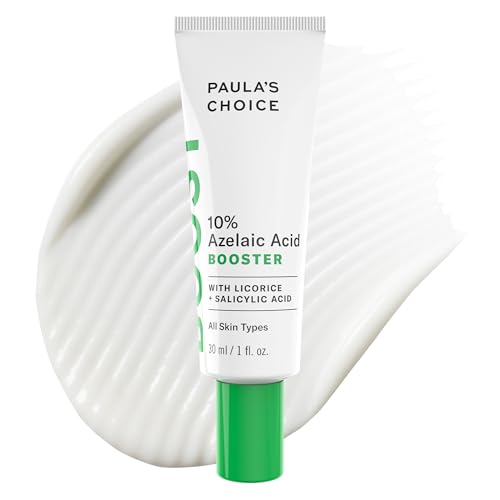
Paula's Choice BOOST 10% Azelaic Acid Booster

6 — The texture problem, solved

Paula's Choice BOOST 10% Azelaic Acid Booster

What’s in it

  • 10% azelaic acid in a cream-gel rather than a suspension
  • Includes salicylic acid
  • 1 fl oz

The cream-gel format does not pill, which is the reason to pay several times the price of the suspension if you wear makeup daily.

Who it’s not for

Sensitive skin that cannot take a BHA as well, and anyone on a budget — this is the most expensive option on the page by a wide margin.

$42.00 · View on Amazon

Amazon price as of October 16, 2026, 03:15 UTC — details

#ad — how we’re funded

Skip This One

Switching brighteners every six weeks because nothing is working

This is the most expensive mistake in the whole pigment category, and it is a behavior rather than a product. Both ingredients here act on melanin production, not on the melanin already sitting in your skin — so the existing marks fade at the speed your skin turns over, which takes roughly twelve weeks and sometimes longer. Six weeks in, nothing much has changed, the bottle gets abandoned, and a new one starts the clock again. People repeat this for a year and conclude that brighteners do not work, when what did not work was never finishing a course. Pick one, pair it with daily sunscreen, and judge it at twelve weeks. If it genuinely has not moved by then, add a second mechanism rather than replacing the first.

Frequently Asked Questions

Azelaic acid if anything is still causing them — active acne, rosacea or redness — because it treats the cause and the mark. Alpha arbutin if the pigment is all that remains.

Sources

Who wrote this

By Sawyer V.. An enthusiast who’s genuinely into this: I read the manufacturer documentation, compile the published percentages, and do the arithmetic. No lab coat.

What I don’t do: test products, accept free product, or accept payment for placement. I hold no clinical credential and don’t claim one. How we pick.

Published October 12, 2026 · Last updated October 12, 2026

A single white cosmetic bottle casting a shadow on a pale surface

Ingredient monograph

Alpha Arbutin

A gentle brightener that works by slowly releasing a strong one — why 2% is a regulatory ceiling, not a marketing choice.

Glass bottle of a clear exfoliating liquid on a dark surface

Ingredient monograph

Azelaic Acid

Redness, acne and pigment from one molecule, and the standard retinoid substitute in pregnancy. 10% versus 15%, honestly.

Two treatment bottles side by side on a dark stone surface

Comparison

Niacinamide vs Azelaic Acid

Azelaic acid is the stronger tool for redness and marks; niacinamide is the easier one. Different steps, so use both.

A bar of soap lit against a dark background

Ingredient monograph

Kojic Acid

Capped at 1% on endocrine grounds, sold mostly as soap, and weakest in exactly that format — what kojic acid can really do.

Two glass cosmetic bottles side by side on a dark surface

One decision per page

Compare

Sixteen head-to-heads, each settling one decision with the verdict in the first paragraph.

Nothing here is medical advice. Editorial policy · How we pick · Affiliate disclosure