Skip to content
Glow & Gild

Ingredient monograph

Copper Peptides

The peptide with the most interesting research behind it and the least clarity about what it does on an ordinary face at cosmetic doses.

By Sawyer V. · Published October 11, 2026 · Last updated October 11, 2026

Glass skincare bottles with labels on textured fabric

The short answer

Copper peptide means GHK-Cu: a three-amino-acid fragment bound to a copper ion, found naturally in human plasma. Its research base is in wound healing and tissue repair rather than cosmetic anti-aging, and the leap between those is the honest caveat on the whole category. Brands sell it at roughly 1-2%. The practical rule that matters: do not layer it with vitamin C or an exfoliating acid in the same step, because low pH and reducing agents destabilize the complex.

Disclosure: Glow & Gild earns a commission when you buy through links on this page, at no extra cost to you. It does not change which product we recommend, and no brand pays for placement here. Read the full disclosure.

What GHK-Cu Actually Is

GHK is a tripeptide — glycine, histidine, lysine — that occurs naturally in human plasma and has a strong affinity for copper. Bound to a copper ion it becomes GHK-Cu, the blue complex sold as copper peptides. Plasma levels of GHK decline with age, which is the observation the entire cosmetic category is built on, and it is worth being precise that a decline with age is a correlation, not a demonstration that topping it up topically reverses anything.

The research that exists is genuinely interesting: GHK-Cu has been studied for wound healing, for stimulating collagen and glycosaminoglycan production, and for modulating the expression of a large number of genes. Most of that work is in vitro, in animal models, or in a wound-healing context where the skin barrier is open. Applying a cosmetic concentration to intact skin is a different proposition, and the published support for the cosmetic claim is much thinner than the enthusiasm around it.

What you wantDoes GHK-Cu help?Honest status
Wound healingThis is the strongest evidenceBut not what you are buying it for
Firmness and skin thicknessPlausible, some supportSmall studies, often brand-funded
Fine linesModestly, over monthsWeaker than a retinoid's case
Overall textureReported, mechanism plausibleHard to separate from the vehicle
PigmentNoSee alpha arbutin or tranexamic acid
AcneNoWrong tool entirely

The One Rule: Do Not Layer It With Acids or Vitamin C

This is the practical fact worth knowing, and the reason copper peptides get written about more than they get used well. GHK-Cu is a metal complex. Two very common routine ingredients destabilize it: strong reducing agents, of which L-ascorbic acid is the one in everybody's bathroom, and low-pH exfoliating acids, which disrupt the binding that holds the copper in place.

WithVerdictHow
Vitamin C (L-ascorbic acid)Separate themVitamin C in the morning, copper peptides at night
Glycolic or salicylic acidSeparate themDifferent nights, or acid first with a long gap
A retinoidFine, on alternate nightsNot a chemical conflict; irritation is additive
NiacinamideFineSame routine
Hyaluronic acid and hydratorsFineLayer freely
SunscreenYes, as alwaysEvery morning

Concentrations, and What They Mean

  • 1% GHK-Cu is the common formulated concentration and what The Ordinary publishes for its multi-peptide copper serum.
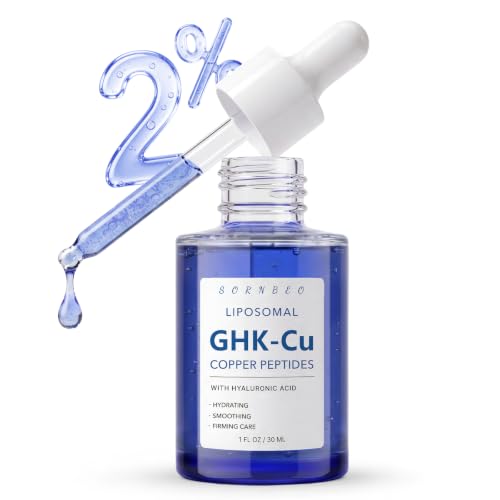
  • 2% GHK-Cu appears on several direct-to-consumer serums, sometimes described as liposomal to signal a delivery claim.
  • Parts-per-million figures on some labels — 10,000 ppm is 1% — are the same number wearing a bigger coat.
  • Higher is not clearly better. There is no established dose-response for cosmetic use on intact skin, so a larger number is a marketing position rather than a demonstrated advantage.
  • The blue color is real, not a dye. A GHK-Cu serum that is colorless should prompt a question.

Copper peptides also sit alongside signal peptides and neuropeptides in the broader category, which the peptides monograph covers, and the best peptide serums roundup compares commercially. For the direct head-to-head that most people are actually deciding, see vitamin C vs copper peptides.

Who Should Bother

  • People who already have the basics in place — sunscreen, a retinoid they tolerate, a moisturizer. Copper peptides are a refinement, not a foundation.
  • People who cannot tolerate retinoids and want something working on firmness with a different mechanism and far less irritation.
  • People willing to give it a dedicated night. If it has to share with vitamin C or acids, do not buy it.
  • Not anyone looking for pigment correction, acne control or a fast visible result.
  • Not anyone on a tight budget who has not yet bought a sunscreen they will actually wear.

Judge it at twelve weeks, and judge it on firmness and texture rather than on lines. If nothing has changed by then, that is a real answer, and it is a more common one in this category than the marketing suggests.

The Ordinary Multi-Peptide + Copper Peptides 1%

1 — The sensible default

The Ordinary Multi-Peptide + Copper Peptides 1%

What’s in it

  • 1% GHK-Cu, published on the label
  • Combined with a multi-peptide complex rather than sold as a single active
  • Aimed at fine lines and skin texture

Publishes its concentration, pairs the copper peptide with other peptides so the formula is not resting on one uncertain ingredient, and costs a fraction of the category's premium tier.

Who it’s not for

Anyone who wants GHK-Cu isolated to judge it on its own, and anyone unwilling to keep it away from vitamin C and acids.

$32.00 · View on Amazon

Amazon price as of October 16, 2026, 03:15 UTC — details

#ad — how we’re funded

NIOD Copper Amino Isolate Serum

Premium Beauty listing

2 — The premium, isolate-led version

NIOD Copper Amino Isolate Serum

What’s in it

  • 1.00% copper tripeptide-1 concentration, per the brand
  • 30 ml; supplied as a concentrate
  • The reference premium product in this category

The product that built the copper peptide reputation in enthusiast skincare, and the one most often cited when people talk about results from this ingredient.

Who it’s not for

Almost anyone on a budget. It costs many times the formulated alternatives for an ingredient whose cosmetic evidence base is genuinely uncertain.

$110.99 · View on Amazon

Amazon price as of October 16, 2026, 03:15 UTC — details

#ad — how we’re funded

Asterwood Copper Peptides Serum with Hyaluronic Acid

3 — A mid-price GHK-Cu with hydration built in

Asterwood Copper Peptides Serum with Hyaluronic Acid

What’s in it

  • GHK-Cu paired with hyaluronic acid
  • Sits between the budget and premium tiers
  • Face serum format

Pairs the peptide with a humectant, which means the serum does something verifiable on day one regardless of what the GHK-Cu is doing over twelve weeks.

Who it’s not for

Anyone who wants a published percentage front and center — the hydration claim leads here.

$21.99 · View on Amazon

Amazon price as of October 16, 2026, 03:15 UTC — details

#ad — how we’re funded

Nuvadermis Liposomal 2% GHK-Cu Copper Peptide Serum

4 — A higher published percentage

Nuvadermis Liposomal 2% GHK-Cu Copper Peptide Serum

What’s in it

  • 2% GHK-Cu, published, with a liposomal delivery claim
  • Combined with hyaluronic acid
  • Face serum format

The option for anyone who wants the top of the commonly sold range with the number stated. Treat the delivery claim as a claim rather than a verified advantage.

Who it’s not for

Anyone expecting double the result from double the percentage — there is no established cosmetic dose-response here to support that.

$23.98 · View on Amazon

Amazon price as of October 16, 2026, 03:15 UTC — details

#ad — how we’re funded

Skip This One

Copper peptides in the same routine step as vitamin C

This is the single most common way money gets wasted on this ingredient, and it is usually done by people being diligent. L-ascorbic acid is a strong reducing agent and GHK-Cu is a metal complex; putting them on skin together destabilizes the copper binding that makes the peptide what it is. The same applies to low-pH exfoliating acids, which disrupt the complex for a different reason. You end up with a degraded version of an expensive ingredient and a vitamin C serum that has also been interfered with — two products cancelling each other while you conclude neither works. Give copper peptides their own night, keep vitamin C in the morning, and if your routine genuinely has no free slot, buy a retinoid instead.

Frequently Asked Questions

GHK-Cu: a tripeptide of glycine, histidine and lysine bound to a copper ion. It occurs naturally in human plasma and declines with age, which is the premise behind the cosmetic category.

Sources

Who wrote this

By Sawyer V.. An enthusiast who’s genuinely into this: I read the manufacturer documentation, compile the published percentages, and do the arithmetic. No lab coat.

What I don’t do: test products, accept free product, or accept payment for placement. I hold no clinical credential and don’t claim one. How we pick.

Published October 11, 2026 · Last updated October 11, 2026

Laboratory pipette dispensing a clear serum, dark background

Ingredient monograph

Peptides

Signal, carrier and neurotransmitter peptides, with the evidence for each stated separately rather than as one claim.

NIOD Copper Amino Isolate Serum

Roundup

Best Peptide Serums

The minimum bar is a named peptide, and most of the shelf misses it. Five that clear it, ranked by evidence.

Top pick: NIOD Copper Amino Isolate Serum

$110.99 · View on Amazon

Amazon price as of October 16, 2026, 03:15 UTC — details

Laboratory pipette dispensing a clear serum, dark background

Comparison

Vitamin C vs Copper Peptides

Vitamin C protects by day; copper peptides are sold on repair. How the evidence compares, and why the two should never share a step.

Cream and serum textures side by side on dark stone

Comparison

Ceramides vs Peptides

A material you replace versus a message you send. Why one gives results in a fortnight and the other needs twelve weeks.

Amber glass serum bottle with a dropper on a dark surface, lit from one side

Ingredient monograph

Retinol

The most studied over-the-counter retinoid. What each percentage band is for, and how to start without peeling.

Serum dropper bottles arranged on a dark surface with directional lighting

The reference layer

Ingredients

Fifteen ingredient monographs: mechanism, strength bands, how to use, who should avoid it.

Nothing here is medical advice. Editorial policy · How we pick · Affiliate disclosure