The Short Answer
These sit on opposite sides of an important line: one removes material from the surface, the other makes holes through it. Dermaplaning is exfoliation with a blade held flat against the skin, and the result is immediate smoothness and a face free of vellus hair. Microneedling works by controlled injury — the punctures trigger a wound-healing response that, at clinical depths, remodels collagen.
| What you want | Verdict | Why |
|---|---|---|
| Instantly smoother makeup application | Dermaplaning | Removes dead cells and peach fuzz in minutes |
| Fine facial hair gone | Dermaplaning | That is literally the job |
| Real collagen remodeling | Neither at home | Effective depths belong in a clinic |
| Scar or texture improvement | Professional microneedling | Depth and sterility both matter |
| Better product absorption | Neither, meaningfully | The claimed gain is small and the risk is not |
| Lowest risk of harm | Dermaplaning | No puncture, no infection route |
| Active acne on your face | Neither | Both spread bacteria across inflamed skin |
How They Actually Differ
| Derma roller | Dermaplaning | |
|---|---|---|
| Mechanism | Punctures the skin | Shaves the surface |
| Breaks the skin barrier | Yes, by design | No, when done correctly |
| Infection risk | Real, and the main concern | Low |
| Result timing | Claimed over months | Immediate |
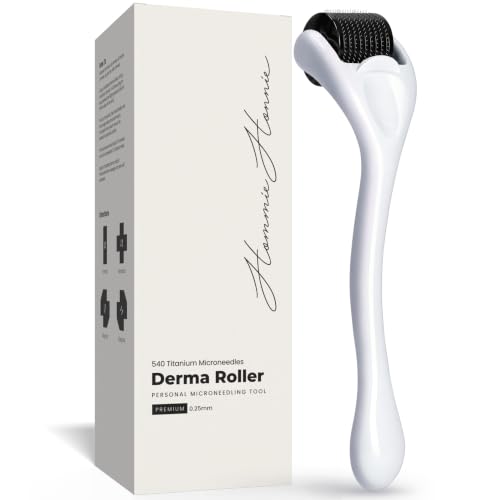
| At-home needle depth | 0.25mm, below therapeutic range | n/a |
| Removes facial hair | No | Yes |
| Sterility requirements | High — device must be disinfected | Use a fresh blade, that is all |
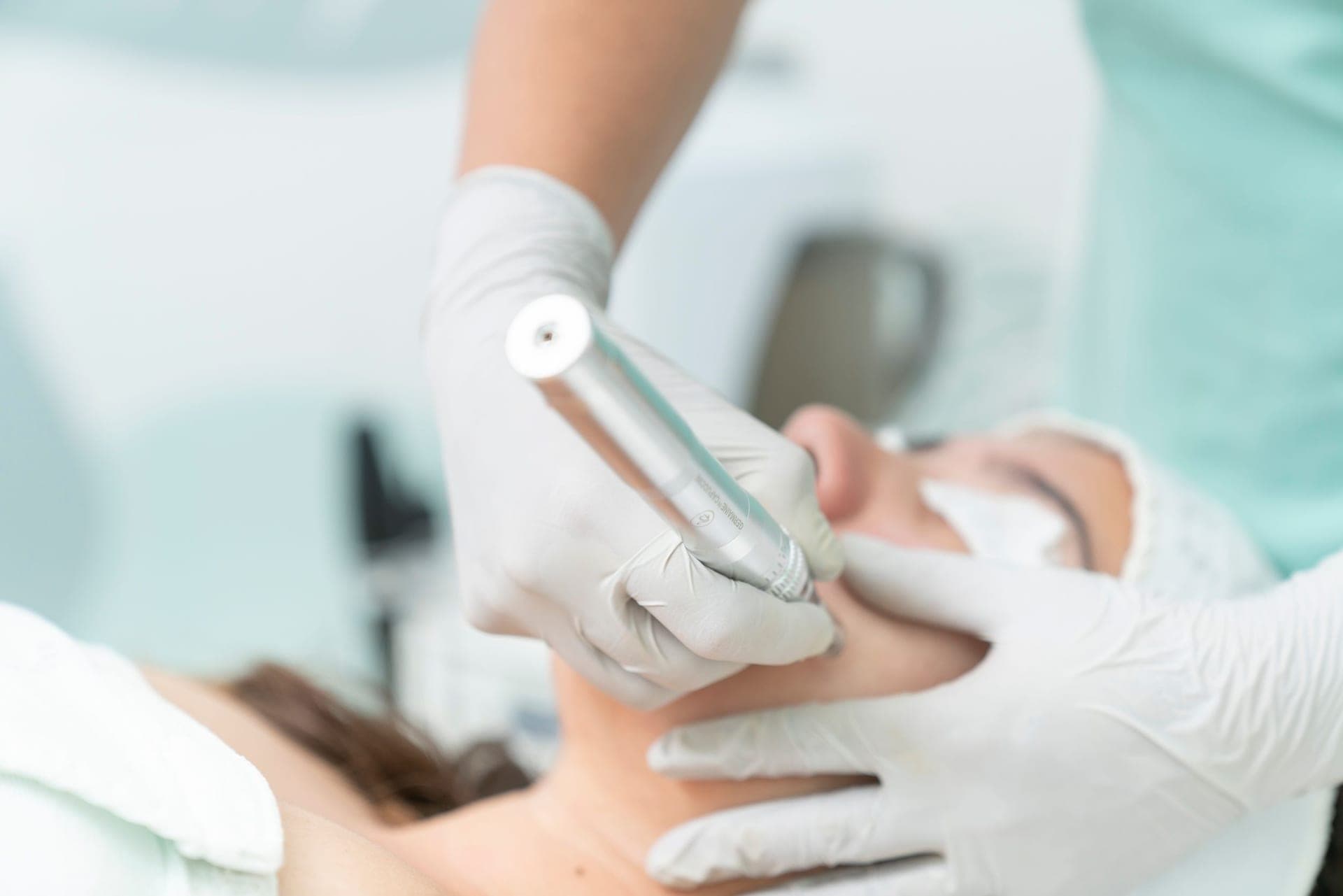
| What clinics use instead | Motorized pens at 0.5 to 2.5mm | A scalpel blade, professionally held |
The depth point is the crux. At-home rollers are sold at 0.25mm because that depth is considered comparatively safe to sell, and it is also below what the microneedling literature studies for collagen remodeling. So the honest position is that a 0.25mm roller is a mild irritant that may improve product penetration slightly, and the devices that do what microneedling claims are not the ones being sold for home use.
Who Each One Suits
- Dermaplaning suits anyone whose foundation clings to peach fuzz, and anyone wanting instant smoothness before an event.
- Rolling suits very few people at home, honestly — and the ones it does suit are disciplined about sterilizing it.
- Active acne, rosacea, eczema or any broken skin: skip both until skin is calm.
- Keloid-prone skin should avoid needling entirely, including at home.
- On isotretinoin or recently finished: avoid both and ask your prescriber.
- Anyone wanting real texture change should price a professional microneedling course instead of buying a roller — see derma rollers for where the at-home version sits.
The hair question comes up constantly: no, dermaplaning does not make facial hair grow back thicker or darker. Cutting a hair at the surface does not change the follicle. Vellus hair regrows as vellus hair, and it feels blunter for a few days because you cut the tapered tip off.
Doing Either Safely
- Start on clean, dry skin for dermaplaning — never over moisturizer or oil.
- Hold the blade at a shallow angle and work in short downward strokes, pulling the skin taut.
- Use a fresh blade, and never on inflamed spots, moles or broken skin.
- After dermaplaning, skip actives that night. The surface is freshly exfoliated.
- For a roller: disinfect before and after, store dry, replace it on the schedule the maker specifies, and never share it.
- No actives, acids or vitamin C immediately after rolling, and sunscreen every morning after either.
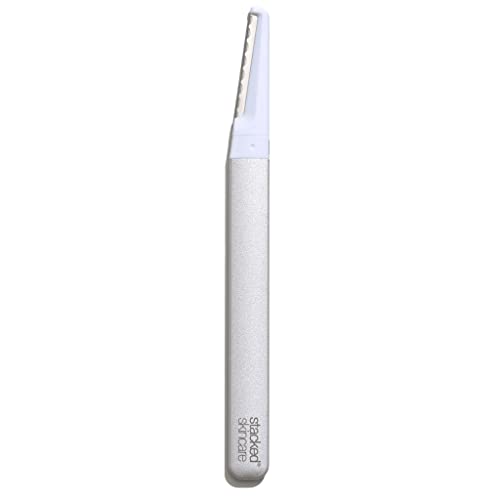
One practical note for dermaplaning: the small single-blade tools sold for the purpose are safer than a razor, because the guard limits how much pressure reaches the skin. Our dermaplaning tools page covers the difference between those and the sonic devices.