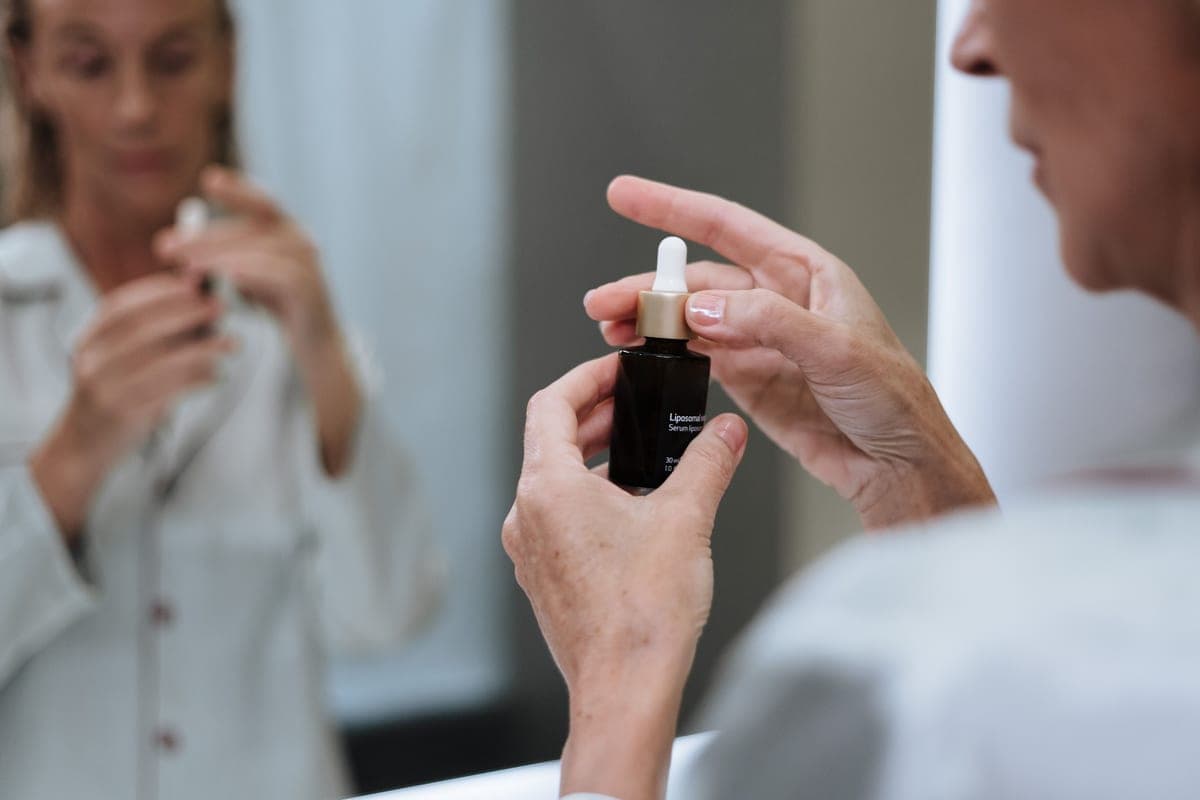
The same percentage in a cream and in a squalane serum are two different experiences. For dry or reactive skin, the vehicle is the decision.
By Sawyer V. · Published September 10, 2026 · Last updated September 10, 2026
The short answer
A cream base buffers a retinoid with occlusives and humectants, which usually means better tolerance at the same percentage. It also slows penetration slightly. For dry, mature or reactive skin that trade is worth making; for oily skin a serum is usually better.
Disclosure: Glow & Gild earns a commission when you buy through links on this page, at no extra cost to you. It does not change which product we recommend, and no brand pays for placement here. Read the full disclosure.
How We Picked
We required a cream or emulsion base rather than an oil or a plain serum, then ranked on whether the concentration is published, then on packaging — retinol degrades in light and air, and a jar undoes whatever the formula achieves. We have not tested any of these.
Everyone in this category says they tested twenty of these. We have not tested any, and we say so. What we did instead: compiled the published concentrations and ingredient lists, checked each claim against what the formula can actually support, and wrote down who each product is wrong for. The full method is published so you can check it.
Quick Picks
The short answer, by buyer. Select any row for the full write-up.
#
Product
Best for
Where to buy
1
No product photograph available for Avene RetrinAL 0.1 Intensive Cream
Avene RetrinAL 0.1 Intensive Cream[Retinal](/ingredients/retinal) sits one conversion step closer to the active form than retinol, so this is a genuine step up delivered in the gentlest common vehicle.
No product photograph available for CeraVe Skin Renewing Retinol Cream
CeraVe Skin Renewing Retinol CreamThe ceramide and niacinamide load is what makes a retinoid routine survivable, and having it in the same tube removes a step.
No product photograph available for Paula's Choice Clinical 1% Retinol Treatment
Paula's Choice Clinical 1% Retinol TreatmentIf you have worked up through 0.5% and genuinely tolerate it four or five nights a week, this is the top rung before a prescription — with the number published and the packaging right..
No product photograph available for Olay Regenerist Retinol24 Night Moisturizer
Olay Regenerist Retinol24 Night MoisturizerFor anyone who will not add a separate treatment step, a retinoid inside the night moisturizer is the version that actually gets used — and the niacinamide content is genuinely high..
No product photograph available for RoC Retinol Correxion Deep Wrinkle Night Cream
RoC Retinol Correxion Deep Wrinkle Night CreamIt is the accessible entry point most people encounter first, and unlike much of that tier it uses a tube rather than a jar — which for an unstable active is the more important decision..
#ad — buying through these links earns us a commission at no cost to you. No price is shown because we do not run a live price feed, and a remembered number would be a guess.
Why the Vehicle Changes the Product
Retinol is oil-soluble, so it has to be carried in something, and what it is carried in changes tolerance more than most people expect.
Vehicle
Behavior
Suits
Plain oil or squalane
Nothing buffers the active; the percentage lands at full strength
Resilient skin that wants a predictable dose
Cream or emulsion
Occlusive and humectant load supports the barrier while it adapts
Dry, mature or reactive skin
Encapsulated in a serum
Slow release; better tolerance at the same nominal percentage
Anyone who reacted badly to an unbuffered formula
With niacinamide or ceramides
Supporting ingredients reduce what the barrier disruption costs
Almost everyone, and especially first-time users
The important nuance: a cream base does not reduce the retinoid dose. It reduces what the barrier disruption costs you. That is why a 0.5% in a cream and a 0.5% in squalane can produce similar long-term results with very different first fortnights.
What a Retinoid Actually Does to Wrinkles
Worth being specific, because this is the claim the category is sold on and the timeline is routinely misrepresented.
Fine lines and texture — genuine improvement, first visible around 8 to 12 weeks, continuing to improve for months.
Collagen density — the mechanism behind long-term change. Measured over six to twelve months in the published studies, not weeks.
Deep static wrinkles — softening at best. These are structural, and no topical resolves them.
Laxity and volume loss — nothing. That is fat pad position and ligament change, which no cream addresses.
And the part that decides whether any of it happens: consistency. The collagen effect is a function of cumulative exposure, so a 0.3% used four nights a week for a year comfortably beats a 1% used twice a month. That is the strongest argument for a cream — it is the format people keep using.
Packaging Is a Ranking Criterion Here
Retinol degrades in light, air and heat. That makes packaging as consequential as the percentage, and it is the one thing a cream format frequently gets wrong — because creams are traditionally sold in jars.
An open jar exposes the formula to light and air every single day. By the time you are halfway through, it is not delivering what the label claims, and there is no way to tell from the outside. An opaque tube or airless pump is close to mandatory, and a wide-mouth jar of retinol is the single most reliable way to waste money in this category regardless of what the front of the box says.
The same rule applies to storage: away from heat and light, and finish an opened product within a few months.
No product photoNo product photograph available for Avene RetrinAL 0.1 Intensive Cream
Premium Beauty listing
1 — The strongest published option in a cream base
Avene RetrinAL 0.1 Intensive Cream
What’s in it
Labeled 0.1% retinaldehyde — a different molecule to retinol and not comparable by percentage
Cream base rather than a light serum, so the vehicle buffers the active
Opaque tube packaging
Retinal sits one conversion step closer to the active form than retinol, so this is a genuine step up delivered in the gentlest common vehicle. Very few brands publish a retinal percentage at all.
Who it’s not for
A first retinoid. 0.1% retinal is the ceiling of the over-the-counter range, and starting here is the fastest route to a fortnight of flaking and an abandoned tube.
No product photoNo product photograph available for CeraVe Skin Renewing Retinol Cream
2 — Barrier support built into the formula
CeraVe Skin Renewing Retinol Cream
What’s in it
Encapsulated retinol with three ceramides and niacinamide; concentration not published
Fragrance-free, non-comedogenic, opaque tube with a pump
Drugstore pricing
The ceramide and niacinamide load is what makes a retinoid routine survivable, and having it in the same tube removes a step. For a first cream this is the lowest-risk option on the page.
Who it’s not for
Anyone who insists on a published percentage — a legitimate position. The concentration is not stated anywhere, so it cannot be compared to a labeled product or checked after a reformulation.
No product photoNo product photograph available for Paula's Choice Clinical 1% Retinol Treatment
Premium Beauty listing
3 — The top of the over-the-counter range
Paula's Choice Clinical 1% Retinol Treatment
What’s in it
Labeled 1% retinol, the practical ceiling for over-the-counter use
Cream-textured treatment with peptides and liquorice extract
Opaque airless packaging
If you have worked up through 0.5% and genuinely tolerate it four or five nights a week, this is the top rung before a prescription — with the number published and the packaging right.
Who it’s not for
Almost anyone reading this page for a first cream. 1% has diminishing returns for most skin and a sharply higher irritation risk, and buying it early usually shortens the retinoid habit.
No product photoNo product photograph available for Olay Regenerist Retinol24 Night Moisturizer
4 — A retinoid and a night cream in one step
Olay Regenerist Retinol24 Night Moisturizer
What’s in it
Retinol plus retinyl propionate in a niacinamide-rich moisturizer base; concentration not published
Fragrance-free version available
Jar format, which is this product's main weakness
For anyone who will not add a separate treatment step, a retinoid inside the night moisturizer is the version that actually gets used — and the niacinamide content is genuinely high.
Who it’s not for
Anyone who wants the formula to last. The jar exposes an unstable active to light and air daily, which is exactly what retinol should not have — decant it or accept the trade.
No product photoNo product photograph available for RoC Retinol Correxion Deep Wrinkle Night Cream
5 — The long-established drugstore option
RoC Retinol Correxion Deep Wrinkle Night Cream
What’s in it
Pure retinol in a night cream base; concentration not published
Opaque tube packaging
One of the longest-running retinol lines in the mass market
It is the accessible entry point most people encounter first, and unlike much of that tier it uses a tube rather than a jar — which for an unstable active is the more important decision.
Who it’s not for
Fragrance-sensitive skin and anyone wanting a stated dose. It is scented, and the concentration is undisclosed.
Anti-wrinkle creams that never name a retinoid at all
A large tier of this category is sold entirely on outcome language — deep wrinkle, age-defying, lifting, renewing — with an ingredient list whose only actives are extracts and a peptide blend, and no retinoid anywhere in it. That is not a weaker retinol cream; it is a moisturizer with a wrinkle claim on the front, and it will do what a moisturizer does. The tell is a front-of-pack promise about wrinkles with no named active to support it: no retinol, no retinal, no retinyl ester, no named peptide. Turn the box over before you buy. If nothing on the ingredient list has published evidence for the claim on the front, the claim is coming from the marketing budget rather than the formula.
Frequently Asked Questions
For dry, mature or reactive skin, usually — a cream base buffers the active and supports the barrier. For oily skin a lighter serum is generally better tolerated cosmetically.
Fine lines and texture around 8 to 12 weeks. The collagen effect is measured over six to twelve months. Deep static wrinkles soften at best.
0.2% to 0.3% to start, built up by frequency before strength. 1% is the over-the-counter ceiling and has diminishing returns for most skin.
Retinol degrades in light and air, and an open jar exposes it to both daily. An opaque tube or airless pump preserves what you paid for.
Yes, carefully — eye-area products are usually 0.01% to 0.1% in a heavier base for a reason. Start with a low frequency and stop if the area stings persistently.
By Sawyer V.. An enthusiast who’s genuinely into this: I read the manufacturer documentation, compile the published percentages, and do the arithmetic. No lab coat.
What I don’t do: test products, accept free product, or accept payment for placement. I hold no clinical credential and don’t claim one. How we pick.
Published September 10, 2026 · Last updated September 10, 2026